
Updated Oct. 26, 2026: rewritten as a practical guide for American shoppers: how unhealthy instant noodles really are, what they cost, and easy ways to make them a better meal.
Quick answer: Instant noodles are cheap and filling, but most are very high in sodium and low in protein and fiber. A standard 3-ounce pack of chicken ramen has about 760 mg of sodium per half-block serving, or roughly 1,520 mg if you eat the whole thing. That’s about two-thirds of the 2,300 mg daily limit. Eating them now and then is fine for most people. To make them healthier, use half the seasoning packet and add an egg, vegetables or leftover meat. The world ate about 124.2 billion servings in 2025, and Americans ate about 5 billion.
Instant noodles by the numbers
| Fact | Number |
|---|---|
| Servings eaten worldwide, 2025 | About 124.2 billion (World Instant Noodles Association) |
| Growth from 2024 | Up about 0.7%, from 123.3 billion |
| Top market | China and Hong Kong, about 43.3 billion servings |
| U.S. servings per year | About 5 billion |
| Sodium in a 3-oz chicken ramen pack | About 760 mg per serving; 2 servings per pack |
| Daily sodium limit (FDA Daily Value) | 2,300 mg |
| Invented | 1958, by Momofuku Ando in Japan |
Why the world keeps eating them
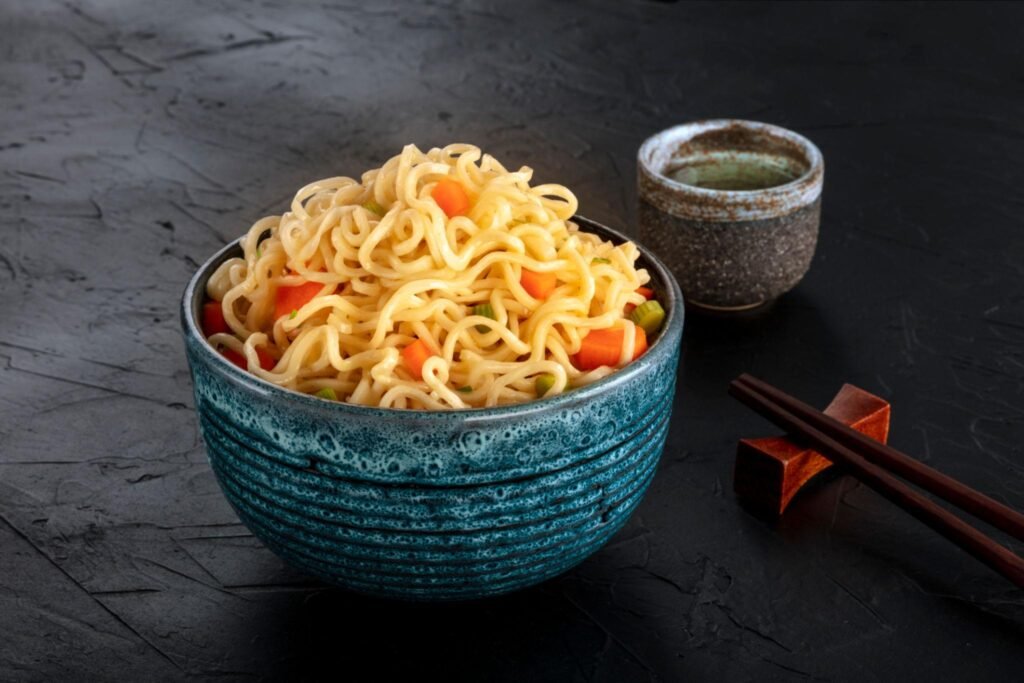
Instant noodles hit a sweet spot no other food quite matches. They’re cheap, they keep for months, and they’re ready in three minutes with just hot water.
They also travel well across cultures. Japan has cup noodles and tonkotsu flavors. South Korea has fiery ramyeon. Indonesia’s Indomie and India’s Maggi are national comfort foods. In the U.S., the 25-cent dorm-room block became a symbol of college life.
Recently, premium brands have pushed into the market with thicker noodles, real broth packets and higher prices. That’s helped instant noodles shed some of their “broke student” image.
Are instant noodles bad for you?
Not in small amounts, but they shouldn’t be a daily meal for most people. Here’s the honest breakdown:
- Sodium is the big problem. Most of it comes from the seasoning packet. Too much sodium over time raises blood pressure, a major risk for heart disease and stroke.
- Low protein and fiber. A plain pack won’t keep you full for long, so you may end up snacking more later.
- Fried noodles. Most blocks are flash-fried, which adds fat, including saturated fat.
- Few vitamins. Plain noodles offer little beyond calories and some added nutrients.
People with high blood pressure, heart disease or kidney problems should be especially careful with salty foods. Ask your doctor how much sodium is right for you.
How to make instant noodles healthier: 7 easy upgrades
- Use half the seasoning packet. That alone can cut sodium by hundreds of milligrams. Add garlic, pepper, chili flakes or lime for flavor instead.
- Crack in an egg during the last minute of cooking for protein.
- Add frozen vegetables. Peas, corn, spinach or a stir-fry mix cost little and cook in the same pot.
- Use leftover meat or tofu. Rotisserie chicken is perfect.
- Drink less of the broth. Much of the sodium stays in the liquid.
- Try air-dried noodles. Some brands bake or air-dry instead of frying. Check the label.
- Compare labels. Sodium ranges widely between brands and flavors. Pick the lower number.
Also read: How to Save Money on Groceries: 24 Tips for Real Families
Reading the label: watch the serving size
This trips up a lot of people. Many 3-ounce packs list nutrition for half a block, with two servings per pack. Almost everyone eats the whole thing, so double the numbers.
| Product (chicken flavor) | Sodium on label | If you eat it all |
|---|---|---|
| 3-oz ramen packet | About 760 mg per serving, 2 servings | About 1,520 mg |
| 3.31-oz ramen bowl | About 1,640 mg per container | About 1,640 mg |
Figures are from grocery retailer listings in October 2026 and can vary by product and recipe changes.
Made-up example (for illustration only): These are made-up numbers to show the math.
Tyler, a college student in Ohio, eats a full pack of chicken ramen for lunch most days. That’s about 1,520 mg of sodium before he eats anything else. He switches to using half the packet, adds a $0.30 egg and a handful of frozen spinach, and drinks only half the broth. His lunch now has more protein, more fiber and several hundred milligrams less sodium, for about 50 cents more per meal.
A 10-minute upgraded ramen recipe
This turns one pack into a balanced lunch. It serves one.
- 1 pack instant ramen (any flavor)
- 1 egg
- 1 cup frozen mixed vegetables or a handful of spinach
- Leftover chicken or a few cubes of tofu (optional)
- 1 green onion, sliced, and a squeeze of lime or a dash of chili crisp
- Bring 2 cups of water to a boil and add the frozen vegetables.
- After 1 minute, add the noodles. Stir in half the seasoning packet.
- Crack in the egg and let it poach for 2 to 3 minutes without stirring.
- Add the chicken or tofu to warm through.
- Top with green onion and lime. Drink only part of the broth.
Instant noodles around the world
| Country | Popular style |
|---|---|
| Japan | Cup noodles and rich, broth-style ramen |
| South Korea | Spicy ramyeon; Koreans are among the world’s biggest per-person eaters |
| Indonesia | Indomie, especially the dry “mi goreng” fried-noodle style |
| India | Maggi, often cooked with vegetables and spices |
| United States | Classic chicken and beef ramen blocks, plus fast-growing premium brands |
Food safety notes
- Don’t microwave foam cups unless the label says it’s microwave-safe. Pour the noodles into a microwave-safe bowl instead.
- Watch the hot water. Cup noodles cause many kitchen scald burns, especially with kids. Use a stable surface.
- Check dates. Dry noodles keep a long time, but the oils in fried blocks can go stale. Stale noodles taste off.
Lower-sodium shopping checklist
- Look at the whole package, not just one serving, on the Nutrition Facts label.
- Check the percent Daily Value. The FDA says 20% or more of the Daily Value per serving is high; 5% or less is low.
- Look for “reduced sodium” or “low sodium” labels, which have legal definitions under FDA rules.
- Buy plain noodles without seasoning and flavor them yourself with low-sodium broth.
- Compare flavors within a brand. Sodium can vary noticeably between versions.
The money side: still one of the cheapest meals
Even with grocery prices higher than a few years ago, basic instant noodles remain one of the cheapest calories in the store, often well under a dollar a pack when bought in multipacks. Premium brands can cost several dollars each.
Smart ways to save:
- Buy multipacks or cases at warehouse clubs or online.
- Check Asian grocery stores for wider selection and lower prices on imported brands.
- Use store brands, which are often cheaper with similar nutrition.
- Stretch them: one pack plus vegetables and an egg can feel like a full meal.
Who should be most careful
Most healthy adults can enjoy instant noodles now and then. Be more careful if you have high blood pressure, heart failure or kidney disease, or if your doctor has told you to limit salt. Older adults and people who already eat a lot of processed food also tend to get more sodium than they realize. For them, plain noodles with your own low-sodium seasoning are the safer choice.
A quick history
Momofuku Ando, a Taiwanese-born Japanese businessman, created the first instant noodles, Chicken Ramen, in 1958. He later launched Cup Noodles in 1971. His company, Nissin, helped turn the idea into a global industry. Today, dozens of countries make their own versions.
Recommended products
- Lower-sodium instant ramen
- Air-dried ramen noodles
- Microwave ramen cookers
- Chili crisp for flavor without the packet
Disclosure: As an Amazon Associate, Nexgen Headlines earns from qualifying purchases.
FAQ
How much sodium is in a pack of ramen?
A standard 3-ounce chicken ramen pack has about 760 mg of sodium per serving, and there are two servings per pack. Eating the whole pack means about 1,520 mg.
Is it OK to eat instant noodles every day?
For most people, not as a daily habit. They’re high in sodium and low in protein and fiber. Occasional meals are fine, especially if you add vegetables and protein.
How can I make ramen healthier?
Use half the seasoning packet, add an egg or leftover meat, toss in frozen vegetables and drink less of the broth.
How many instant noodles does the world eat?
About 124.2 billion servings in 2025, according to the World Instant Noodles Association. Americans ate about 5 billion.
Who invented instant noodles?
Momofuku Ando created the first instant noodles, Chicken Ramen, in Japan in 1958.
Bottom line
Instant noodles are a cheap, handy meal, and the world can’t get enough of them. The catch is sodium: a full pack can carry about two-thirds of your daily limit. Use half the packet, add protein and vegetables, and keep them as an occasional meal rather than a daily one.
Last reviewed: Oct. 26, 2026. This article is general information, not medical advice.
Sources: World Instant Noodles Association: demand rankings; Ingredients Network; FDA: Sodium in your diet; Hannaford product label; Giant product label.
Featured image: A bowl of ramen upgraded with eggs, spinach and chicken. Photo: Amar Nath Adak / Wikimedia Commons, CC BY-SA 4.0; edited by Nexgen Headlines.