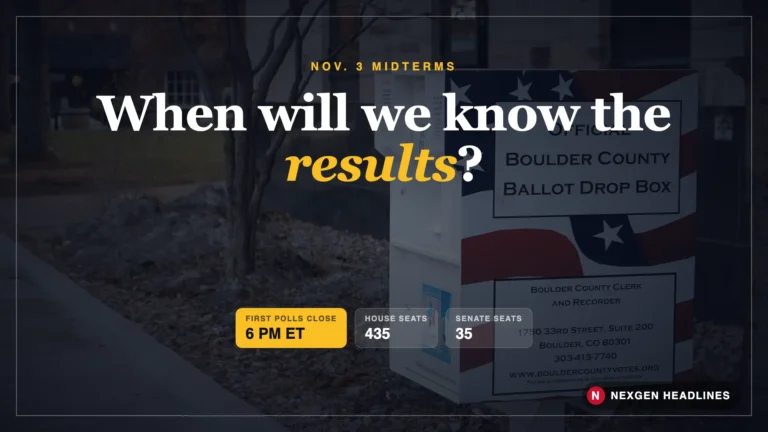

Quick answer: Election Day is Tuesday, Nov. 3, 2026. Find your polling place on your state or county election website or at vote.org. It may have changed since you last voted. Most polls open between 6 and 7 a.m. local time. According to the National Conference of State Legislatures, 36 states request or require some form of ID at the polls, so check your state’s rules before you go. If there’s a problem with your registration, ask for a provisional ballot.
Voting in person should take a few minutes, but small surprises slow people down: a new polling location, the wrong ID, or a name that isn’t on the list. This guide walks through finding your polling place, what to bring, what to expect inside and what to do if something goes wrong.
Step 1: Find your polling place
- Your state or county election website. Most have a “find my polling place” lookup. Search for your state’s secretary of state or elections office.
- vote.org or Vote411.org. Nonpartisan tools that point you to your official polling location.
- Your sample ballot or voter card, if your county mailed one.
- Call your county election office if the website doesn’t load. Election offices expect calls on Election Day.
Important: polling places change. A school or church you used two years ago may not be a polling place this year, especially after redistricting or consolidation. Check even if you think you know.
In some counties, you can vote at any “vote center” in the county instead of one assigned precinct. Your county website will say if that applies to you.
Step 2: Check your hours
Most polling places open between 6 and 7 a.m. and close between 7 and 9 p.m. local time. Daylight saving time ended on Nov. 1, so check that your clock is right. If you are in line when polls close, stay in line: in general, you can still vote.
Also read: When Will We Know the 2026 Midterm Election Results?
Step 3: Know your state’s ID rules
| Type of state | What it usually means at the polls |
|---|---|
| Photo ID states | You’re asked for a photo ID such as a driver’s license, state ID, passport or military ID. Some have backup options if you don’t have one. |
| Non-photo ID states | Other documents may count, such as a utility bill, bank statement or government check with your name and address. |
| No-document states | You usually sign in, and your signature or personal details are checked against the voter list. |
NCSL counts 36 states that request or require ID: 24 ask for photo ID and 12 also accept non-photo ID. Rules change, and several states tightened them recently, so confirm your state’s current list on its official election website.
First-time voters: if you registered by mail and didn’t provide ID when you registered, federal law may require you to show ID the first time you vote, even in states that normally don’t ask.
Made-up example (not a real person): Luis moved across town in August and updated his registration online. On Election Day, he goes to his old polling place out of habit, and his name isn’t on that list. A poll worker looks him up, finds his new precinct two miles away, and sends him there. He votes in 15 minutes. If he hadn’t had time to drive over, he could have asked for a provisional ballot. Checking his polling place the night before would have saved him the trip.
Step 4: What to bring
- ID, if your state requests or requires it.
- Your sample ballot with notes, if your state allows it. Many do, and it speeds things up for long ballots with local races and ballot measures.
- Your mail ballot, if you received one and want to vote in person instead. Some states ask you to surrender it.
- Water, a phone charger and patience for busy times like early morning and after work.
Leave at home: campaign shirts, hats and buttons. Many states ban campaign gear within a set distance of polling places. Some also limit phone use or photos inside the voting area, so keep your phone away while you vote.
Step 5: What happens inside
- Check in with a poll worker, who finds your name and confirms your details.
- Show ID if required, and sign the poll book.
- Get your ballot: paper, a ballot-marking device, or a touchscreen, depending on your county.
- Mark your choices privately. Ask for a new ballot if you make a mistake; don’t try to fix it yourself.
- Cast it in the scanner or ballot box, and grab your “I Voted” sticker.
If something goes wrong
| Problem | What to do |
|---|---|
| Your name isn’t on the list | Ask the poll worker to check other spellings and nearby precincts. If you still can’t be found, ask for a provisional ballot. |
| You’re at the wrong polling place | Ask where your correct precinct is. If you can’t get there in time, ask whether you can vote a provisional ballot. |
| You don’t have the required ID | Ask about your state’s backup options, such as signing an affidavit or voting a provisional ballot and showing ID later. |
| A machine isn’t working | Poll workers can usually give you a paper ballot or an emergency ballot. |
| You need help voting | Voters with disabilities or who need language help are entitled to assistance. Ask a poll worker. |
| Someone is trying to intimidate you | Tell a poll worker and call 866-OUR-VOTE (866-687-8683), a nonpartisan hotline. |
What is a provisional ballot?
A provisional ballot is a backup ballot for voters whose eligibility can’t be confirmed on the spot. It’s kept separate, and election officials check it after Election Day. If you’re eligible, it counts. Some states require you to bring ID or more information to the election office within a few days. Ask how to check whether your provisional ballot was counted before you leave.
Already voted early or by mail?
If you voted early or returned a mail ballot, you’re done. Don’t vote again in person. Many states let you track your mail ballot online to confirm it was received and accepted. If your state notifies you of a problem, such as a missing signature, follow its “ballot cure” instructions quickly, because cure deadlines can fall soon after Election Day.
Best times to vote
- Mid-morning or early afternoon is often quieter than before and after work.
- Avoid the last hour if you can, when lines often build.
- Check wait times. Some counties post live wait times online, so you can pick a quieter moment.
- Consider lunchtime if your workplace is close to your polling place.
Can you take time off work to vote?
Many states have laws that let workers take time off to vote, sometimes with pay, if their work hours don’t leave enough time while polls are open. The rules, notice requirements and hours vary by state. Check your state labor department or election website, and tell your employer in advance if your state requires it.
Voting with kids, disabilities or language needs
- Bringing children: most states let you bring your kids into the voting booth with you.
- Accessibility: polling places must be accessible, and accessible voting machines are available. Curbside voting is offered in some states.
- Language help: many counties provide ballots or assistance in other languages, and you can usually bring someone to help you, with some exceptions such as your employer or union rep.
FAQ
How do I find my polling place?
Use your state or county election website, or a nonpartisan tool such as vote.org or Vote411.org. Check every election, because locations can change.
Do I need ID to vote?
It depends on your state. NCSL counts 36 states that request or require some form of ID at the polls. Check your state’s election website for its exact list.
What if my name isn’t on the voter list?
Ask the poll worker to double-check, including nearby precincts. If you still can’t be found, ask for a provisional ballot.
Can I wear a campaign shirt to vote?
Many states ban campaign clothing and buttons near polling places. Leave them at home to avoid problems.
What time do polls open?
Most polling places open between 6 and 7 a.m. local time. Check your county’s exact hours.
Bottom line
Tonight, look up your polling place and your state’s ID rules. Tomorrow, bring what you need, go at a quieter time if you can, and ask for a provisional ballot if anything goes wrong. Voting should take minutes, and a little planning keeps it that way.
Last reviewed: Nov. 2, 2026. Voting rules vary by state; confirm details with your state or county election office.
Sources: NCSL: Voter ID laws; USA.gov: Election Day; US Election Assistance Commission: Voters; Vote.org polling place locator; Election Protection.
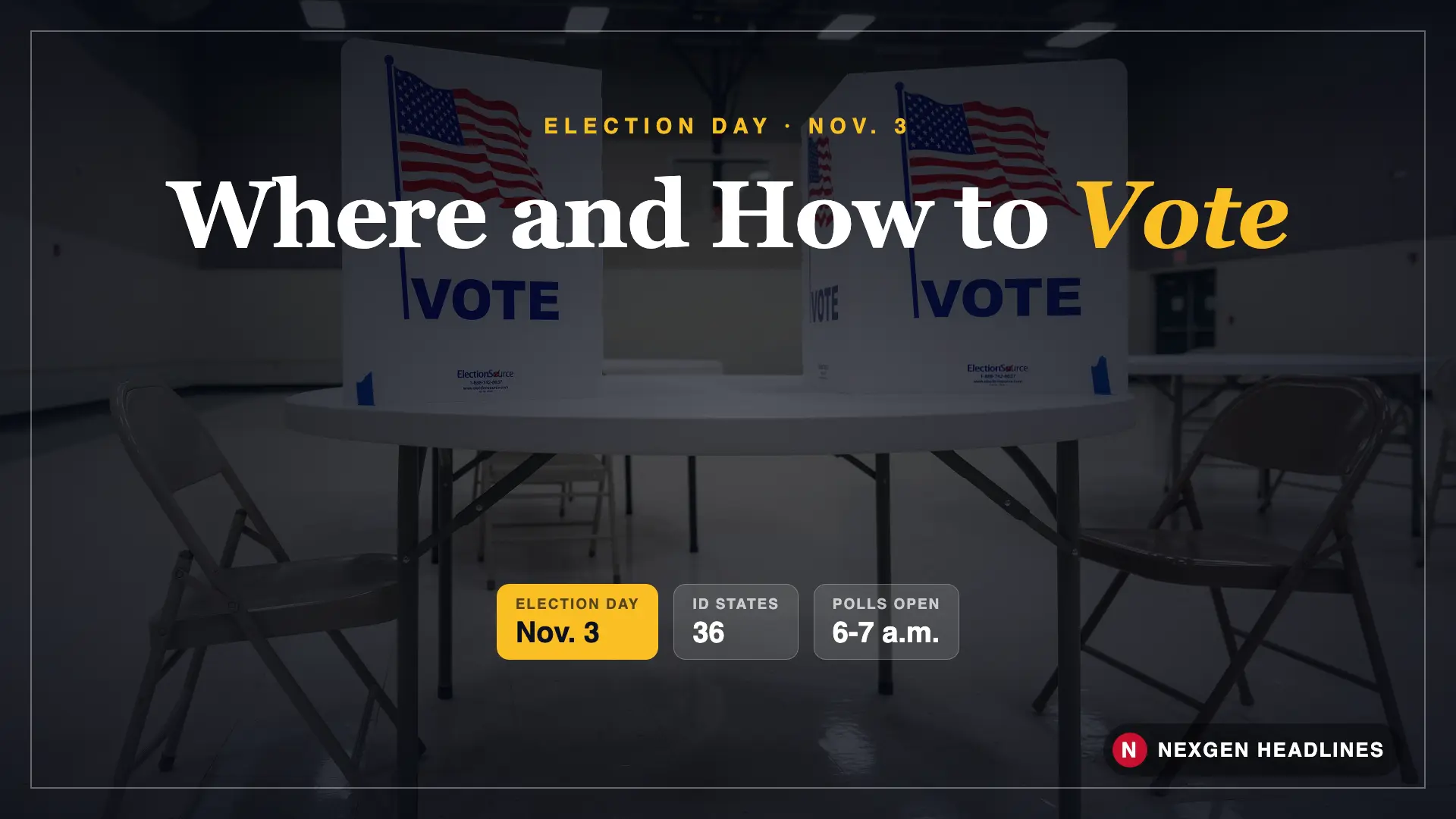
Featured image: Voting booths at a polling place in Grand Rapids, Minnesota. Photo: Lorie Shaull via Wikimedia Commons, CC BY 2.0; edited by Nexgen Headlines.