
If you buy your own health insurance through HealthCare.gov or a state marketplace, this fall’s open enrollment is the one you shouldn’t put on autopilot. The extra subsidies that kept many premiums low from 2021 through 2025 have expired, insurers have asked for some of the biggest rate increases in years, and a court fight has added confusion about the deadline.
The good news: the process itself hasn’t changed much, and an hour of comparison shopping can still save a household hundreds or even thousands of dollars in 2027. Here’s what’s different this year, the dates that matter, and a step-by-step way to pick a plan without getting lost in the jargon.
Quick answer
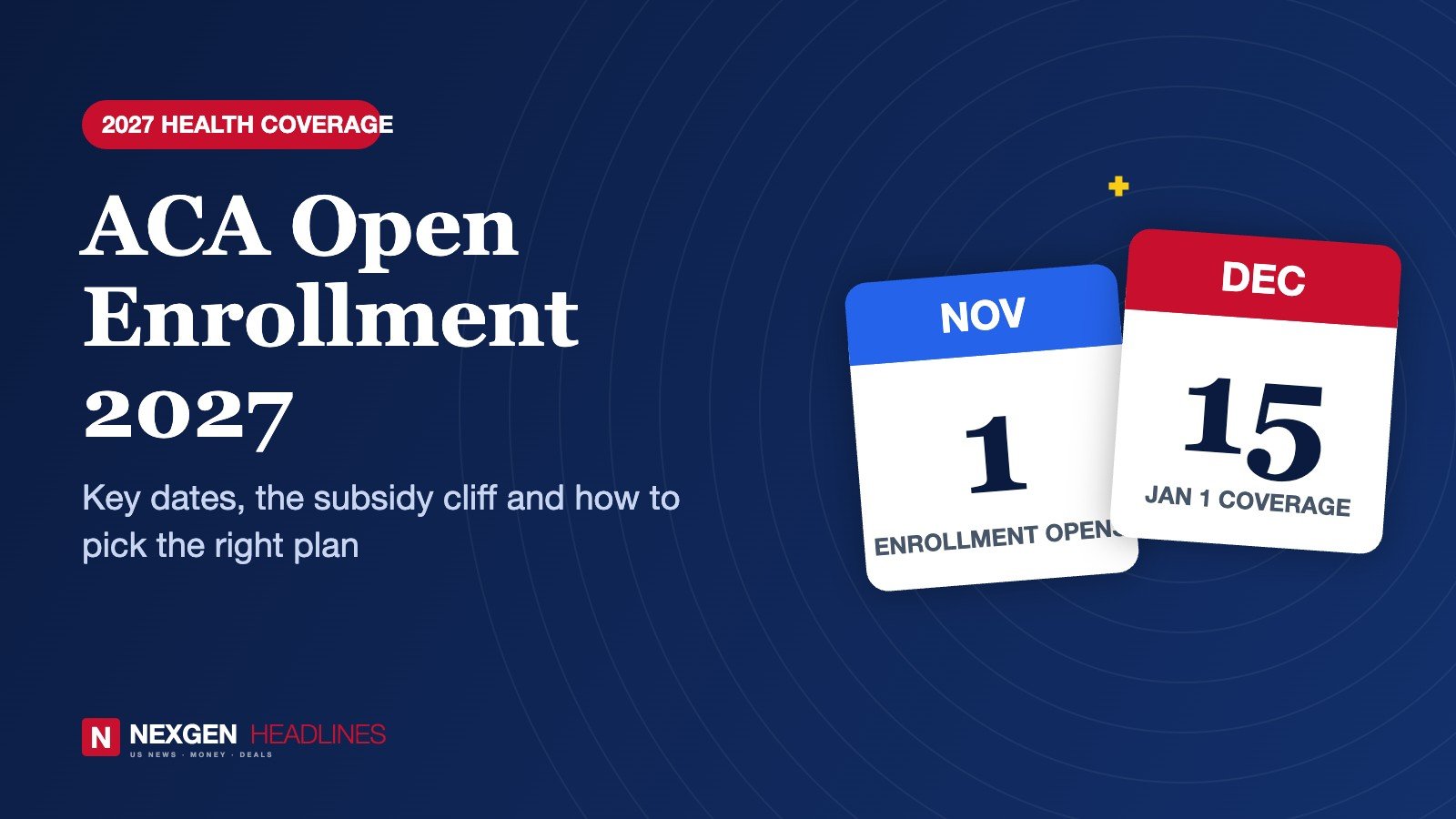
- Opens: Saturday, November 1, 2026 (Idaho and Georgia open earlier in October).
- Enroll by December 15 to have coverage start January 1, 2027.
- Final federal deadline: January 15, 2027, according to HealthCare.gov. A court appeal is pending, so don’t count on that date.
- Biggest change: the enhanced premium tax credits are gone, so the “400% of poverty” subsidy cliff is back.
What changed for 2027
1. The enhanced subsidies expired
From 2021 through 2025, Congress boosted the premium tax credits that lower monthly marketplace payments. Those boosts lapsed at the end of 2025. The House passed an extension in early 2026, but as of mid-October the Senate hasn’t acted, so nothing has become law.
In practice that means two things for 2027:
- Help is smaller for many people who still qualify, because the formula goes back to the older, less generous version.
- The cliff is back. Households earning more than 400% of the federal poverty level generally don’t get any premium tax credit at all. For someone close to that line, earning a little more can cost far more in premiums.
2. Premiums are going up
Insurers filed for a median increase of roughly 15% for 2027, according to a Peterson-KFF analysis of rate filings. Your own number could be higher or lower depending on your state, your plan and your age. The key point is that if you let your plan auto-renew, your bill may jump without you noticing until January.
3. The deadline is caught up in a court case
A 2025 federal rule would have ended open enrollment on December 15. In June 2026 a federal court in Maryland threw out that part of the rule, and HealthCare.gov currently lists January 15, 2027 as the last day to enroll. The government appealed, and the appeals court is scheduled to hear the case on October 30. Our advice is simple: treat December 15 as your real deadline. You’ll get January 1 coverage, and you won’t be caught off guard if the dates change.
4. Eligibility rules for some immigrants narrow
Starting January 1, 2027, premium tax credits are limited to lawful permanent residents and a few other specific groups. If anyone in your household has a different immigration status, check your eligibility carefully on HealthCare.gov or with a certified navigator.
Key dates for 2027 coverage
| Date | What happens |
|---|---|
| Oct 15 / Oct 19, 2026 | Idaho and Georgia state exchanges open early |
| Nov 1, 2026 | Open enrollment opens on HealthCare.gov and most state sites |
| Dec 15, 2026 | Last day to enroll for coverage starting Jan 1 |
| Jan 15, 2027 | Current federal end date (coverage starts Feb 1) |
| Varies | Some states run later, e.g. California, New York, New Jersey and DC through Jan 31 |
If you live in a state with its own exchange (like Covered California, NY State of Health or Pennie in Pennsylvania), check that site directly. Their dates can differ from HealthCare.gov.
How to pick a plan: a 7-step walkthrough
Step 1: Estimate your 2027 income honestly
Your subsidy is based on what you expect your household to earn next year, not what you made last year. Use your best estimate of adjusted gross income. Freelancers and gig workers should be realistic: guessing too low can mean paying some of the credit back at tax time, and guessing too high can mean overpaying every month. You can update your income during the year if things change.
Step 2: Log in, even if you plan to keep your plan
Auto-renewal keeps you covered, but it doesn’t shop for you. Your current plan could be the most expensive option in your area for 2027, or your insurer could have changed its doctor network. Log in, update your application, and see your real 2027 prices.
Step 3: Understand the metal levels
- Bronze: lowest premiums, highest deductibles. Good if you’re healthy and mainly want protection from a disaster.
- Silver: middle ground. If your income is under 250% of poverty, silver is often the best deal, because only silver plans come with “cost-sharing reductions” that lower your deductible and copays.
- Gold: higher premiums, lower costs when you use care. Worth a look if you see doctors often or have a planned surgery.
- Platinum: highest premiums, lowest out-of-pocket costs. Not offered everywhere.
Step 4: Compare total cost, not just the premium
A cheap premium can hide a $7,000 deductible. For each plan you’re considering, add up a rough year:
12 × monthly premium + expected deductible and copays = your realistic yearly cost
If you rarely see a doctor, weight it toward premiums. If you have a chronic condition, a baby on the way or regular prescriptions, assume you’ll hit a big chunk of the deductible.
Step 5: Check your doctors and prescriptions
Use the plan’s provider search to confirm your doctors and nearest hospital are in network, then check the drug list (formulary) for every prescription. This is the step people skip most, and it’s the one that causes the most expensive surprises.
Step 6: Look at HSA-eligible plans
Some bronze and silver plans are HSA-eligible. If you have one, you can put pre-tax money into a Health Savings Account, which never expires and can be invested. For healthy people who can afford to save, it’s one of the best tax breaks available.
Step 7: Enroll, then pay the first premium
You aren’t covered until you pay your first month’s premium to the insurer. Save the confirmation, and set a reminder to check that your ID cards arrive in late December.
If you’re near the 400% cliff
For 2027 coverage, 400% of the poverty level works out to roughly $63,000–$64,000 for a single person. HHS uses the prior year’s poverty guidelines, so check the exact figure on HealthCare.gov. If you’re close to the line, a few legal moves can lower the income the marketplace counts:
- Contributing to a traditional 401(k) or 403(b) through work
- Contributing to a traditional IRA, if you’re eligible to deduct it
- Contributing to an HSA, if your plan qualifies
- For the self-employed, tracking every legitimate business deduction
Talk to a tax professional before you count on this. Even a few thousand dollars of extra contributions can make a big difference in your premium.
Where to get free, unbiased help
Every state has navigators: trained, federally funded helpers who walk you through enrollment at no cost and don’t earn commission. Find one through the “Find Local Help” tool on HealthCare.gov or call the marketplace at 1-800-318-2596. Be wary of unsolicited calls or texts offering “free” or “$0” plans. Marketplace scams have been a real problem. (Our guide on how to spot and report scam texts covers the warning signs.)
Turning 65 soon? Then this isn’t your enrollment. Medicare runs on its own calendar. See our Medicare open enrollment guide.
Short on time? Flip through the quick visual version of this guide.
Frequently asked questions
When does ACA open enrollment start for 2027?
November 1, 2026 on HealthCare.gov and in most states. Idaho (Oct 15) and Georgia (Oct 19) open earlier.
What is the deadline to enroll for January 1 coverage?
December 15, 2026. If you enroll after that but before the final deadline, coverage usually starts February 1.
Did the enhanced ACA subsidies get extended?
Not as of mid-October 2026. They expired at the end of 2025. The House passed an extension, but the Senate hasn’t, so 2027 plans are priced without them unless Congress acts.
What happens if I don’t do anything?
Most people are automatically re-enrolled in the same or a similar plan, but at 2027 prices and with 2027 subsidy rules. That could mean a much higher bill. Logging in to update your income and compare plans is strongly recommended.
Can I get a plan outside open enrollment?
Only if you have a qualifying life event, such as losing job-based coverage, moving, getting married or having a baby. That opens a 60-day Special Enrollment Period.
Is there still a penalty for not having health insurance?
There’s no federal penalty, but California, Massachusetts, New Jersey, Rhode Island and Washington, DC have their own individual mandate penalties.
Are navigators really free?
Yes. Navigators and certified application counselors don’t charge you and can’t steer you toward a particular insurer.
The bottom line
2027 is a year to shop, not to coast. Mark December 15 on your calendar, update your income, compare the total yearly cost of at least three plans, and confirm your doctors and prescriptions. It’s an hour of slightly boring work that can easily be worth more than any other money move you make this fall.
This article is general information, not insurance or tax advice. Dates and subsidy rules may change. Confirm on HealthCare.gov or your state exchange before enrolling.
Sources: HealthCare.gov, Peterson-KFF Health System Tracker, HFMA.