
Quick answer: Buy now, pay later (BNPL) splits a purchase into smaller payments, most often four payments over six weeks with the first one due at checkout. Pay-in-4 plans usually charge no interest if you pay on time, but late fees, overdraft charges and stacking several plans are where holiday shoppers get hurt. Federal rules are light: the CFPB withdrew its BNPL rule, so protections now depend on your state and the lender. Use BNPL only for purchases you could pay for in full today.
Buy now, pay later buttons sit next to “add to cart” at almost every big retailer this time of year. They make a $400 gift feel like a $100 gift. That is the appeal and the trap. Here is how these plans work, what they really cost and a simple test for when they make sense.
How buy now, pay later works
| Plan type | How it works | Interest |
|---|---|---|
| Pay in 4 | 25% at checkout, then 3 more payments every 2 weeks | Usually 0% if paid on time |
| Monthly installments | Payments over several months or years for bigger purchases | Often charged, sometimes high |
| Pay in 30 days | Pay the full amount within a month | Usually 0% if paid on time |
Behind the button is a short-term loan from a separate lender, not the store. That matters: your agreement, your fees and your customer service all come from the BNPL company, so read its terms the same way you would read a credit card offer.
Most plans take payments automatically from a debit card, bank account or credit card. Approval is fast and often uses a soft credit check, which does not hurt your score.
The real costs to watch
- Late fees. Miss an automatic payment and many lenders charge a fee. Policies differ, so read the terms before you agree.
- Bank overdraft fees. If a payment pulls from a checking account that is short, your bank may charge you too.
- Interest on longer plans. Monthly installment loans for big items can carry interest rates similar to credit cards.
- Harder returns. If you return an item, the refund goes through the BNPL lender. Keep paying until the refund shows up, or you may be charged a late fee.
- Stacking. Five small plans across different apps can add up to one big monthly bill that is easy to lose track of.
Made-up example (not a real person): Chris buys a $320 gaming console, a $160 jacket and a $120 smartwatch in early December, each on a different pay-in-4 app. Each plan looks small: $80, $40 and $30 every two weeks. Together that is $150 every two weeks, landing the week before rent is due. One payment bounces, and Chris pays a BNPL late fee plus a bank overdraft fee. The purchases were fine; the timing was not.
Does buy now, pay later affect your credit?
- Applying usually involves a soft check, which does not affect your score.
- Paying on time has not always helped your score, because many lenders have not reported pay-in-4 loans to credit bureaus.
- That is changing. FICO has introduced score versions that can include BNPL data, and some lenders now report payments. Missed payments and accounts sent to collections can hurt your credit.
- Lenders still see your habits. Mortgage and auto lenders may ask about BNPL debt, and it can show up on bank statements they review.
What protections do you have?
Federal oversight of BNPL has pulled back. The Consumer Financial Protection Bureau withdrew its rule that treated BNPL lenders like credit card companies, and it has said it does not plan to issue a new one. That means protections now depend more on your state and your lender’s own policies.
Some states are stepping in. New York published proposed BNPL rules in February 2026, including licensing and an interest cap. Illinois signed a BNPL consumer protection law in June 2026. If you live elsewhere, read the lender’s dispute and refund policy before you buy.
If you pay your BNPL installments with a credit card, you may have credit card dispute rights for the payments. Using a debit card usually gives you fewer protections.
Also read: How to Pay Off Credit Card Debt
BNPL vs credit card vs saving up
| Pay-in-4 BNPL | Credit card | Saving up | |
|---|---|---|---|
| Interest | Usually 0% if on time | High if you carry a balance | None |
| Late fees | Possible | Possible | None |
| Dispute rights | Depend on lender and state | Strong federal protections | Depends on how you pay |
| Builds credit | Sometimes | Yes, with on-time payments | No |
| Risk of overspending | High | High | Low |
A 4-question test before you click “pay later”
- Could I pay for this in full today? If not, BNPL is borrowing, not budgeting.
- Do I know every payment date? Put them in your phone calendar before you finish checkout.
- How many plans do I already have? Add up all your open BNPL payments first.
- What happens if I return it? Check the refund and late-fee rules now, not later.
Smart ways to use BNPL, if you use it
- Stick to one app so all your payments are in one place.
- Pay early if you can. Most apps let you pay off a plan anytime with no penalty.
- Link a card that won’t overdraft, or keep a cushion in your account.
- Skip it for small items. Splitting a $40 purchase adds hassle and risk for very little benefit.
- Turn off “auto-approve” offers and in-app reminders that push you to buy more.
Where you’ll see BNPL this holiday season
BNPL now shows up in more places than online checkout pages:
- At the register. Many stores let you scan a code or tap a virtual card from a BNPL app at checkout.
- Inside credit card and bank apps. Some card issuers offer “plan it” or installment options that turn a past purchase into monthly payments, sometimes with a fixed monthly fee instead of interest.
- For travel and concert tickets. Airlines, hotels and ticket sites increasingly offer pay-over-time options. Those purchases are harder to undo if plans change.
- For everyday spending. Some people now split groceries and gas. If you’re doing that regularly, it’s a sign your monthly budget needs a closer look, not more installment plans.
Each of these works a little differently, with its own fees and rules. Before you accept any “split it” offer, find out three things: the total you’ll pay, the exact payment dates, and what happens if a payment is late.
Good reasons to skip BNPL entirely
- You’re already carrying a credit card balance.
- Your checking account often runs close to zero before payday.
- You’re planning to apply for a mortgage or car loan in the next few months.
- You have trouble tracking several due dates at once.
In any of these cases, the safer move is to pick gifts that fit what you can pay today, or save for a few weeks first.
Already behind on BNPL payments?
- Contact the lender before the due date. Some will move a payment date or set up a plan.
- Stop new purchases on BNPL until you are caught up.
- List every plan, its due dates and amounts, then pay the ones with fees or interest first.
- Talk to a nonprofit credit counselor if the total is more than you can handle. The National Foundation for Credit Counseling (nfcc.org) can connect you with one.
Tools to keep holiday spending on track
Disclosure: As an Amazon Associate, Nexgen Headlines earns from qualifying purchases.
FAQ
Is buy now, pay later interest-free?
Pay-in-4 plans are usually interest-free if you pay on time. Longer monthly installment plans often charge interest.
Does BNPL hurt your credit score?
Applying usually uses a soft check that does not hurt your score. Missed payments or accounts sent to collections can hurt it, and more lenders now report BNPL activity.
What happens if I miss a BNPL payment?
You may be charged a late fee, your bank may charge an overdraft fee, and the lender may stop you from using the service.
Can I return something I bought with BNPL?
Yes, through the store’s normal return policy. Keep making payments until the lender shows the refund, so you are not charged late fees.
Is BNPL regulated in the US?
Lightly. The CFPB withdrew its BNPL rule, so protections depend on your state and lender. New York and Illinois have moved to add their own rules.
Bottom line
Buy now, pay later is a tool, not free money. Use it only for things you can already afford, keep it to one app, and put every payment date in your calendar. If you are using BNPL because you cannot afford the gift, a smaller gift is the better deal.
Last reviewed: Nov. 1, 2026.
Sources: CFPB: Buy now, pay later; Consumer Finance Monitor (Ballard Spahr): BNPL regulation; New York DFS: BNPL regulation (Feb. 2026); FICO; NFCC.
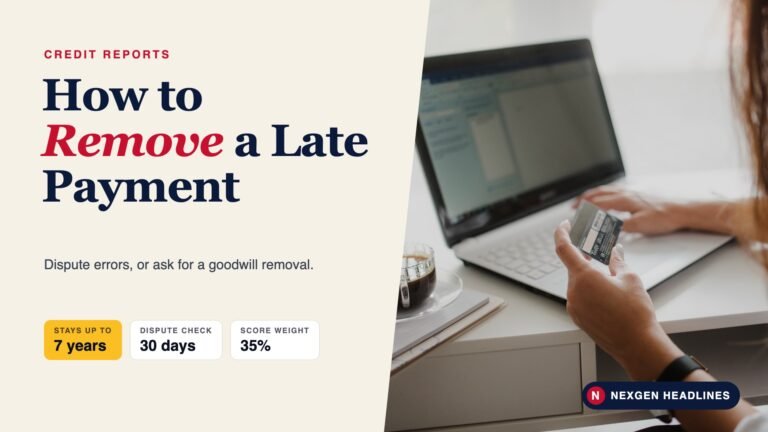
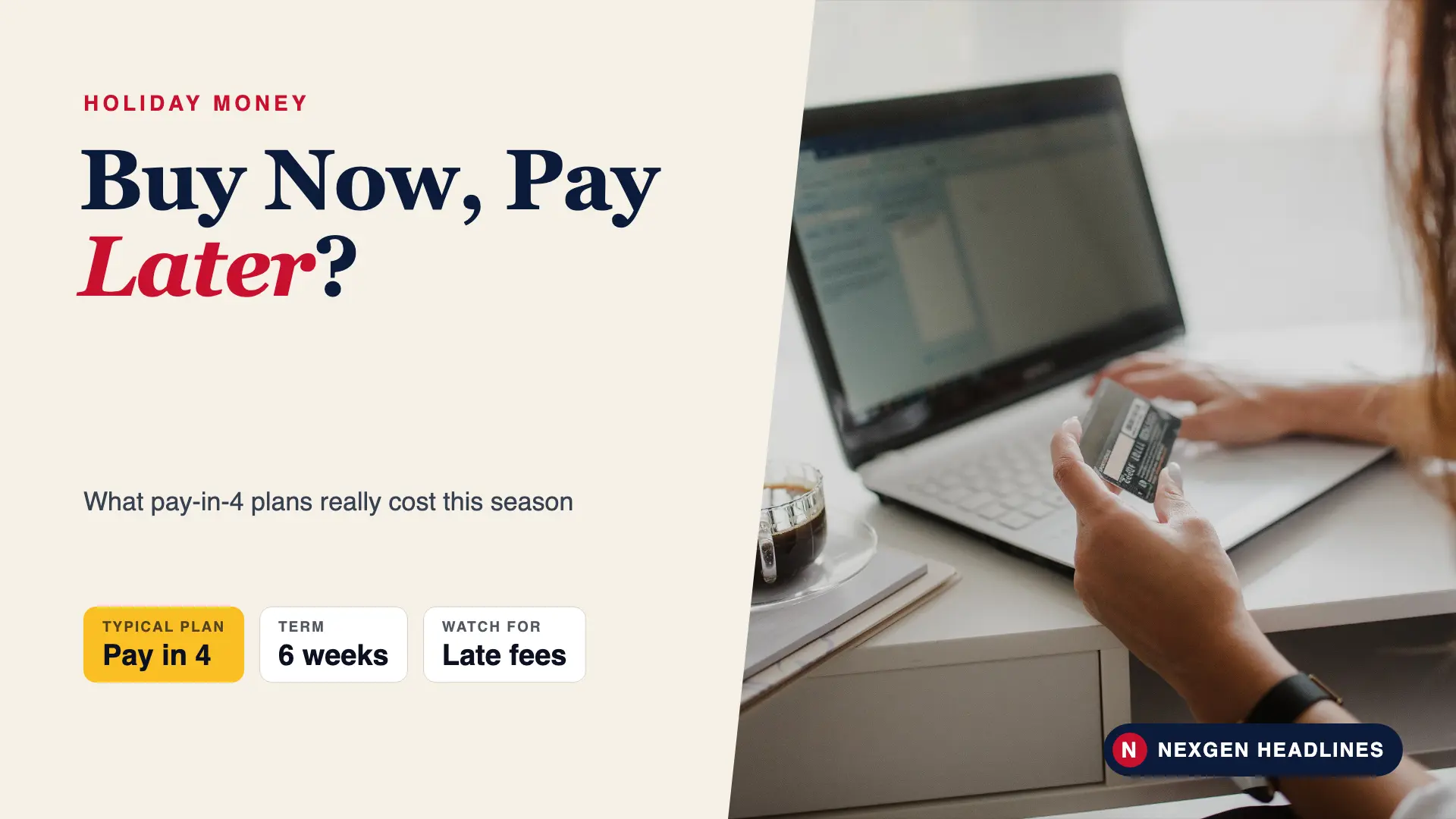
Featured image: A shopper holds a credit card at a laptop. Photo: Shixart1985 via Wikimedia Commons, CC BY 2.0; edited by Nexgen Headlines.