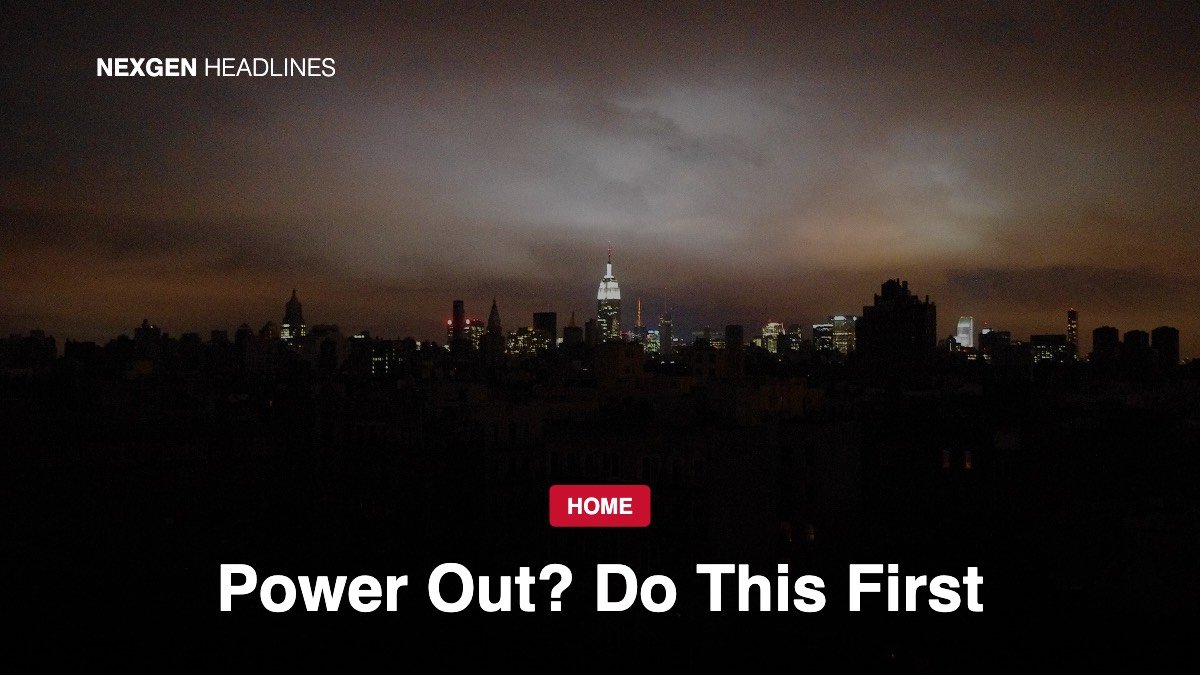

Quick answer: Keep the fridge and freezer closed: food stays cold about 4 hours in the fridge and about 48 hours in a full freezer, per Ready.gov. Run generators outdoors at least 20 feet from doors and windows, and never heat your home with a gas stove or oven.
Key takeaways: According to Ready.gov, a refrigerator keeps food cold for about 4 hours and a full freezer for about 48 hours if the doors stay closed. Throw out food that has reached 40°F or higher for two hours or more. Run generators outdoors at least 20 feet from doors and windows, and never heat your home with a gas stove or oven.
The first big storm I remember as a kid ended with my family eating ice cream for dinner because Mom said “it will melt anyway.” It was fun. It was also a lesson in what not to do with the rest of the fridge. Winter storms, heat waves and wildfire shutoffs mean outages can happen almost anywhere in the U.S., so a few minutes of planning now is worth it.
Before the lights go out: a short kit
- Nonperishable food and water.
- A flashlight for every household member, with spare batteries.
- A portable charger or power bank, kept charged.
- Coolers and ice, and an appliance thermometer for the fridge and freezer.
- A plan for refrigerated medicine and any power-dependent medical device. Ask your doctor or pharmacist.
During an outage
- Keep the fridge and freezer doors closed. Ready.gov says a fridge holds temperature for about 4 hours and a full freezer for about 48 hours.
- Use a thermometer. Throw out food that has reached 40°F or higher.
- Know the two-hour rule. Discard food exposed to 40°F or higher for 2 hours or more, or anything with an odd smell, color or texture. The official advice: when in doubt, throw it out.
- Medicine. If power is out more than a day, discard refrigerated medication unless the label says otherwise, and ask your pharmacist for a replacement.
Generator safety is not optional
- Run generators and their fuel only outdoors, at least 20 feet from windows, doors and attached garages.
- Install battery-backup carbon monoxide detectors on every level of your home.
- Keep the generator dry, let it cool before refueling, and use heavy-duty extension cords.
- Never use a gas stove or oven to heat your home.
My take
If you only do one thing this week, buy a cheap appliance thermometer and put it in the fridge. It takes the guessing out of “is this still safe?”, which is the question everyone asks at 2 a.m. in the dark.
Fridge food after an outage: keep or toss?
The big rule from FoodSafety.gov: a fridge keeps food safe for up to 4 hours without power if you keep the door shut. After that, perishable food that sat at 40°F or above for more than 2 hours should go. Never taste food to test it.
Here is a quick guide based on the federal chart. Check the full chart for items not listed.
| Food in the fridge | Above 40°F for 2+ hours |
|---|---|
| Raw or cooked meat, poultry, fish, seafood | Throw out |
| Lunch meat, hot dogs, bacon, sausage | Throw out |
| Milk, cream, yogurt, sour cream, soy milk | Throw out |
| Eggs and egg dishes | Throw out |
| Soft cheese (mozzarella, Brie, cottage, cream cheese) | Throw out |
| Shredded or low-fat cheese | Throw out |
| Cooked pasta, rice, potatoes; leftovers; pizza | Throw out |
| Opened baby formula | Throw out |
| Hard cheese (cheddar, Swiss, Parmesan) | Keep |
| Butter and margarine | Keep |
| Uncut fresh fruit and vegetables | Keep |
| Peanut butter, jelly, mustard, ketchup, pickles | Keep |
| Bread, rolls, tortillas, bagels | Keep |
| Opened mayonnaise or tartar sauce | Throw out if above 50°F for more than 8 hours |
Freezer food: when you can refreeze
A full freezer holds a safe temperature for about 48 hours. A half-full freezer lasts about 24 hours, if the door stays closed. Food can be refrozen if it still has ice crystals or is at 40°F or below. The quality may suffer, but it is safe.
- Meat, poultry and seafood: refreeze if it still has ice crystals. Throw out if it sat above 40°F for more than 2 hours.
- Ice cream and frozen yogurt: throw out once thawed, even if it still feels cold.
- Bread, muffins, waffles, flour and nuts: these can be refrozen in both cases.
- Frozen dinners and frozen pizza: refreeze only if they still have ice crystals.
Also read: Kayem meat recall 2026: which hot dogs and deli meats to check.
What to do in the first hour
- Check your breaker box. If only your home is dark, a tripped breaker may be the cause. If the whole street is dark, it is an outage.
- Report it to your utility. Use its app, website or outage line. Do not assume a neighbor already did. Save the outage number in your phone now.
- Unplug electronics. Ready.gov warns that power can come back with surges or spikes that damage TVs, computers and appliances. Leave one lamp on so you know when power returns.
- Write down the time. The 4-hour fridge clock starts when the power goes out. You will forget later.
- Save your phone battery. Turn on low-power mode and lower screen brightness. Use a power bank or your car charger, with the car outside, never in a garage.
- Check on neighbors. Older adults and people who use medical equipment may need help first.
Carbon monoxide: the hidden danger
One of the biggest outage dangers is carbon monoxide (CO), a gas you cannot see or smell. Generators, grills and camp stoves all make it. The CDC says more than 400 Americans die each year from unintentional CO poisoning not linked to fires. More than 100,000 visit an emergency department.
Know the symptoms. The CDC lists headache, dizziness, weakness, upset stomach, vomiting, chest pain and confusion. People often think it is the flu. People who are asleep can die before they feel anything.
- Run generators only outside, more than 20 feet from windows, doors and vents. Never in a garage, even with the door open.
- Never use a charcoal grill or camp stove indoors.
- Never heat your home with a gas oven or stovetop.
- Never run your car in an attached garage to charge a phone or warm up.
- Use battery-powered or battery-backup CO alarms near every sleeping area. The CDC says to replace them as the maker says, or every 5 years.
- If an alarm sounds or someone feels sick, get everyone outside into fresh air right away and call 911.
Medicine and medical devices
Ready.gov says to talk to your doctor before an outage about a plan for refrigerated medicine and devices that need power. Ask how long each medicine can be kept at warmer temperatures.
- Medicine in the fridge: if power is out for more than a day, Ready.gov says to throw it out unless the label says otherwise. Call your pharmacist about a replacement.
- Oxygen, CPAP or home dialysis: ask your supplier about backup batteries. Many utilities also keep a list of customers who rely on medical equipment. Call yours to ask.
- Extreme heat or cold: Ready.gov advises going to a community location with power, such as a cooling or warming center. Your city or county website lists them.
Outage kit: what it costs
You do not need to spend a lot. Here is a simple kit, from cheapest to most expensive. Prices vary by store and brand.
| Item | Why it helps | Priority |
|---|---|---|
| Fridge/freezer thermometer | Tells you if food stayed at 40°F or below | Must have |
| Flashlight or lantern for each person | Safer than candles, which can start fires | Must have |
| Battery-backup CO alarm | Warns you before CO makes you sick | Must have |
| Power bank | Keeps phones charged for alerts and calls | Must have |
| Cooler and ice packs | Holds fridge food longer | Nice to have |
| Hand-crank or battery weather radio | Gets alerts if cell service drops | Nice to have |
| Portable power station | Runs small devices without fumes | Optional |
| Portable generator | Runs bigger appliances, but only outdoors | Optional |
Common mistakes to avoid
- Opening the fridge “just to check.” Each opening lets cold air out. Use a thermometer instead.
- Tasting food to see if it is still good. Bacteria that cause illness often do not change the taste or smell.
- Using candles near curtains or kids. Battery lights are safer.
- Plugging a generator into a wall outlet. This is called backfeeding. It can hurt utility workers and start fires. Use heavy-duty extension cords or have an electrician install a transfer switch.
- Touching downed power lines. Treat every fallen line as live. Stay far away and call your utility or 911.
Recommended products
Simple items that make the next outage easier and safer.
- Fridge and freezer thermometer (2-pack)
- Battery-backup carbon monoxide alarm
- LED battery lantern
- Hand-crank NOAA weather radio with phone charger
- Portable power station for phones and small devices
Disclosure: As an Amazon Associate, Nexgen Headlines earns from qualifying purchases.
FAQ
Should I fill the freezer?
A fuller freezer holds its temperature longer, which is why the 48-hour figure applies to a full one.
Can I refreeze thawed food?
Check Ready.gov and USDA guidance for specifics. If it reached 40°F or higher for 2 hours, throw it out.
Source: Ready.gov, Power Outages. General information only.
Last reviewed: Oct. 23, 2026. Food and safety rules from federal agencies; check your utility for local outage help.
Sources: Ready.gov, Power Outages, FoodSafety.gov, Food Safety During Power Outage, CDC, Carbon Monoxide Poisoning Basics.