
Quick answer: The 2026 Nobel Prize announcements ran from October 5 through October 12, 2026, covering medicine, physics, chemistry, literature, peace and economics.
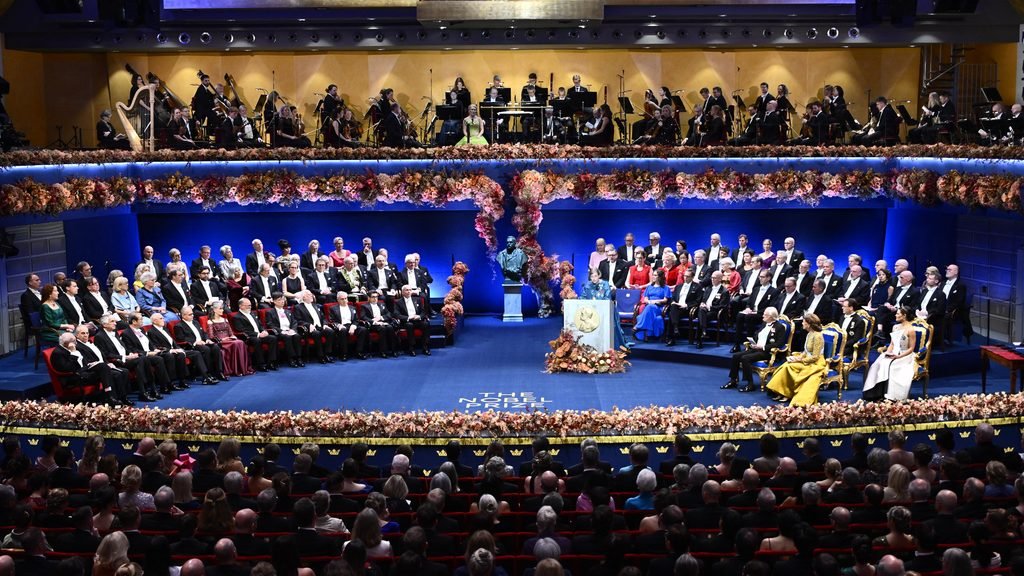
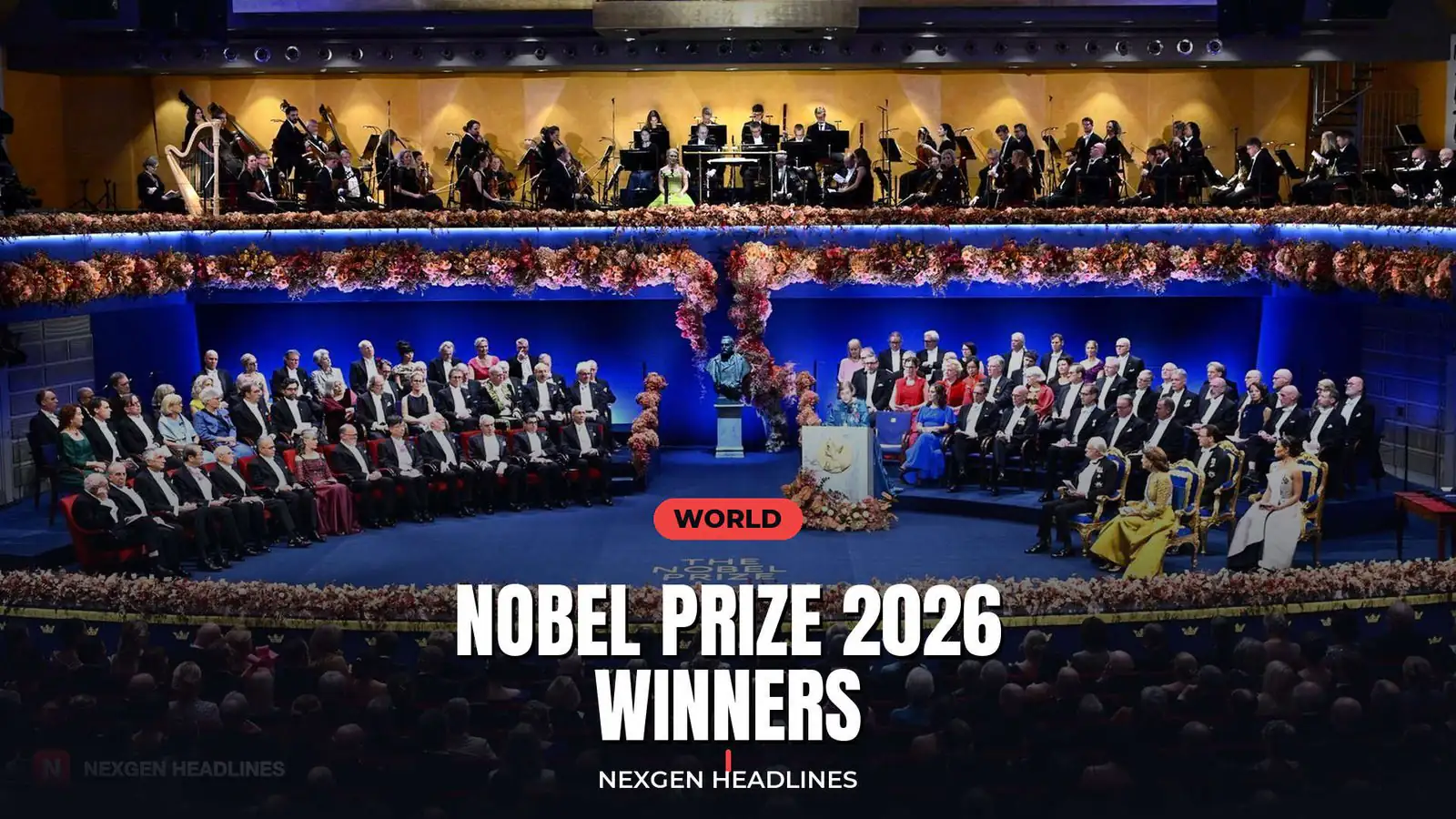
Nobel Prize 2026 has officially begun, launching one of the most closely watched award weeks in the world. From science and medicine to literature, peace and economics, this year’s prizes will recognize people and organizations whose work has made a significant contribution to humanity.
The official announcement period runs from October 5 through October 12, 2026, with one category announced on each scheduled day.
Medicine Opens Nobel Prize 2026 Week
The first major announcement came Monday, October 5, with the Nobel Prize in Physiology or Medicine.
The Nobel Assembly at Karolinska Institutet awarded the 2026 Medicine Nobel to Karl Deisseroth, Peter Hegemann and Georg Nagel for discoveries concerning light-gated ion channels and optogenetics.
Their work helped establish optogenetics, a powerful research technique that allows scientists to control specific cells using light.
The breakthrough has become an important tool for studying how the brain and nervous system function.
What Is Optogenetics?
Optogenetics combines genetics and light to control the activity of selected cells.
Scientists can introduce light-sensitive proteins into specific cells. Researchers can then use light to activate or inhibit those cells and observe what happens.
This approach has helped researchers investigate complicated biological processes with much greater precision.
The technique is especially important in neuroscience because it can help scientists understand how individual groups of neurons contribute to behavior and brain activity.
Why the Discovery Matters
The significance of the 2026 Medicine Nobel extends beyond a single laboratory technique.
Understanding how cells communicate and respond to signals is essential to modern biology and medicine. Optogenetics has provided researchers with a way to examine those processes with remarkable precision.
The technology has been used extensively in experimental research involving the brain and nervous system.
While Nobel-recognized discoveries do not automatically become medical treatments, research tools such as optogenetics can help scientists better understand diseases and eventually explore new therapeutic approaches.
More Nobel Winners Are Coming
The Medicine announcement is only the beginning of Nobel Prize 2026 week.
The next major announcement is the Nobel Prize in Physics, scheduled for Tuesday, October 6. Chemistry follows on Wednesday, October 7, while the Literature prize is scheduled for October 8.
The Nobel Peace Prize will be announced on October 9 in Oslo, followed by the prize in Economic Sciences on October 12.
That means several major announcements remain ahead, with global attention expected to focus on each category.
The Nobel Prize Has a Long History
The Nobel Prize has been awarded since 1901 and is based on the will of Swedish inventor and industrialist Alfred Nobel.
The prizes recognize achievements in physics, chemistry, physiology or medicine, literature and peace. The Sveriges Riksbank Prize in Economic Sciences in Memory of Alfred Nobel was established later.
Over more than a century, the awards have become one of the world’s most respected systems for recognizing major achievements.
The Nobel Foundation says the prize is intended to celebrate work that provides significant benefit to humanity.
Why Nobel Week Gets Global Attention
Nobel Week attracts attention because the awards cover subjects that affect people around the world.
A scientific discovery can change how researchers understand nature. A medical breakthrough can influence future healthcare research. Literature can introduce new ideas and perspectives, while the Peace Prize highlights efforts connected to peace and human rights.
For researchers and institutions, receiving a Nobel Prize can also bring worldwide attention to work that may otherwise be known mainly within specialist communities.
What to Watch Next
The coming days will reveal the remaining Nobel Prize 2026 laureates.
Physics could highlight a major discovery about the fundamental laws of nature. Chemistry may recognize work that changes how scientists understand materials or molecules. Literature will bring attention to a writer, while the Peace Prize will focus on an individual or organization working in the area of peace.
The Economic Sciences announcement will complete the main prize announcements on October 12.
Each winner will also receive worldwide attention as the Nobel organizations publish explanations of the achievements behind the awards.
Important News Takeaway
The Nobel Prize 2026 season has officially started, with the first award going to Karl Deisseroth, Peter Hegemann and Georg Nagel in Physiology or Medicine for discoveries concerning light-gated ion channels and optogenetics.
The announcement begins a full week of major international awards. Physics, Chemistry, Literature, Peace and Economic Sciences will follow through October 12.
For science and technology readers, the 2026 Medicine prize offers an especially interesting example of how a fundamental discovery can create a powerful new research tool. The remaining announcements could bring more groundbreaking achievements into the global spotlight.
Update: all six 2026 Nobel Prize winners
Nobel week is now over. All six 2026 prizes were announced between Oct. 5 and Oct. 12, 2026. Here is the full list, checked against the official press releases on NobelPrize.org.
| Prize (date announced) | Winner(s) | Why they won (official wording) |
|---|---|---|
| Physiology or Medicine (Oct. 5) | Karl Deisseroth, Peter Hegemann, Georg Nagel | “for their discoveries concerning light-gated ion channels and optogenetics” |
| Physics (Oct. 6) | Francis Halzen | “for decisive contributions to the IceCube Neutrino Observatory and the discovery of high-energy neutrinos of astrophysical origin” |
| Chemistry (Oct. 7) | Henri B. Kagan, Kenso Soai | “for the discovery of non-linear effects and autocatalysis in asymmetric organic synthesis” |
| Literature (Oct. 8) | Anne Carson | for a “bold and inventive” body of work in “playful dialogue with the classical tradition” |
| Peace (Oct. 9) | Navanethem “Navi” Pillay | “for her efforts to promote peace and international law” |
| Economic Sciences (Oct. 12) | Robert E. Hall, Michael Woodford | “for microeconomic foundations of macroeconomic stabilisation” |
Each prize is worth 12 million Swedish kronor this year, according to the press releases. When a prize has more than one winner, the money is split among them.
The American connection: U.S. schools behind 2026 winners
Several of this year’s winners work at U.S. universities. That matters for American readers, because much of this research was paid for, at least in part, by U.S. science funding over many years.
- Karl Deisseroth (Medicine) – Stanford University and the Howard Hughes Medical Institute. He earned his Ph.D. and M.D. at Stanford.
- Francis Halzen (Physics) – University of Wisconsin–Madison. He was born in Belgium in 1944.
- Robert E. Hall (Economics) – Stanford University. He was born in Palo Alto, California, in 1943.
- Michael Woodford (Economics) – Columbia University in New York. He was born in Chicopee, Massachusetts, in 1955.
The other winners are based in Germany (Hegemann at Humboldt University of Berlin; Nagel at the University of Würzburg), France (Kagan), Japan (Soai), Canada (Carson) and South Africa (Pillay).
Each prize in plain English
Physics: a telescope made of ice
Neutrinos are tiny particles that pass through the Earth, and through you, without leaving a trace. Halzen first pitched the idea of catching them in South Pole ice in 1988. The IceCube observatory he led fills one cubic kilometer of ice with light sensors and was finished in 2011.
When a neutrino hits an atom in the ice, it makes a faint flash of light. Those flashes help scientists trace particles back to violent events far outside our solar system.
Chemistry: why molecules have a “hand”
Many molecules come in left-handed and right-handed versions, like a pair of gloves. In drugs, one version can help while the other does nothing or causes harm. Kagan and Soai showed how small imbalances can grow during a reaction, which helps chemists make the version they want.
Peace: a career in international law
Pillay grew up under apartheid in Durban, South Africa. The Norwegian Nobel Committee notes she defended Nelson Mandela and other anti-apartheid activists early in her career. She later served as a judge at the International Criminal Tribunal for Rwanda and the International Criminal Court, and as U.N. High Commissioner for Human Rights.
Economics: the models the Fed uses
Hall and Woodford built the “New Keynesian” models that central banks use to decide when to raise or cut interest rates. The Royal Swedish Academy of Sciences says these models are now used by central banks and finance ministries around the world. In simple terms, their work shapes the thinking behind the rates on your mortgage, car loan and savings account.
Also read: Anne Carson Wins the 2026 Nobel Prize in Literature: Who She Is and Which Books to Read
What happens next: the Dec. 10 ceremonies
| Event | Where | When |
|---|---|---|
| Nobel Prize award ceremony (physics, chemistry, medicine, literature, economics) | Stockholm Concert Hall, Sweden | Dec. 10, 2026 |
| Nobel Peace Prize award ceremony | Oslo City Hall, Norway | Dec. 10, 2026 |
Dec. 10 is the anniversary of Alfred Nobel’s death, which is why both ceremonies fall on that day. Winners also give Nobel lectures in the days before. NobelPrize.org usually streams the ceremonies online for free, so you can watch from the U.S. Stockholm is six hours ahead of Eastern time, so a late-afternoon Stockholm event lands in the U.S. morning.
How to read about the winners for free
- Start with the “popular information” pages on NobelPrize.org. They explain each prize for non-experts, with simple drawings.
- Use your public library. Apps such as Libby and Hoopla, run through many U.S. libraries, often carry books by literature winners at no cost with a library card.
- Look for university pages. Stanford, Columbia and UW–Madison post free explainers and interviews when their faculty win.
- Watch the Nobel lectures. They are posted online after Nobel Week and are aimed at a general audience.
Common myths about the Nobel Prize
- “There is a Nobel Prize for math.” There is not. Alfred Nobel’s will named physics, chemistry, medicine, literature and peace only.
- “The economics prize is an original Nobel.” It was added later by Sweden’s central bank. Its formal name is the Sveriges Riksbank Prize in Economic Sciences in Memory of Alfred Nobel.
- “All prizes are given in Sweden.” The Peace Prize is chosen by a Norwegian committee and handed out in Oslo.
- “A Nobel discovery means a new treatment soon.” Not always. Optogenetics is mostly a lab research tool today, even though it helps scientists study brain disease.
FAQ
Who won the 2026 Nobel Peace Prize?
Navi Pillay of South Africa won “for her efforts to promote peace and international law.” It was announced in Oslo on Oct. 9, 2026.
How much money do Nobel winners get in 2026?
Each prize is 12 million Swedish kronor. Shared prizes are split among the winners. The dollar value changes with the exchange rate.
Did any Americans win a 2026 Nobel Prize?
Yes. Economics winners Robert E. Hall and Michael Woodford were both born in the U.S. Medicine winner Karl Deisseroth and physics winner Francis Halzen work at U.S. universities.
When is the 2026 Nobel Prize ceremony?
Dec. 10, 2026, in Stockholm for most prizes and in Oslo for the Peace Prize.
The bottom line
The 2026 Nobel class runs from brain science and South Pole physics to international law and the economics behind interest rates. Four winners have strong U.S. ties. The prizes will be handed out on Dec. 10, and you can follow it all for free online.
More sources: NobelPrize.org – All Nobel Prizes 2026; press releases for medicine, physics, chemistry, peace and economic sciences; NobelPrize.org – 2026 award ceremony.
THANKS FOR READING
Sources: NobelPrize.org: all 2026 prizes, Britannica.
Last reviewed: Nov. 6, 2026. Facts are as reported when this story was published on Oct. 5, 2026.