

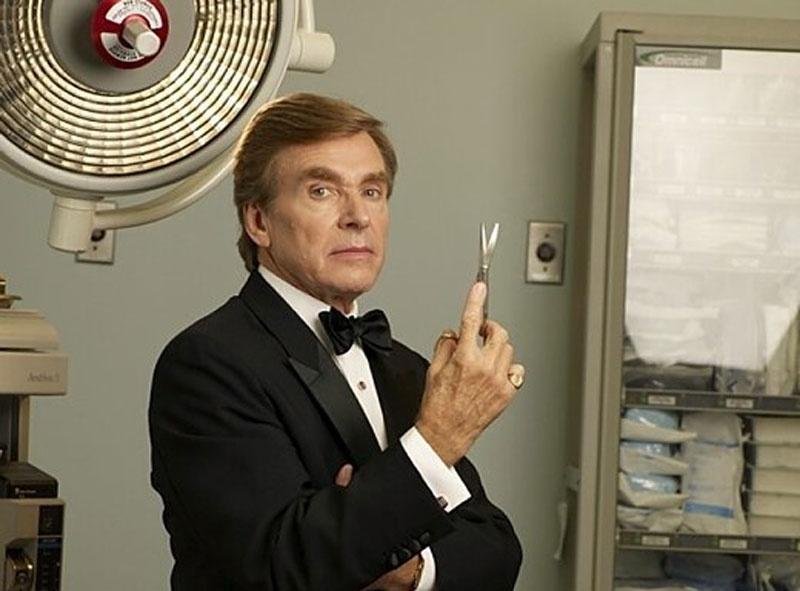
The Swan Surgeon Responds to a Controversial Revelation
The Swan Surgeon is responding to renewed questions about a private photo session involving contestants from Fox’s controversial reality series The Swan, more than two decades after the program first aired.
Plastic surgeon Dr. Randal Haworth, who was one of the medical experts featured on the show, has defended the previously undisclosed photo shoot described in Hulu’s new documentary, The Swan: Behind the Mirror.
Haworth characterized the project as “exceedingly artistic” and said the photographs were intended for a coffee-table book that was ultimately never published. He also maintained that the participants had agreed to take part.
The explanation has added another layer to a documentary that is already prompting former contestants and production insiders to reconsider their experiences on the series.
A Reality Show That Promised Transformation
The Swan originally aired in 2003 and 2004 and followed women undergoing dramatic physical transformations that included cosmetic surgery, fitness programs, dieting and life coaching.
The show’s format was built around the idea of transformation.
Contestants entered the program without seeing their reflection for an extended period. They worked with surgeons, trainers, therapists and other specialists before eventually seeing their new appearance.
The women were then placed in a competition that compared their transformations, with one contestant ultimately being selected as “The Swan.”
At the time, the format attracted significant attention because it combined reality television with extensive cosmetic procedures.
More than 20 years later, Hulu’s documentary is revisiting what happened behind the scenes and asking former participants and members of the production team to discuss experiences that were not fully shown to television audiences.
What the Documentary Reveals
The Swan: Behind the Mirror premiered on Hulu on September 29, 2026.
The documentary brings former contestants and people involved with the original production together to examine the show’s legacy and the experiences of women who participated.
Among the issues discussed is an off-site photo session that was not part of the televised program.
Former contestants Amy Williams and Kari Bravata have described being brought into a private setting for a photo shoot in which they were asked to pose without clothing.
Their accounts have raised questions about how the session was presented to contestants and whether they fully understood its purpose at the time.
The documentary has therefore shifted attention away from the transformations viewers saw on television and toward the boundaries surrounding the show’s production.
Haworth Says the Project Was Artistic
Haworth has offered a different explanation of the photo session.
According to reporting surrounding the documentary, he said the photographs were intended as an artistic project and were supposed to become part of a coffee-table book.
That book was never published.
Haworth has also maintained that the women involved had consented to participate.
His description is important because it directly addresses the central question raised by former contestants: why the photographs were taken and what they were told about the project.
The disagreement between those accounts is now part of the broader discussion surrounding The Swan.
The documentary allows former participants to describe their experiences while also bringing attention to explanations from people involved with the original program.
Why the Story Is Returning in 2026
The renewed interest is closely connected to the release of The Swan: Behind the Mirror.
When The Swan originally aired, reality television was still developing into the enormous entertainment industry it would later become.
Programs frequently placed participants in unusual situations, and production standards were different from those audiences expect today.
The new documentary gives former contestants an opportunity to revisit those experiences with the perspective of more than two decades.
That distance matters.
People who participated in the show in their younger years can now discuss what they remember, what they understood at the time and how they view the experience today.
Former Contestants Describe Discomfort
Some former contestants have described the photo session as confusing or uncomfortable.
Their accounts raise questions about how participants were informed about the project and how much control they felt they had over the situation.
Those accounts are part of the documentary’s larger examination of the reality show’s production environment.
The women who participated in The Swan had already agreed to an unusually demanding program involving significant physical changes, strict schedules and close supervision.
According to material revisited in the documentary, contestants followed structured diets and exercise programs and were separated from family and friends during portions of the transformation process.
The documentary explores how those rules affected participants and how the experience looked from the inside.
The Strict Rules of the Original Show
One of the most striking elements being revisited is the strict set of rules contestants agreed to follow.
Former participants were expected to follow the program’s diet and exercise requirements. They also underwent regular therapy and were instructed not to look at themselves in mirrors.
The purpose was to keep contestants focused on the transformation process rather than constantly examining their appearance.
The restrictions were presented as part of the show’s format, but former contestants now have an opportunity to discuss how those rules actually felt.
The documentary suggests that the reality behind the television production was considerably more complicated than the polished transformation stories presented to viewers.
A Different Era of Reality Television
The controversy also reflects how reality television has changed.
In the early 2000s, cosmetic-transformation programs were popular across American television.
Shows built around weight loss, makeovers, cosmetic surgery and personal reinvention attracted large audiences.
The Swan pushed that concept further by combining extensive cosmetic procedures with a competitive reality-TV structure.
The contestants’ physical changes were central to the program’s appeal.
Today, however, audiences and participants often ask more questions about informed consent, psychological support, privacy and the responsibilities of producers.
That shift in expectations is one reason the documentary has attracted renewed attention.
The Surgeon’s Role in the Original Series
Haworth was one of the physicians prominently associated with The Swan.
As a plastic surgeon, his role involved performing procedures that were part of contestants’ transformations.
The series presented the medical team as an important part of the process, alongside fitness experts, therapists and other specialists.
His response to the photo-shoot controversy is therefore significant because he was directly connected to the production and is now explaining how he viewed the project.
His claim that the photographs were intended to be artistic contrasts with the discomfort expressed by some former contestants.
The Larger Conversation About Consent
At the center of the controversy is a broader question about consent.
Consent is not simply whether someone eventually agrees to participate. Questions can also arise about what a person understood about the purpose of an activity, who was present, how the material would be used and whether the participant felt free to decline.
The documentary has brought those questions into the discussion surrounding The Swan.
Haworth says participants consented to the photographs.
Former contestants have described the experience differently.
Those competing accounts are now part of the public conversation generated by the documentary.
A Show Being Reexamined Two Decades Later
The renewed attention toThe Swan Surgeon is not limited to the photo shoot.
The documentary examines the entire culture surrounding the series and asks whether the transformation promised by the program came with costs that were not visible to viewers.
Former contestants have discussed the strict rules, isolation, physical procedures and emotional pressure associated with the experience.
The series may have been presented as an opportunity for dramatic personal change, but the documentary gives participants a chance to explain how they experienced that process themselves.
What Comes Next for the Conversation
The release of The Swan Surgeon: Behind the Mirror means the conversation around the original series is likely to continue.
For viewers who remember The Swan Surgeon, the documentary provides a new perspective on a program that once represented an extreme form of reality television.
For former contestants, it provides an opportunity to revisit experiences that were largely understood through the edited television version of events.
And for people involved in the original production, including The Swan Surgeon, it creates an opportunity to explain decisions that are now being examined with the benefit of more than 20 years of hindsight.
The disagreement over the photo shoot is unlikely to be understood through a single account alone.
The documentary presents former contestants’ memories, while Haworth has offered his own explanation of the purpose and consent surrounding the project.
Why “The Swan” Still Matters
More than two decades after its original run, The Swan remains an unusual case study in reality television.
The program combined cosmetic surgery, personal coaching, strict rules and competition into a format designed to produce dramatic transformations.
Its return through The Swan: Behind the Mirror shows that the story did not necessarily end when the cameras stopped rolling.
The new documentary is allowing participants and production figures to revisit what happened behind the scenes, including an artistic photo project that was never publicly released.
For audiences today, the discussion is less about the television makeover itself and more about the people who lived through it.
Important News Takeaway
The latest controversy surrounding The Swan Surgeon centers on Dr. Randal Haworth’s defense of a previously undisclosed photo session involving contestants from the 2000s reality series. Haworth has described the project as highly artistic, intended for an unpublished coffee-table book, and said participants consented. Former contestants have described the experience differently, making the issue part of Hulu’s broader documentary examination of the series.
THANKS FOR READING