
Updated Oct. 26, 2026: rewritten to explain how the U.S.-Iran war and Iran’s oil leverage reach American wallets, from gas and heating bills to interest rates, with practical steps to protect your budget.
Quick answer: Iran’s biggest weapon in this war is oil. By disrupting the Strait of Hormuz, where about one-fifth of the world’s oil normally passes, it has pushed up prices worldwide. In the U.S., gas averaged $4.29 a gallon on Oct. 25, 2026 (AAA), and the September inflation report showed gasoline up 34.2% from a year earlier, lifting overall inflation to 3.7%. That helped push the Federal Reserve to raise rates in September, and mortgage rates are running above 7%. America’s own oil production and Gulf pipelines that bypass Hormuz soften the blow, but they can’t stop it.
The war’s effect on your money at a glance
| Measure | Latest | Source |
|---|---|---|
| U.S. average gas price | $4.29/gallon (Oct. 25, 2026) | AAA |
| Gas a year earlier | About $3.06/gallon | AAA, via news reports |
| Gasoline prices, 12-month change | +34.2% (September) | BLS |
| Overall inflation (CPI) | 3.7% (September) | BLS |
| Fed’s benchmark rate | 3.75%–4.00%, raised Sept. 16 | Federal Reserve |
| 30-year mortgage rate | About 7.3%–7.4% in October | Freddie Mac |
How Iran uses oil as leverage
The Strait of Hormuz is a narrow sea lane between Iran and Oman. In 2024, about 20 million barrels of oil a day flowed through it, roughly a fifth of global consumption, according to the U.S. Energy Information Administration. Oil from Saudi Arabia, Iraq, Kuwait, the UAE and Qatar’s gas exports all rely on it.
Iran doesn’t need to close the strait completely to cause damage. Attacks on a few tankers, mines in the water, or threats against shipping are enough to drive up insurance costs and scare off ship owners. In October 2026, the UK’s maritime security agency logged 23 attacks on ships in the first 18 days of the month, almost double the war’s average.
Why the U.S. and its allies are less exposed than before
| Buffer | How it helps |
|---|---|
| U.S. oil production | The U.S. is one of the world’s top oil producers and a major exporter, so it isn’t cut off from supply. It still pays global prices, though. |
| Saudi East-West pipeline | Moves crude from eastern oil fields to Red Sea ports, skipping Hormuz. Reuters reported Saudi Arabia was weighing an expansion of up to 2 million barrels a day. |
| UAE’s Fujairah pipeline | Carries roughly 1.5 million to 1.8 million barrels a day to a port outside the strait |
| Strategic Petroleum Reserve | Emergency oil the U.S. government can release to calm markets |
| Sanctions | New U.S. sanctions in August targeted networks that help Iran sell oil, cutting its income |
These buffers explain why prices haven’t spiked even higher. But oil is priced globally. When supply anywhere gets tight, American drivers pay more too.
Also read: How Low Is America’s Emergency Oil Reserve? The SPR in 2026
Where you feel it, and what to do
1. Gas
Fuel is the most direct hit. Compare prices with an app, join a grocery or warehouse fuel program, keep tires properly inflated and combine errands. Don’t fall for “fuel saver” gadgets; the FTC has warned that most don’t work.
2. Home heating
If you heat with heating oil or propane, expect higher winter bills. Ask your supplier about budget plans that spread costs over the year, and get on low-income energy help lists early if you qualify for LIHEAP.
3. Groceries and shipping
Diesel runs the trucks that stock stores, so higher fuel costs ripple into food prices. Store brands, sales cycles and meal planning help offset it.
4. Borrowing costs
Higher inflation led the Fed to raise rates for the first time since 2023. Credit card rates, which follow the Fed, are already high. Paying down variable-rate debt is one of the best moves you can make right now.
5. Your retirement account
War news can make markets swing. History shows that selling in a panic often locks in losses. If you’re unsure about your mix of investments, talk to a fee-only fiduciary adviser. This article isn’t investment advice.
Made-up examples (not real people): These are made-up households to show the math.
The Nguyens in Atlanta buy about 20 gallons of gas a week. At $1.23 more per gallon than last year, that’s about $24.60 a week, or roughly $1,280 a year. They cut about a quarter of that by carpooling to work and using a warehouse club’s gas station.
Rita in Vermont heats her home with oil. She signs up for her supplier’s monthly budget plan in October, so a cold January doesn’t hit her with one huge bill.
A war-proof household budget checklist
- Re-price your commute. Multiply your weekly gallons by today’s price, not last year’s, and adjust your monthly budget.
- Lock in winter heating early. Ask about fixed-price or budget plans before the coldest months.
- Attack variable-rate debt. Credit cards and HELOCs get more expensive when the Fed raises rates.
- Keep an emergency fund. Even one extra month of expenses gives you room if prices jump again.
- Shop insurance at renewal. Car insurance and other bills are rising too; comparing quotes can offset gas costs.
- Avoid panic moves. Don’t hoard fuel, and don’t make big investment changes based on one day’s headlines.
What the Fed’s Oct. 27–28 meeting means for you
The Federal Reserve sets short-term interest rates. It raised them in September because inflation, driven by gas, moved further from its 2% goal. At this week’s meeting, it can hold steady, raise again or signal what comes next.
Any change shows up quickly in credit card rates and slowly in mortgage rates, which follow longer-term bond markets. If you’re shopping for a home, compare lenders and ask about rate locks. If you carry card balances, paying them down protects you whatever the Fed decides.
Iran’s weak spots
Oil leverage cuts both ways. Iran needs oil revenue, and the U.S. naval blockade of its ports and new sanctions make it harder to sell. China has been Iran’s largest buyer, and Washington has tried to pressure the companies and banks involved without starting a wider fight with Beijing.
Iran’s ceasefire proposal asks for an end to the U.S. blockade and the lifting of oil sanctions. That shows how much the pressure on its income matters.
How oil prices turn into pump prices
Crude oil is the biggest single part of what you pay for gasoline, according to the Energy Information Administration. The rest covers refining, distribution and taxes, including the federal tax of 18.4 cents a gallon. When crude jumps, pump prices usually follow within days. When crude falls, stations tend to cut prices more slowly, a pattern economists call “rockets and feathers.” That’s why gas can stay high for a while even after oil prices ease.
What could bring prices down
- A ceasefire that reopens the Strait of Hormuz to normal traffic.
- Fewer ship attacks, which would lower war-risk insurance costs.
- More oil from elsewhere, including U.S. producers and Gulf pipelines that bypass the strait.
- Lower winter demand worldwide if the economy slows.
Any of these could ease prices, but none is certain. Plan your budget around today’s prices, not hoped-for ones.
Key dates to watch
- Oct. 27–28: Federal Reserve meeting and rate decision.
- Nov. 3: Midterm elections.
- Mid-November: October inflation report from the Bureau of Labor Statistics.
FAQ
How does the Iran war affect U.S. gas prices?
Iran has disrupted the Strait of Hormuz, where about one-fifth of the world’s oil normally passes. Less supply means higher global prices. AAA’s U.S. average was $4.29 a gallon on Oct. 25, 2026.
Why did the Fed raise interest rates in 2026?
Inflation climbed as gas prices jumped. The Fed raised its benchmark rate to 3.75%–4.00% on Sept. 16, 2026, its first increase since 2023.
Does the U.S. get oil from Iran?
No. U.S. sanctions bar Iranian oil imports. But oil is priced globally, so disruptions anywhere raise prices for Americans.
Can Saudi Arabia and the UAE avoid the Strait of Hormuz?
Partly. Saudi Arabia’s East-West pipeline and the UAE’s Fujairah pipeline move some oil around the strait, but not nearly all of it.
Should I change my 401(k) because of the war?
We can’t give personal investment advice. In general, panic selling during market swings often locks in losses. A fee-only fiduciary adviser can review your situation.
Bottom line
Iran’s oil leverage is why the war shows up in your budget: gas near $4.29, inflation at 3.7% and higher interest rates. America’s own production and Gulf pipelines limit the damage, but they don’t erase it. Focus on what you control: fuel costs, heating plans and paying down variable-rate debt.
Last reviewed: Oct. 26, 2026. Prices change daily.
Sources: AAA gas prices; BLS: Consumer Price Index (Sept. 2026); Federal Reserve: FOMC; Freddie Mac via FRED; U.S. Energy Information Administration; CBS News.
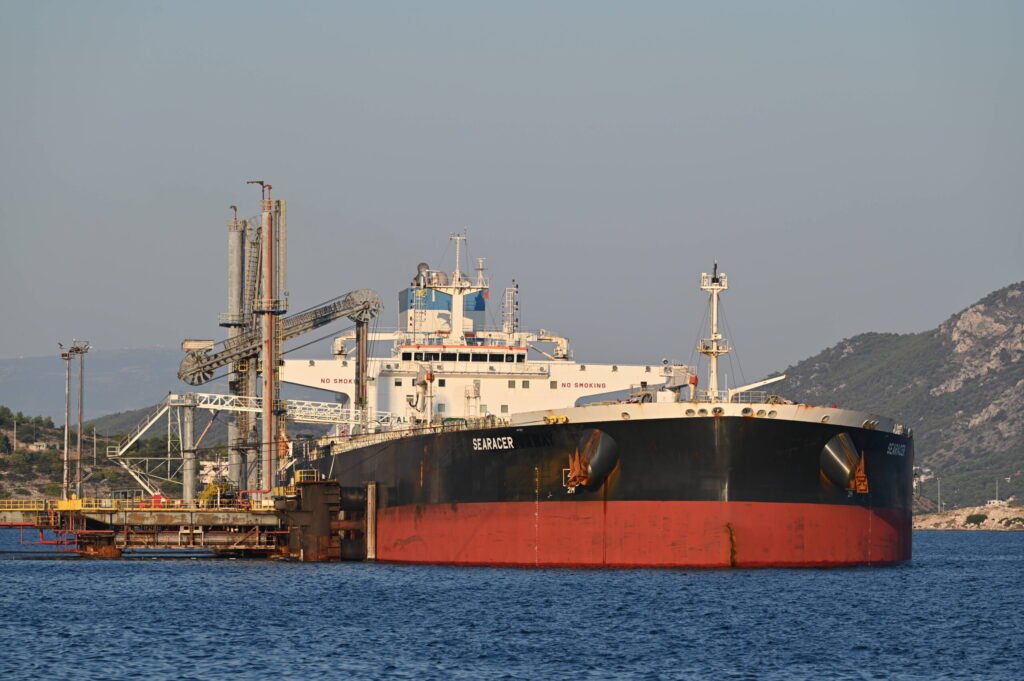
Featured image: An oil and gas tanker at sea (file photo). Photo: Jernej Furman / Wikimedia Commons, CC BY 2.0; edited by Nexgen Headlines.