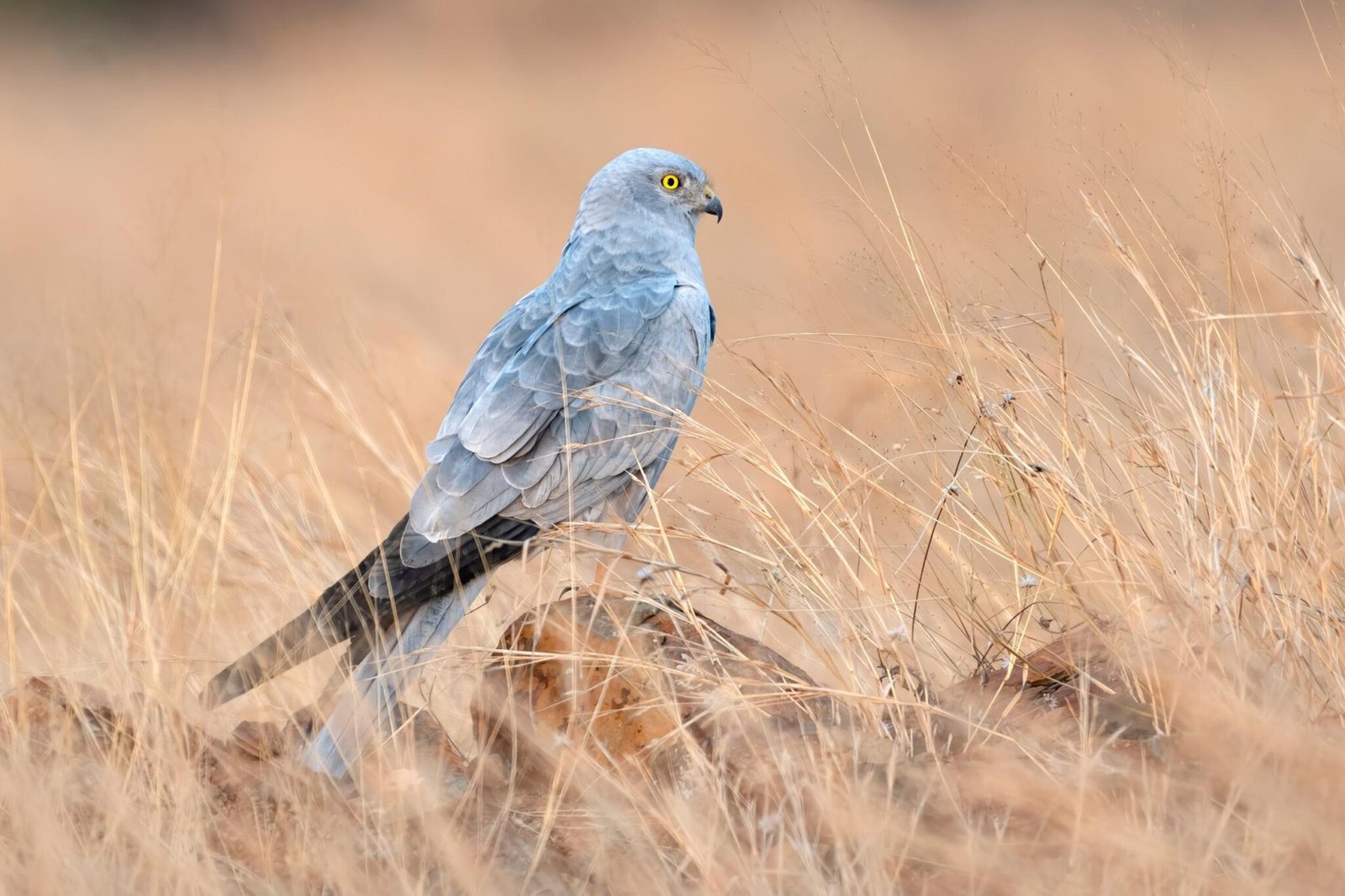

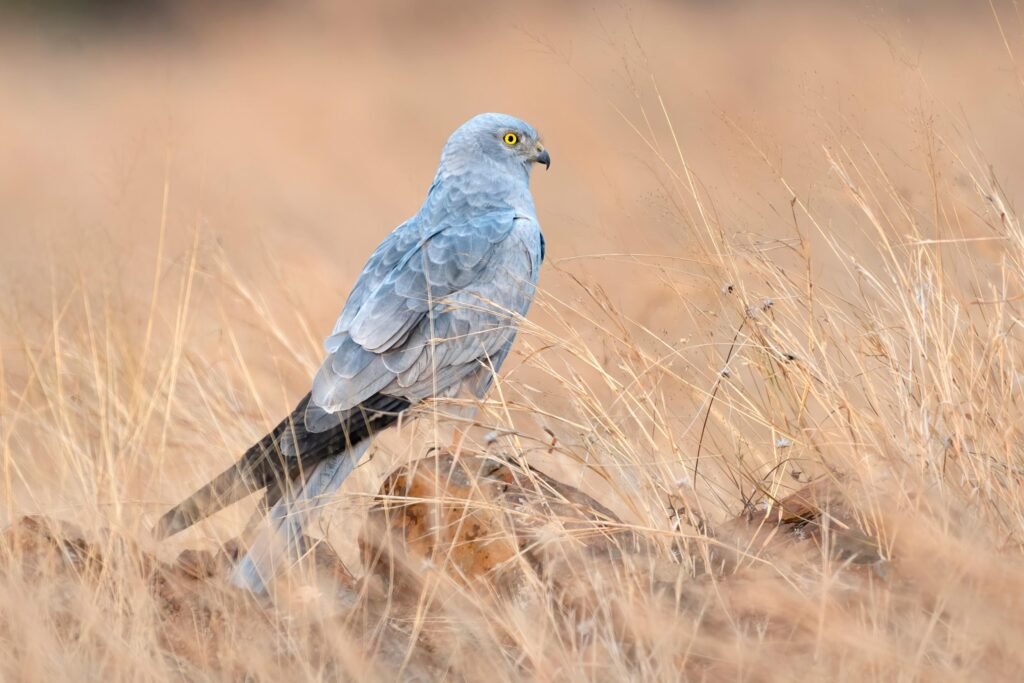
Montagu’s Harrier has become the center of an extraordinary conservation success story in Britain after one male bird helped produce six chicks with two different females — while the exact location of the nests remains a closely guarded secret.
- A Rare Bird With an Extraordinary Story
- Meet AU, the Remarkable Male
- Why the Location Is Being Kept Secret
- Farming Cooperation Made the Difference
- Ground Nesting Makes the Species Vulnerable
- The Male’s Incredible Courtship Display
- Six Chicks Bring New Hope
- Scientists Are Tracking the Young Birds
- Migration Is Another Major Challenge
- A Population That Nearly Disappeared
- Why Conservationists Don’t Want Too Much Attention
- Farmers Are Essential Partners
- A Cautious Reason for Optimism
- The Bigger Conservation Lesson
- What Happens Next?
- Why This Story Matters
- Summary
The rare bird of prey, known by the leg-ring name AU, has given conservationists new hope after Britain went several years without successfully producing a new generation of Montagu’s harriers. This summer, the 10-year-old male attracted two females and helped establish two separate nests, resulting in six chicks successfully fledging.
The unusual breeding success is particularly important because Montagu’s harriers are among Britain’s rarest breeding birds. Conservationists now believe careful protection of nesting sites, cooperation with farmers and improved monitoring could help the species survive in Britain.
A Rare Bird With an Extraordinary Story
Montagu’s harriers are elegant, long-winged birds of prey that migrate between Africa and Europe.
Every spring, some birds travel north from sub-Saharan Africa to breeding grounds across Europe. Only a small number make their way to Britain, making the country’s population especially vulnerable to changes in habitat, farming practices and breeding success.
The species was placed on Britain’s red list of birds at greatest conservation concern in 2021.
The situation became particularly worrying when no breeding pairs were recorded in Britain between 2020 and 2023.
Then AU appeared to change the story.
Meet AU, the Remarkable Male
AU was originally ringed as a chick in 2016 in a different part of Britain.
At the time, nobody could have predicted that the bird would eventually become one of the most important breeding males for the country’s remaining population.
The Royal Society for the Protection of Birds, or RSPB, says AU has now been responsible for at least 16 chicks since 2018.
His latest achievement may be his most significant yet.
During May, AU performed spectacular aerial courtship displays that attracted two females. The birds eventually established two separate nests, producing six young.
The RSPB has described him as effectively helping to keep Britain’s Montagu’s harrier population alive.
Why the Location Is Being Kept Secret
One of the biggest mysteries surrounding the story is the location of the nests.
Conservationists have deliberately refused to reveal exactly where the birds are breeding.
That is not simply an attempt to create excitement.
It is a serious protection measure.
Montagu’s harriers are highly sensitive to disturbance, and human activity around a nest can potentially interfere with breeding.
The RSPB says the location has been kept secret because the birds may return to the same breeding sites in future years. The nests are also located on private land.
Keeping the location confidential helps prevent crowds of birdwatchers, photographers and curious visitors from accidentally disturbing the birds.
Farming Cooperation Made the Difference
The birds’ nesting success is also closely connected to cooperation from local farmers.
Unlike many birds of prey that nest in trees or cliffs, Montagu’s harriers can nest on the ground, including within agricultural fields.
That creates a major problem.
A nest hidden inside a crop field can easily be destroyed during harvesting unless farmers know where it is and can adjust their plans.
In this case, a farmer left a patch of barley specifically as habitat for the birds.
One of the two nests was discovered within that protected patch, while the second nest was less than a mile away.
That cooperation allowed the young birds to develop safely.
Ground Nesting Makes the Species Vulnerable
The nesting behavior of the Montagu’s Harrier creates several conservation challenges.
Ground nests are vulnerable to:
- Agricultural machinery
- Harvesting
- Predators
- Human disturbance
- Extreme weather
- Habitat changes
A nest can be extremely difficult to detect from the ground.
That means conservationists often depend on careful observation and cooperation with landowners.
Protecting even a small area around a nest can make the difference between a successful breeding season and the loss of an entire brood.
The Male’s Incredible Courtship Display
AU’s success began with an impressive display in the sky.
Montagu’s harriers perform an aerial courtship behavior sometimes called “skydancing.”
The display can involve dramatic dives, loops, twists and U-shaped movements high above the ground.
The male’s performance is designed to attract a female and demonstrate his fitness.
According to the RSPB, AU spent about 10 days performing these spectacular displays in May before successfully attracting two females.
For birdwatchers fortunate enough to witness it, the sight is extraordinary.
A graceful raptor suddenly climbs high above the landscape before diving and twisting through the air.
Six Chicks Bring New Hope
The six chicks produced this year represent far more than a successful breeding season.
They are a potential foundation for the future of the species in Britain.
Each surviving juvenile increases the possibility that Montagu’s harriers could establish a stronger breeding population in future years.
The birds will eventually leave Britain and migrate toward wintering grounds in sub-Saharan Africa.
Their survival journey will be long and challenging.
Scientists Are Tracking the Young Birds
Conservationists have taken an important new step by fitting two juvenile females with satellite tracking devices.
The tags were placed on one chick from each of the two nests.
This is reportedly the first time juvenile Montagu’s harriers in Britain have been fitted with satellite tags for conservation monitoring.
The technology could provide valuable information about where the young birds travel, how they survive migration and whether they eventually return to Britain to breed.
The journey could cover thousands of miles.
Understanding that journey could help scientists identify threats outside Britain as well as within it.
Migration Is Another Major Challenge
For a bird that travels between Africa and Europe, survival depends on much more than conditions at the nesting site.
Montagu’s harriers face hazards throughout their migration.
They must find food, avoid predators and navigate changing landscapes across multiple countries.
Habitat loss in wintering areas can affect populations just as severely as problems at European breeding grounds.
Satellite tracking therefore offers conservationists a much broader picture of the species’ life.
A Population That Nearly Disappeared
The current success is especially remarkable when compared with the species’ history in Britain.
The breeding population reached around 30 pairs in the mid-1950s before falling dramatically.
By 1974, the British breeding population had disappeared.
The species later returned, with as many as 13 pairs recorded in the late 2000s, but numbers remained extremely fragile.
That history explains why six new chicks can generate so much excitement among conservationists.
For a common bird, six chicks might be routine.
For Britain’s Montagu’s harriers, they are enormously valuable.
Why Conservationists Don’t Want Too Much Attention
It may seem strange that conservationists would keep such a positive story partly hidden.
Normally, publicity can help endangered species by encouraging people to support conservation.
But rare birds face a unique problem: too much attention can sometimes harm the animals conservationists are trying to protect.
If the exact location became widely known, large numbers of people could travel there hoping to photograph the birds.
Even well-intentioned visitors could disturb nesting adults.
That is why secrecy can sometimes be an important conservation tool.
Farmers Are Essential Partners
The success of the Montagu’s Harrier also demonstrates how wildlife conservation increasingly depends on cooperation between farmers and environmental groups.
Agricultural land is not simply a place where wildlife disappears.
With the right management, farms can provide important habitats.
Leaving part of a field unharvested, protecting a nest and adjusting machinery schedules can give vulnerable birds the opportunity to raise their young.
The relationship between conservationists and farmers could therefore become a model for protecting other threatened farmland species.
A Cautious Reason for Optimism
The latest breeding success does not mean Britain’s Montagu’s harrier population has recovered.
Six chicks are an encouraging development, but the species remains extremely rare.
The young birds must survive migration and adulthood before they can contribute to future breeding.
Still, conservationists now have something they did not have a few years ago: evidence that successful breeding is possible.
And AU has demonstrated that one determined male can make an extraordinary difference.
The Bigger Conservation Lesson
The story of the Montagu’s Harrier illustrates an important truth about endangered species.
Conservation does not always begin with huge national programs or massive protected areas.
Sometimes it begins with one farmer protecting a small section of a field.
Sometimes it involves one scientist monitoring a nest.
Sometimes it depends on keeping a location secret.
And sometimes, remarkably, it comes down to one bird returning year after year and successfully raising another generation.
What Happens Next?
The next stage will be following the young birds as they leave Britain.
The satellite tags fitted to the two juvenile females could provide unprecedented information about their migration routes and survival.
Conservationists will also continue monitoring AU and watching to see whether the adult birds return to the same area next year.
If they do, the site could become an increasingly important breeding location for the species.
Why This Story Matters
The Montagu’s Harrier is more than a rare bird with an unusual family structure.
Its story demonstrates how wildlife can recover when science, farmers, conservationists and local communities work together.
The decision to keep the nesting location secret may frustrate curious bird lovers, but it could ultimately help ensure that these remarkable birds have a future in Britain.
Summary
The Montagu’s Harrier is showing promising signs of recovery in Britain after a remarkable breeding season led by a male known as AU. The 10-year-old bird attracted two females and helped produce six chicks in two separate nests. Conservationists have kept the exact nesting location secret because the birds are highly sensitive to disturbance and may return to the same sites. Cooperation with farmers, including protecting a section of barley habitat, helped the chicks survive. Two juvenile females have also been fitted with satellite tags for the first time in Britain, potentially providing valuable information about their long migration. Although the species remains extremely rare, AU’s success offers conservationists a powerful reason for cautious optimism.
THANKS FOR READING