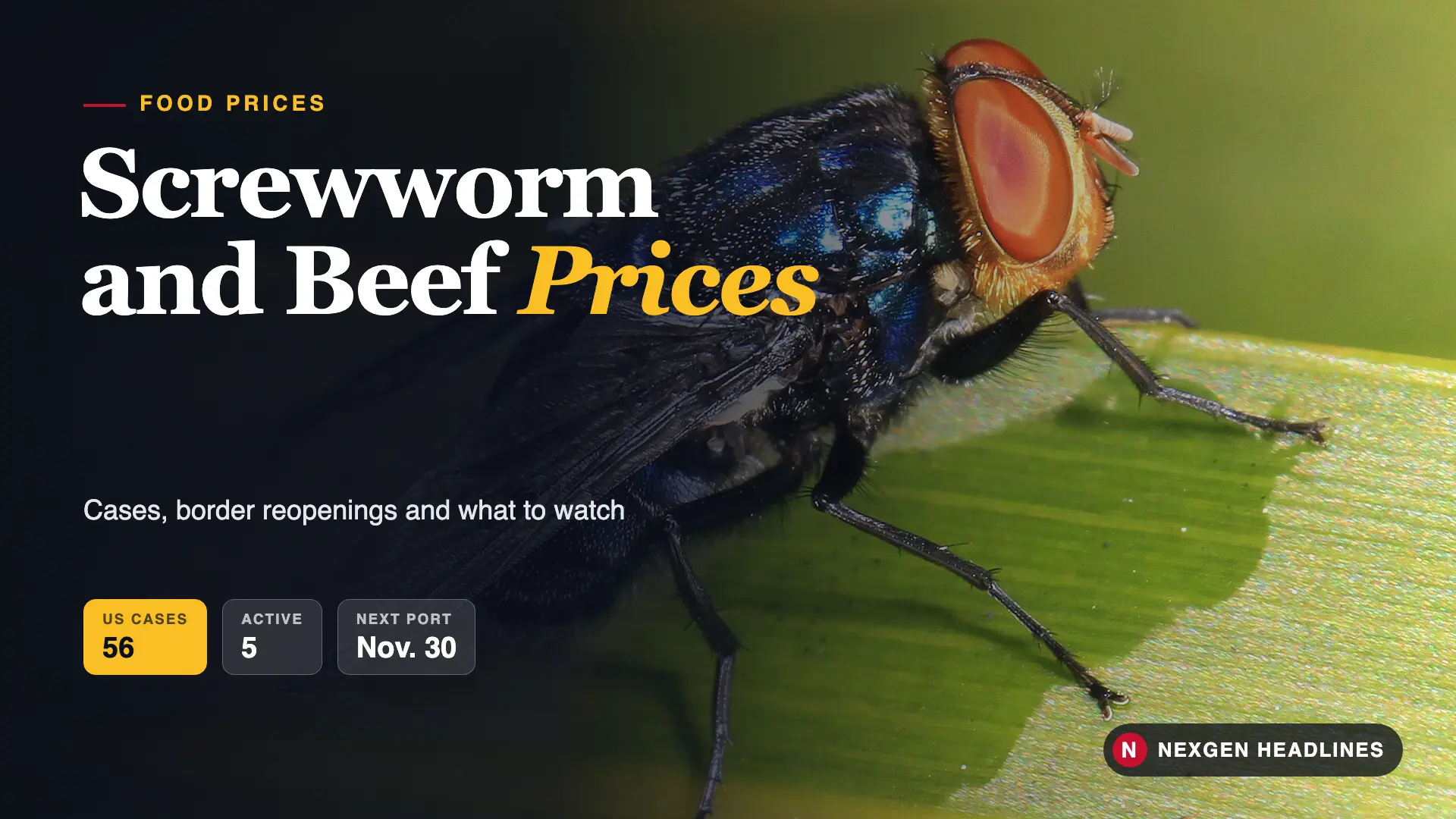

Updated Oct. 26, 2026: rewritten with the latest USDA case numbers, border reopenings and what screwworm means for beef prices, pets and families.
Quick answer: New World screwworm is a parasitic fly whose larvae eat living flesh in animals. The USDA has confirmed 56 US cases since June 2026, with 5 still active, Reuters reported on Oct. 20. Much of southern New Mexico is now a designated infested zone. The USDA is reopening cattle imports from Mexico in stages, with Columbus, New Mexico, set for Oct. 26 and Nogales, Arizona, for Nov. 30 if conditions allow. The import pause has been linked to record-high ground beef prices.
Screwworm in the US at a glance
| Item | Latest |
|---|---|
| Confirmed US cases since June 2026 | 56 (5 active), per USDA via Reuters |
| First US wildlife detection | Confirmed by USDA APHIS |
| New Mexico | 3 cases the week of Oct. 16 (Grant and Otero counties); much of the south is an infested zone |
| Border reopenings so far | Douglas, Ariz. (August); Santa Teresa, N.M. (September) |
| Next reopenings | Columbus, N.M. (Oct. 26); Nogales, Ariz. (Nov. 30, planned) |
| Beef prices | Ground beef at record highs this year, per Reuters |
The USDA says the reopening schedule can change if animal health risks rise.
What is New World screwworm?
Screwworm flies lay eggs in open wounds, the navel of newborn animals, or other moist spots. The larvae burrow into living tissue as they feed. Without treatment, an infested animal can die.
The US wiped out screwworm decades ago by releasing sterile male flies. Females that mate with them lay eggs that never hatch. Over time, the population collapses. The pest spread north again through Central America and Mexico in recent years.
Which animals can get it?
- Cattle, horses, sheep and goats are most at risk.
- Dogs, cats and wildlife, such as deer, can be infested too.
- People can be infested in rare cases, usually through an open wound. The CDC says human cases in the US are uncommon.
Why it matters for your grocery bill
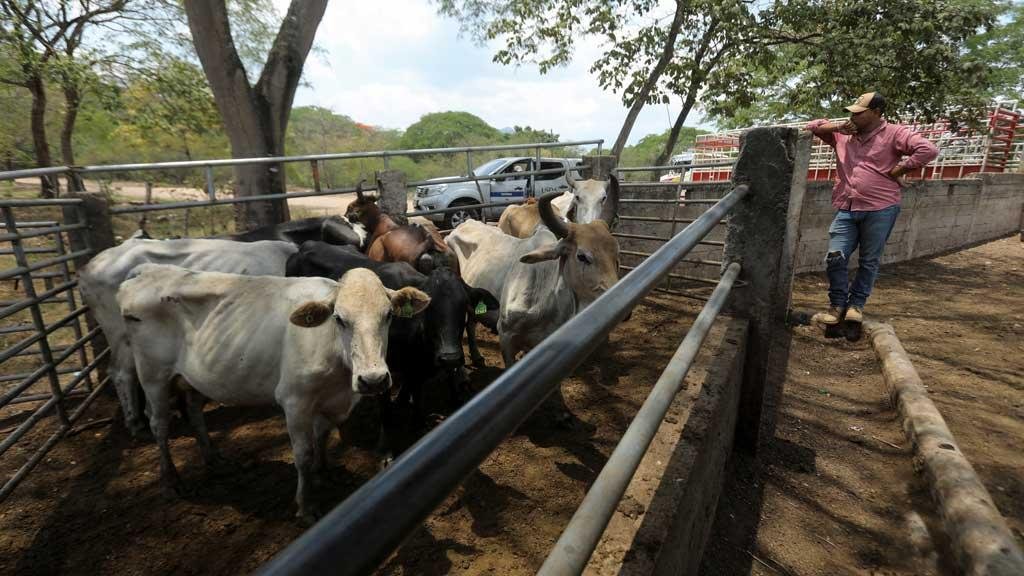
The US imports many young cattle from Mexico each year. They are raised and fed here before going to market. When the border closed to Mexican cattle, that supply dropped.
US herds were already small after years of drought. Fewer cattle plus strong demand pushed prices up. Reuters reported that the import block has been linked to record-high ground beef prices this year, and that affordability has become an issue ahead of the November midterms.
Reopening ports should slowly add supply. But cattle take time to raise, so relief at the meat counter is likely to be gradual. That is an expectation, not a forecast.
How to save on beef while prices are high
- Buy family packs and freeze portions.
- Try cheaper cuts like chuck roast or bottom round for slow cooking.
- Mix ground beef with beans or lentils in tacos, chili and sauces.
- Watch store apps for weekly meat deals and digital coupons.
- Consider a chest freezer and buy in bulk when prices dip.
- Swap in chicken, pork or eggs a few nights a week.
Made-up example (not real people): These are made-up examples to show the savings.
The Nguyens, Houston used to buy 4 pounds of ground beef a week. Now they use 2 pounds of beef plus a can of black beans in their recipes. They cut their beef spending roughly in half without giving up taco night.
Rita, Albuquerque buys a large chuck roast on sale, slow cooks it on Sunday and uses it for three meals. Per serving, it costs less than buying ground beef at full price.
Also read: How to Save Money on Groceries
What pet and livestock owners should do
- Check animals daily for wounds, especially in border states.
- Treat and cover wounds quickly. Ask your vet about wound sprays.
- Watch for warning signs: a bad smell from a wound, larvae in the wound, or an animal acting restless or licking one spot.
- Report suspected cases right away to your veterinarian, your state animal health official or USDA APHIS. Fast reporting helps stop spread.
- Follow movement rules if you live in or near an infested zone, including inspection requirements.
Travelers and hunters: simple precautions
If you travel to affected parts of Mexico or Central America, or hunt in infested zones, keep cuts covered and clean. Check dogs after hunts. See a doctor or vet quickly if a wound gets worse or you notice movement in it.
Common mistakes to avoid
- Ignoring small wounds. Even a minor cut can attract flies in warm weather.
- Trying home remedies only. A vet should treat infestations; larvae must be fully removed.
- Moving animals without checking rules. Infested zones have restrictions.
- Believing beef is unsafe to eat. Screwworm affects live animals. It is not a food safety issue for properly inspected meat.
What this means for ranchers’ wallets
For cattle producers, screwworm brings costs on both sides of the border.
- Treatment and labor: daily checks, wound care and vet visits take time and money.
- Movement limits: animals in infested zones may need inspections or treatment before they can be sold or moved.
- Lost sales: Mexican ranchers lost access to their biggest buyer while the border was closed.
- Feedlot supply: US feedlots that rely on Mexican calves had fewer animals to buy, which pushed up prices for young cattle.
Producers with losses should ask their local USDA Farm Service Agency office about any available assistance programs and keep detailed records of treatment costs and dead animals.
Timeline: screwworm’s return
| Date | What happened |
|---|---|
| 1966 | The US declares itself free of screwworm after years of sterile fly releases. |
| 2023–2025 | The pest spreads north through Central America and into Mexico. |
| 2025 | The US suspends imports of live cattle from Mexico. |
| June 2026 | Screwworm is detected on Texas farms; US case count begins. |
| August 2026 | Douglas, Ariz., port reopens for Mexican cattle. |
| September 2026 | Santa Teresa, N.M., port reopens. |
| Week of Oct. 16, 2026 | Three new New Mexico cases; much of the south becomes an infested zone. |
| Oct. 20, 2026 | USDA reports 56 US cases since June, 5 active. |
How the sterile fly program works
The sterile insect method is one of the great success stories in US farming. Scientists raise huge numbers of screwworm flies and sterilize the males with radiation. Planes then drop the sterile males over infested areas.
Female screwworm flies usually mate only once. If a female mates with a sterile male, her eggs never hatch. Release enough sterile males, and the wild population shrinks generation by generation.
The US and Mexico ran this program together for decades and pushed the pest down to Panama, where a barrier of sterile flies held it back for years. The USDA is expanding sterile fly production to fight the current outbreak.
Who decides what
| Agency | Role |
|---|---|
| USDA APHIS | Confirms cases, sets infested zones, runs sterile fly releases and decides border reopenings |
| State animal health officials | Inspect herds, enforce movement rules and take local reports |
| Mexico’s agriculture agency (SENASICA) | Controls the pest and inspects cattle on the Mexican side |
| CDC | Provides guidance on rare human cases |
Key dates to watch
- Oct. 26, 2026: Planned cattle import restart at Columbus, N.M.
- Nov. 30, 2026: Planned restart at Nogales, Ariz., if conditions allow.
- Ongoing: USDA case updates and any changes to infested zones.
Recommended products
Disclosure: As an Amazon Associate, Nexgen Headlines earns from qualifying purchases.
FAQ
Is it safe to eat beef during the screwworm outbreak?
Yes. Screwworm infests live animals. It does not make properly inspected meat unsafe to eat.
Can my dog or cat get screwworm?
Yes, pets with open wounds can be infested, especially in affected areas. Keep wounds clean and covered and call your vet if you see larvae.
Can people get screwworm?
It is rare, but it can happen through an open wound. Keep wounds clean and covered when outdoors in affected areas, and see a doctor if you notice larvae.
When will beef prices go down?
No one knows for sure. Reopening the border adds cattle over time, but herds take years to rebuild. Any price relief is likely to be slow.
How does the USDA fight screwworm?
Mainly by releasing sterile flies, inspecting animals at the border, treating cases and limiting animal movement in infested zones.
Bottom line
New World screwworm is back in the US, with 56 confirmed cases since June and an infested zone in southern New Mexico. The USDA is reopening cattle imports carefully, but beef prices may stay high for a while. Check animals daily, report suspected cases fast, and stretch your grocery budget with cheaper cuts and smart swaps.
Last reviewed: Oct. 26, 2026. Case numbers change often; check USDA for the latest.
Sources: Reuters via U.S. News (Oct. 20, 2026); Source New Mexico (Oct. 22, 2026); USDA APHIS: New World screwworm; CDC: myiasis; The Texas Tribune.
Featured image: Screwworm fly, Key Deer National Wildlife Refuge, Florida. Photo: Judy Gallagher / Wikimedia Commons, CC BY 2.0; edited by Nexgen Headlines.