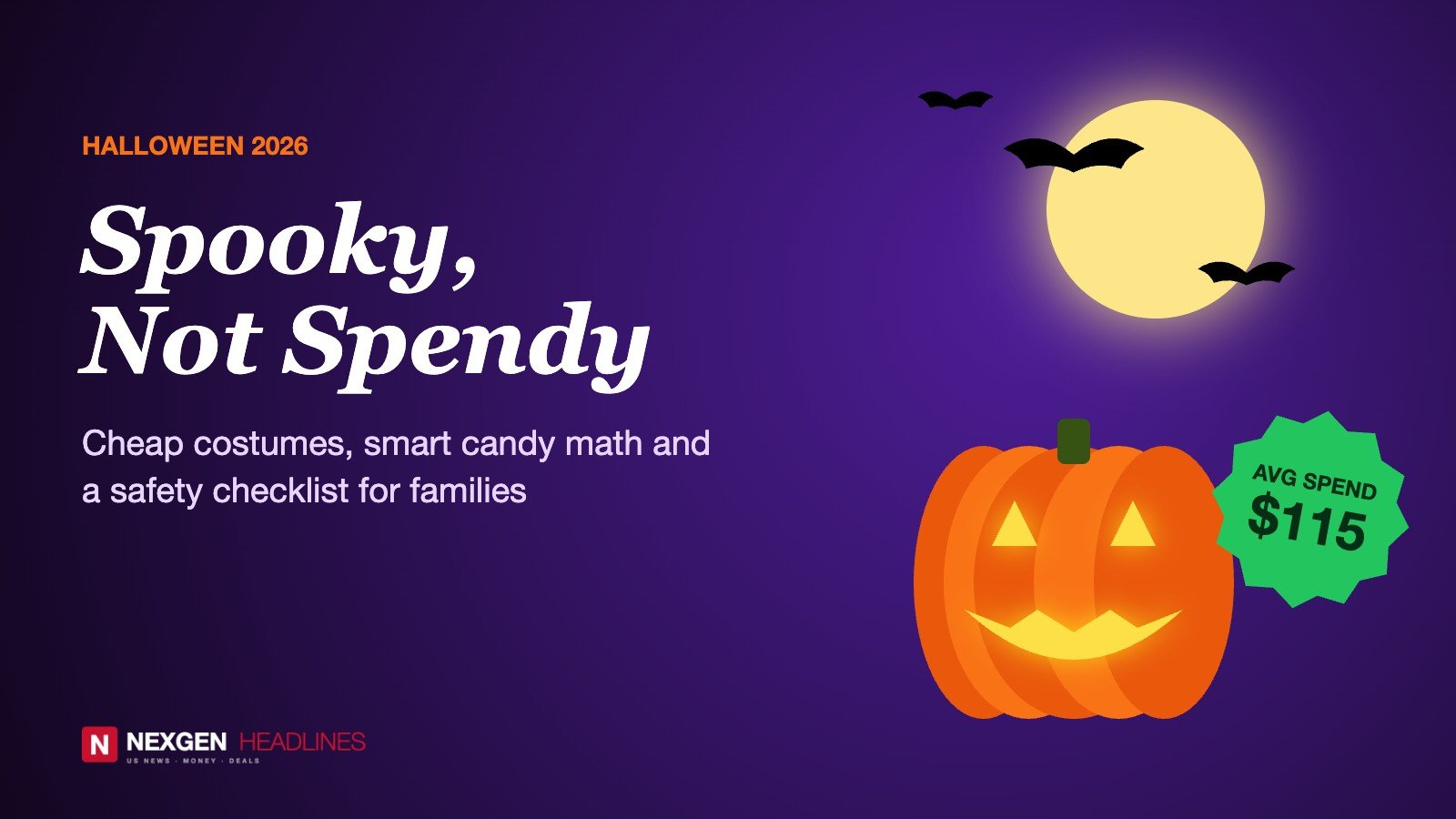

Halloween keeps getting bigger, and pricier. The National Retail Federation expects Americans to spend a record $13.5 billion on Halloween in 2026, or about $115 per person, according to its annual survey. And 79% of shoppers told NRF they expect prices on Halloween items to be higher this year because of tariffs.
But a great Halloween has never really been about how much you spend. The best costumes are usually the clever ones, kids care about the candy and the fun, and the most-loved decorations in any neighborhood are often homemade. Here’s how to have a full, fun Halloween for a lot less, plus the safety basics every family should know.
Halloween 2026 by the numbers (NRF)
- Total spending: $13.5 billion (record)
- Average per person: $115.14
- Candy: about $4.1 billion
- 74% of Americans plan to celebrate
- 49% started shopping in September or earlier
Costumes: the biggest place to save
Costumes are one of the biggest Halloween expenses, and a store-bought kids’ costume can easily cost $30–$60 for something worn once. Here are some better options:
- Shop your own closet first. A flannel shirt and jeans make a lumberjack. A white shirt and black pants make a waiter, a chef or a mime. Pajamas plus ears make almost any animal.
- Swap with friends and neighbors. Kids outgrow costumes every year. A quick post in a local parents’ group or Buy Nothing group often turns up a whole bin of hand-me-downs.
- Thrift and dollar stores. Goodwill and other thrift stores stock Halloween racks every October, and dollar stores are great for accessories like wands, masks, face paint and hats.
- Group and family costumes from basics. Matching colored T-shirts plus felt cutouts can make a box of crayons, a pack of M&Ms or the planets.
- DIY with cardboard. Robots, LEGO bricks, dice and vending machines are classics for a reason. They’re cheap, memorable and fun to build together.
Tip: If you do buy, check return policies. Some families buy two sizes and return one. The best clearance deals start on November 1, so it’s a good time to pick up next year’s costume.
Candy: buy smart, not more
- Do the math. A typical trick-or-treater takes one or two pieces. If you usually get 50 kids, you need about 100 pieces, not four giant bags.
- Compare unit price (the price per ounce on the shelf tag). Warehouse clubs and store brands often win, but not always.
- Use store apps and digital coupons. Grocery and drugstore apps regularly run candy discounts in the last two weeks of October.
- Consider non-candy treats. Stickers, pencils or glow sticks are often cheaper per piece and are safe for kids with food allergies.
Want more grocery-store savings? See our guide on how to save money on groceries.
Decorations that look great for less
- Carve, don’t buy, your best decor. Pumpkins from a grocery store are usually far cheaper than pumpkin patches. Paint small ones with kids instead of carving if you want them to last longer.
- Paper and cardboard. Black paper bats taped up a wall or construction-paper eyes in the windows cost almost nothing and look great at night.
- Light it right. Swapping a porch bulb for an orange or purple LED is one of the cheapest ways to make a house look festive.
- Buy decor on November 1. Discounts of 50% or more are common after Halloween. Put the money toward next year’s display.
Free and low-cost things to do
- Trunk-or-treat events at schools, churches and community centers
- Library Halloween story times and costume parades
- Free kids’ events at local malls and downtown business districts
- A neighborhood scary movie night with a projector and a sheet
- Pumpkin carving or painting party where everyone brings their own pumpkin
A sample $50 Halloween plan for a family
| Item | Approx. cost |
|---|---|
| Two DIY/thrifted costumes | $15 |
| Candy for ~50 trick-or-treaters | $15–$20 |
| Two pumpkins | $8–$10 |
| Colored porch bulb and paper decor | $5–$7 |
| Total | About $45–$52 |
Prices vary by region and store. These are rough budget estimates.
Halloween safety checklist
Halloween is one of the most dangerous nights of the year for child pedestrians, so a few basics matter more than any costume:
- Be visible. Add reflective tape to costumes and bags, and give kids a flashlight or glow stick.
- Choose face paint over masks when you can, so kids can see clearly. Test makeup on a small patch of skin first.
- Make sure costumes fit. Hem anything that drags to prevent trips, and choose flame-resistant materials.
- Use sidewalks and crosswalks, and walk, don’t run, across streets.
- Kids under 12 should be with an adult. Older kids should go in groups with a planned route and a check-in time.
- Inspect candy at home. Toss anything unwrapped, torn or homemade from strangers, and watch for allergens.
- Drivers: slow down in neighborhoods between dusk and about 9 p.m., and watch for kids darting between parked cars.
- Use LED lights or battery candles in jack-o’-lanterns instead of real flames.
Short on time? Flip through the quick visual version of this guide.
Frequently asked questions
How much do Americans spend on Halloween in 2026?
The NRF projects a record $13.5 billion total, or about $115 per person who celebrates.
When is the best time to buy Halloween candy?
Grocery-store discounts tend to show up in the final two weeks of October. The deepest discounts come on November 1, which is great for next year’s decorations but too late for candy.
How much candy do I need for trick-or-treaters?
Plan for about two pieces per expected child. If you’re not sure how many to expect, ask longtime neighbors, or buy a moderate amount and keep a backup bag you can return unopened.
What are good cheap last-minute costumes?
Ghost (an old sheet), cat or bunny (black clothes plus ears and face paint), a tourist (Hawaiian shirt, camera, sunglasses), a scarecrow (flannel, straw hat, painted freckles) or a “zombie” version of any old outfit.
What time is trick-or-treating?
It varies by town, but most neighborhoods run from about 5:30 or 6 p.m. to 8 or 9 p.m. Some cities set official hours, so check your local government’s website or social media.
Is Halloween on a weekend in 2026?
Yes. October 31, 2026 falls on a Saturday, so expect bigger crowds and more parties. It’s also the night before clocks fall back for daylight saving time on November 1, so you get an extra hour of sleep. (More on that in our daylight saving time guide.)
The bottom line
Halloween prices may be scary this year, but the holiday doesn’t have to be. Start with your closet, buy only the candy you need, make a few decorations with the kids, and put the savings toward something that lasts. The memories don’t cost a thing.
Sources: National Retail Federation, CDC, NHTSA.