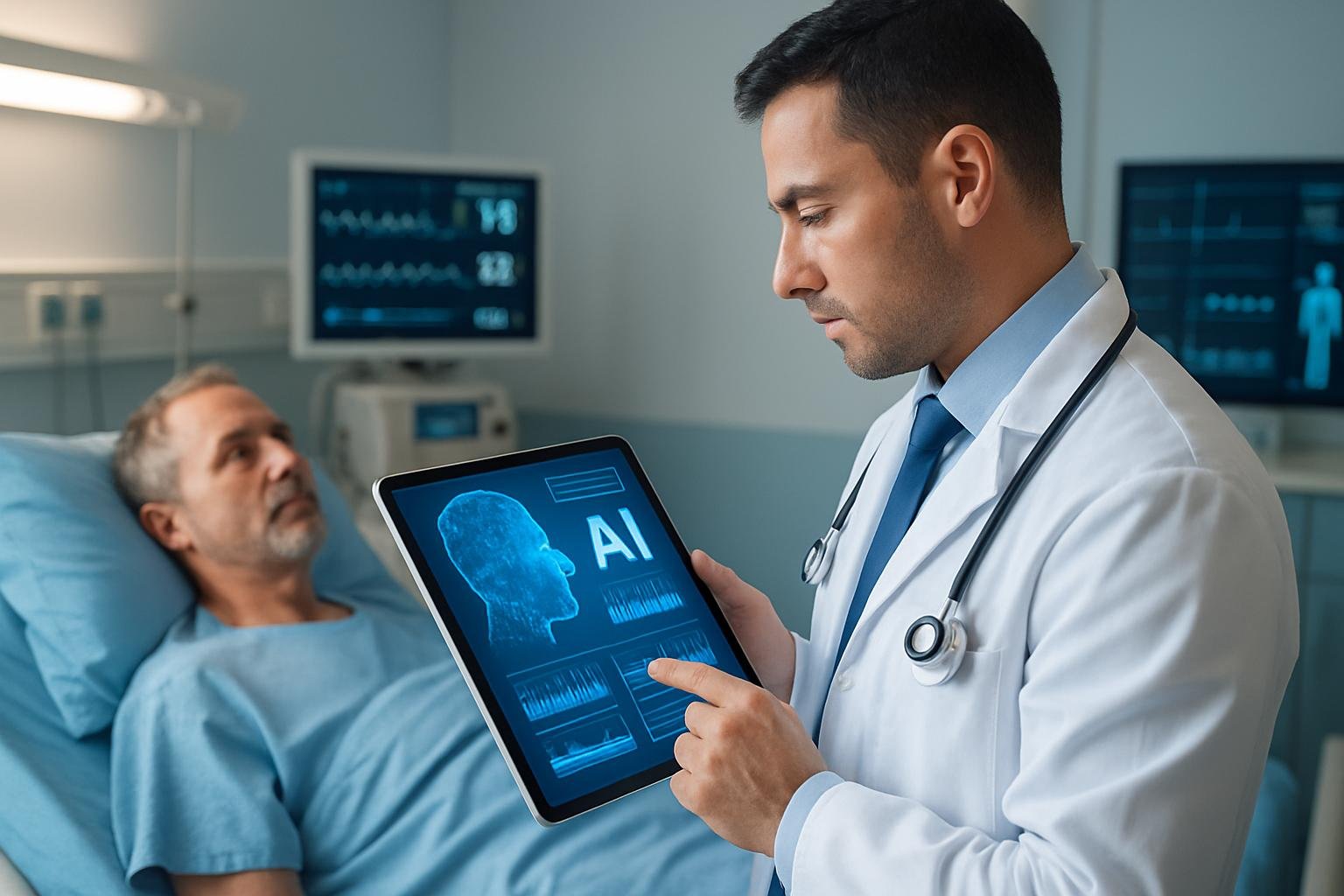

AI in Healthcare is entering a new era as one of the world’s most respected hospitals tests artificial intelligence to improve diagnoses, patient care, and medical efficiency. Here’s what it means for the future of medicine.
Artificial intelligence is rapidly changing industries around the globe, but perhaps nowhere is its potential more exciting than in medicine. AI in Healthcare is now taking center stage as one of the world’s most respected hospitals launches an ambitious effort to test how artificial intelligence can improve patient care, reduce physician workload, and accelerate medical research.
The hospital’s initiative reflects a growing belief among healthcare leaders that AI should not replace doctors—it should empower them. By assisting physicians with administrative work, analyzing enormous amounts of medical data, and identifying patterns that humans might overlook, AI has the potential to make healthcare faster, more accurate, and more personalized.
While the technology is still evolving, early results suggest that carefully designed AI systems could help solve some of healthcare’s biggest challenges, including physician burnout, delayed diagnoses, and rising medical costs.
Why AI Is Becoming Essential in Modern Medicine
Healthcare generates enormous amounts of information every day.
Medical records, laboratory results, imaging scans, prescriptions, insurance documents, physician notes, and research studies create a massive volume of data that healthcare professionals must review quickly and accurately.
This is where AI in Healthcare can make a meaningful difference.
Modern AI systems can process large datasets within seconds, summarize patient histories, identify potential health risks, and assist clinicians in making informed decisions.
Rather than replacing human expertise, these tools provide physicians with additional insights that support better clinical judgment.
The Hospital’s Vision for AI
AI in Healthcare
The leading medical institution behind this initiative is testing AI across multiple departments to understand where the technology delivers the greatest value.
Instead of limiting AI to a single purpose, researchers are evaluating how it can improve nearly every stage of patient care.
Current areas of testing include:
- Clinical documentation
- Medical imaging analysis
- Appointment scheduling
- Predictive disease detection
- Patient communication
- Research support
- Administrative workflow
- Personalized treatment planning
Hospital leaders emphasize that every AI recommendation is reviewed by qualified healthcare professionals before affecting patient care.
Human oversight remains central to every decision.
Helping Doctors Spend More Time With Patients
One of the most immediate benefits of AI in Healthcare may be reducing administrative burdens.
Physicians often spend hours completing electronic medical records, documenting appointments, reviewing paperwork, and handling insurance-related tasks.
These responsibilities reduce the amount of time available for direct patient interaction.
AI-powered documentation systems can automatically summarize conversations, organize medical notes, and prepare clinical reports, allowing doctors to focus more on listening to patients rather than typing into computers.
Many physicians believe this improvement alone could significantly reduce burnout.
Earlier and More Accurate Diagnoses
Artificial intelligence is also showing promise in medical diagnostics.
Advanced AI models can analyze X-rays, CT scans, MRIs, and pathology images with remarkable speed.
Although AI does not replace radiologists or specialists, it can highlight suspicious findings that deserve closer examination.
Researchers hope this technology will help detect diseases such as:
- Cancer
- Heart disease
- Stroke
- Lung disorders
- Kidney disease
- Eye conditions
Earlier diagnosis often leads to more effective treatment and better long-term outcomes.
Personalized Treatment Plans
Every patient is different.
Age, genetics, lifestyle, medications, and medical history all influence treatment decisions.
AI in Healthcare can analyze these factors simultaneously, helping physicians identify treatment options tailored to individual patients.
Instead of relying solely on broad clinical guidelines, doctors may eventually receive AI-assisted recommendations based on millions of comparable medical cases and the latest scientific research.
This approach supports precision medicine while leaving final decisions in the hands of healthcare professionals.
Accelerating Medical Research
Research is another area where artificial intelligence could make a lasting impact.
Medical scientists spend years reviewing published studies, organizing clinical trial data, and identifying promising research directions.
AI can rapidly search scientific literature, summarize findings, identify knowledge gaps, and even suggest potential research questions.
Researchers believe this capability could accelerate discoveries in areas such as cancer treatment, Alzheimer’s disease, diabetes, rare diseases, and infectious illnesses.
Improving Hospital Operations
Beyond direct patient care, AI in Healthcare is helping hospitals operate more efficiently.
Hospitals must manage thousands of daily decisions involving staffing, operating rooms, emergency departments, equipment, and patient flow.
AI systems can analyze historical patterns to predict:
- Emergency room demand
- Hospital bed availability
- Surgical scheduling
- Staff requirements
- Supply inventory
- Patient discharge timing
Better operational planning may reduce waiting times while improving overall patient experience.
Protecting Patient Privacy
Despite its promise, AI also raises important concerns.
Hospitals must protect sensitive medical information while ensuring AI systems comply with privacy regulations.
Healthcare leaders stress that patient data should remain secure, encrypted, and carefully governed.
Many AI systems are designed to remove personally identifiable information whenever possible before analyzing medical records.
Transparency also remains essential.
Patients deserve to know when AI assists in their care and how healthcare providers use the technology.
Challenges Still Remain
Although AI in Healthcare continues advancing rapidly, experts caution that important challenges remain.
AI systems can occasionally make errors or reflect biases present in training data.
Medical decisions involve complex ethical considerations that extend beyond statistics.
For that reason, hospitals emphasize that AI should function as a decision-support tool—not an independent decision-maker.
Doctors continue providing clinical judgment, empathy, communication, and accountability that technology cannot replace.
A New Era for Healthcare
Many healthcare experts believe artificial intelligence represents one of medicine’s biggest technological advances since electronic medical records.
If implemented responsibly, AI could help address physician shortages, reduce healthcare costs, improve diagnostic accuracy, and expand access to quality care around the world.
The hospital leading this initiative hopes its research will establish best practices that other healthcare organizations can safely adopt.
What This Means for Patients
For patients, the future of AI in Healthcare could mean:
- Faster diagnoses
- Shorter waiting times
- More personalized treatments
- Better communication
- Improved safety
- Earlier disease detection
- Increased physician availability
Importantly, healthcare leaders emphasize that AI is intended to strengthen—not replace—the relationship between doctors and patients.
Looking Ahead
Artificial intelligence is still in the early stages of transforming healthcare, but momentum continues building rapidly.
As hospitals refine these technologies and researchers gather more evidence, AI is expected to become an increasingly valuable partner in modern medicine.
The goal is not to automate healthcare but to create smarter systems that help clinicians deliver safer, faster, and more compassionate care.
If successful, today’s pilot programs may shape the future of medicine for decades to come.
Summary
AI in Healthcare is emerging as one of the most promising innovations in modern medicine. By helping doctors analyze medical data, improve diagnoses, streamline administrative work, personalize treatments, and accelerate research, artificial intelligence has the potential to transform patient care. While important challenges related to privacy, ethics, and accuracy remain, leading hospitals are demonstrating that AI works best as a powerful assistant—not a replacement—for healthcare professionals. As research continues, patients around the world could benefit from safer, more efficient, and more personalized medical care.
THANKS FOR READING