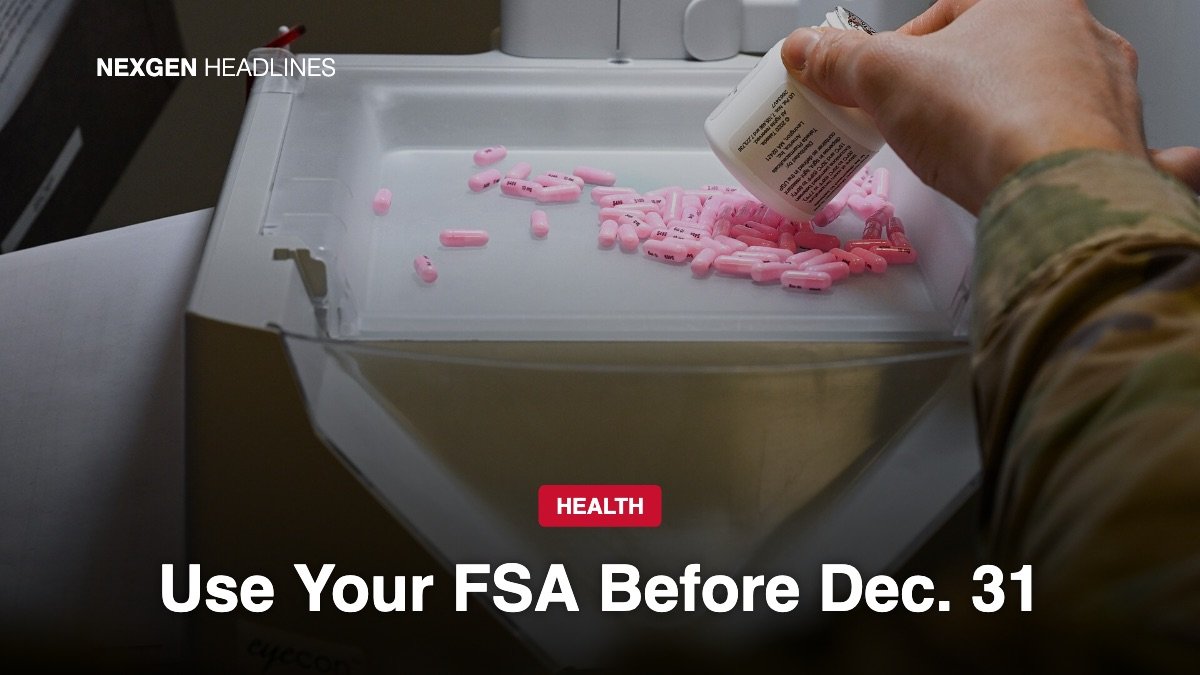

Quick answer: A health FSA is often use-it-or-lose-it, so check your balance and your plan’s carryover or grace-period rules before December 31. The 2026 health FSA limit is $3,400; HSAs, by contrast, roll over every year.
Key takeaways: A health FSA is often “use it or lose it,” while an HSA rolls over every year. The 2026 health FSA limit is $3,400. The 2026 HSA limits are $4,400 (self-only) and $8,750 (family), plus $1,000 if you are 55 or older. Check your own plan’s rules and balance now, because your employer’s plan decides whether you get a carryover or a grace period.
Every year around this time my inbox fills with the same question from friends: “Do I lose my FSA money?” Picture Marcus (an illustrative example), who put $1,200 into his health FSA in January and, in November, finds he has used only $700. He has $500 sitting there with weeks left. Whether he loses it depends on one thing: what his employer’s plan allows.
FSA vs HSA in plain English
| Health FSA | HSA | |
|---|---|---|
| Who sets the rules | Your employer’s plan | You own the account |
| 2026 limit | $3,400 | $4,400 self-only / $8,750 family (+$1,000 if 55+) |
| Leftover money | May expire; some plans allow a limited carryover or a grace period | Generally rolls over each year |
| Who qualifies | Employees whose employer offers it | People with a high-deductible health plan and no disqualifying other coverage |
Sources: IRS limits for 2026 (Rev. Proc. 2025-19 for HSAs, Rev. Proc. 2025-32 for the FSA), and IRS Publication 969.
What to do this week
- Log in and check your balance. Your plan administrator’s site or app shows it.
- Read your plan’s deadline. Some plans give a grace period after December 31; some allow a carryover (for 2026 the IRS maximum carryover is $680 for plans that offer it); some offer neither. Ask HR which applies to you.
- Spend on things you really need. Prescription copays, dental work you have been putting off, glasses or contacts, and eligible over-the-counter items are common uses. Do not buy things you will not use just to empty the account.
- Keep receipts. You may need to substantiate claims.
HSA owners: different rules
The IRS says amounts that remain in an HSA at the end of the year are generally carried over. For the prior year, contributions could be made through April 15 of the following year, so for 2026 you would expect April 15, 2027. Eligibility requires qualifying high-deductible coverage, and you generally cannot contribute if you are enrolled in Medicare.
Back to Marcus
Marcus called HR and learned his plan had a carryover. He still booked the dentist appointment he had delayed since spring, used about $300 of it, and carried the rest forward. The lesson: five minutes to read the plan beats guessing.
Carryover vs. grace period vs. neither
IRS Publication 969 says health FSAs are generally “use-it-or-lose-it.” But your employer may add one of two safety nets. A plan cannot offer both for a health FSA.
| Plan type | What happens to leftover money | Key limit for 2026 plans |
|---|---|---|
| Carryover | A set amount rolls into next year. Anything above it is lost. | Up to $680 |
| Grace period | You get extra time to spend last year’s money on new expenses. | Up to 2½ months after the plan year ends (March 15 for a calendar-year plan) |
| Neither | Money left at the end of the plan year is lost. | Spend by Dec. 31 (calendar-year plans) |
One more date matters: the claim deadline, often called a run-out period. It is the last day to send receipts for expenses you already had. It is set by your plan, so check your plan summary or ask HR.
Also note: your employer is not allowed to refund unused FSA money to you in cash, per the IRS. That is why planning matters.
What you can buy with FSA money
Health FSAs pay for medical care as the tax code defines it. IRS Publication 969 confirms that over-the-counter medicine (with or without a prescription) and menstrual care products count. Your plan decides the final list, so check its eligible-items page.
| Usually eligible | Usually NOT eligible |
|---|---|
| Doctor and dentist copays and deductibles | Teeth whitening |
| Dental cleanings, fillings, braces | Cosmetic procedures |
| Eye exams, prescription glasses and contact lenses | Gym memberships for general health |
| Contact lens solution | Vitamins for general health (most cases) |
| Over-the-counter pain relief, allergy and cold medicine | Health insurance premiums (for health FSAs) |
| Menstrual pads and tampons | Toiletries like regular shampoo |
| Crutches, blood sugar monitors and other diagnostic devices | Items for someone not on your plan |
Source for the lists: IRS Publication 502 (medical expenses) and Publication 969. Some items, like massage or supplements, may need a doctor’s note. Ask your plan before you buy.
Also read: Tax withholding checkup before Dec. 31, so your refund or bill in April is not a surprise.
Smart ways to use leftover money before Dec. 31
- Book appointments now. Dentist and eye doctor offices fill up in December. Many people have the same idea.
- Order glasses or contacts. A backup pair of prescription glasses or a year of contacts can use a few hundred dollars at once.
- Refill prescriptions you already take. Ask your pharmacist if an early or 90-day refill is allowed under your insurance.
- Stock your medicine cabinet. Pain relievers, allergy pills, cold medicine, bandages and a first aid kit are common FSA buys. Buy what you will use within the next year.
- Check your health devices. A blood pressure monitor or thermometer may qualify. Confirm with your plan first.
- Use the FSA card at checkout, or save the receipt. Itemized receipts make claims faster.
Dependent care FSA: the limit just went up
A dependent care FSA is a different account. It pays for child care, day care, before- and after-school care and day camp so you can work. It is not for medical bills.
For 2026, IRS Publication 15-B says the annual dependent care FSA limit rose from $5,000 to $7,500 (from $2,500 to $3,750 if married filing separately). If you set your 2026 amount low, check whether your employer lets you raise it for 2027 during open enrollment.
Dependent care FSAs follow their own use-it-or-lose-it rules. The $680 health FSA carryover does not apply to them. Ask HR about your plan’s deadline.
New 2026 HSA rules worth knowing
If you are choosing a plan for 2027, the IRS says a 2025 tax law made three changes that help HSA users:
- Bronze and catastrophic plans count. Starting Jan. 1, 2026, these plans are treated as HSA-compatible, whether you buy them on the marketplace or not.
- Telehealth before the deductible is OK. You can use telehealth before meeting your deductible and still contribute to an HSA.
- Direct primary care. Starting Jan. 1, 2026, people in certain direct primary care arrangements can still contribute to an HSA and use HSA money for the monthly fees.
A trap to avoid: if your general health FSA has a grace period and you still have money in it, Publication 969 says that coverage can block HSA contributions in the new year. The exception is when your FSA balance is zero at the end of the prior plan year.
How to pick next year’s FSA amount
Open enrollment is the time to set your health FSA amount for next year. Aim for costs you are almost sure to have. Use this simple method:
- Pull last year’s numbers. Your plan site, pharmacy app and insurance statements show what you actually paid.
- Add costs you know are coming. Braces, a planned surgery, new glasses or a baby on the way.
- Subtract one-time costs that will not repeat. For example, last year’s emergency room visit.
- Stay under the IRS cap. For 2026 plans it is $3,400. The 2027 limit had not been confirmed in the sources we checked, so use your employer’s enrollment materials.
Example (illustrative): a family spent $900 on copays, $250 on medicine and $350 on contacts. That is $1,500. If their plan has a $680 carryover, a small overestimate carries over. If it has no carryover, choosing about $1,400 is the safer pick.
Mistakes that cost people money
- Guessing your plan rules. Carryover, grace period and claim deadlines differ by employer. Read your plan summary.
- Buying things you do not need. Spending $300 on unused items is the same as losing $300.
- Throwing away receipts. Your plan can ask you to prove a purchase was eligible. Snap a photo of each receipt.
- Setting next year’s amount too high. Add up last year’s actual costs, plus any known surgery, braces or new glasses.
- Forgetting to re-enroll. At many employers, your FSA election does not roll over. Check during open enrollment.
- Leaving a job without spending it. Coverage often ends on your last day. Use it or file claims before you go.
Who qualifies, in short
- Health FSA: employees whose employer offers one. You do not need a high-deductible plan.
- Dependent care FSA: working parents or caregivers with qualifying care costs, if the employer offers it.
- HSA: people with HSA-compatible coverage (now including bronze and catastrophic plans) and no disqualifying other coverage. Generally not people enrolled in Medicare.
Recommended products
Items many health FSAs cover. Check your plan’s eligible list before you buy.
- Upper-arm blood pressure monitor
- Home first aid kit
- Digital thermometer for adults and kids
- Contact lens solution
Disclosure: As an Amazon Associate, Nexgen Headlines earns from qualifying purchases.
FAQ
Can I have an FSA and an HSA?
Usually not a general-purpose health FSA alongside an HSA. Rules have exceptions, so confirm with your plan documents.
What if I leave my job?
FSA access often ends with employment. Ask HR before your last day.
General information, not tax or financial advice. Marcus is an illustrative example. Confirm figures with the IRS and your plan administrator.
Last reviewed: Oct. 23, 2026. Limits are for 2026 plan years. Your employer’s plan sets the final rules.
Sources: IRS 2026 inflation adjustments, IRS Publication 969, IRS Publication 502, IRS Publication 15-B, IRS, One Big Beautiful Bill provisions.