
The first cold snap of the season always seems to catch people off guard: a pipe freezes overnight, the car battery dies on the coldest morning of the year, or the first heating bill lands and it’s double what you expected. Most of that is preventable, and much of it costs less than a tank of gas to fix.
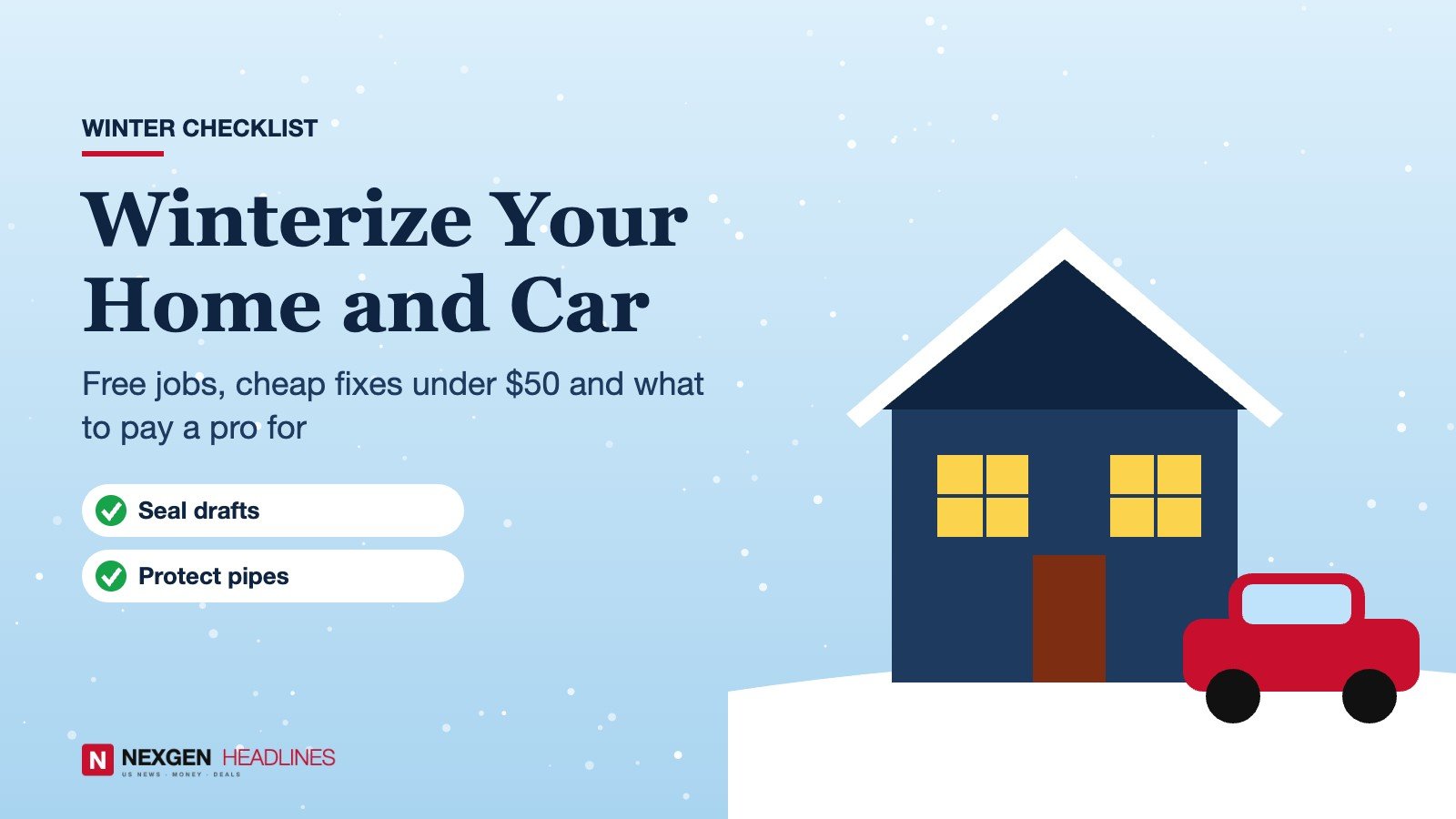
This is our weekend checklist for getting a typical American home and car ready for winter. We’ve split it into free jobs, cheap fixes under $50, and the things worth paying a pro for, so you can start wherever your budget and your free Saturday allow.
Key takeaways
- Sealing air leaks and adjusting your thermostat are the two biggest free or cheap ways to cut heating costs.
- Disconnect garden hoses and shut off outdoor faucets before the first hard freeze.
- Get your car battery tested for free at most auto parts stores. Batteries are a top cause of winter breakdowns.
- Test your smoke and carbon monoxide alarms. Home heating raises CO risk.
Part 1: Winterize your home
Free jobs (do these this weekend)
- Disconnect and drain garden hoses. A hose left attached can trap water in the faucet, which freezes, expands and can split the pipe inside your wall. Store hoses in the garage or shed.
- Shut off outdoor faucets. If you have an indoor shut-off valve for exterior spigots (often in the basement), close it, then open the outside faucet to let it drain.
- Reverse your ceiling fans. Set them to spin clockwise on low. This gently pushes warm air that collects near the ceiling back down into the room.
- Lower the thermostat at night and when you’re out. The Department of Energy estimates you can save up to about 10% a year on heating and cooling by turning the thermostat back 7–10°F for 8 hours a day. A programmable or smart thermostat makes this automatic.
- Open curtains on sunny days, close them at night. South-facing windows are free solar heat, and closed curtains help hold it in after dark.
- Clear gutters and downspouts. Clogged gutters can cause ice dams, which push melting snow under your shingles. Make sure downspouts send water at least a few feet away from your foundation.
- Find your main water shut-off. If a pipe ever bursts, knowing exactly where this valve is can save thousands of dollars in damage. Show everyone in the house.
Cheap fixes (under $50 total)
- Weatherstripping and door sweeps ($10–$25). Hold a lit incense stick near door and window edges on a windy day. If the smoke wavers, you’ve found a leak.
- Caulk ($5–$10 a tube) for gaps around window frames, baseboards and where pipes enter the house.
- Foam outlet gaskets ($5 a pack) behind switch plates and outlet covers on exterior walls. They seem minor, but they add up.
- Pipe insulation sleeves ($2–$5 each) for exposed pipes in the garage, crawl space or attic.
- Window insulation film kit ($15–$25) for older single-pane windows. It’s a hair dryer and some double-sided tape, and it makes a real difference.
- New furnace filter ($5–$20). A clogged filter makes your system work harder. Check it monthly in winter.
Worth paying a pro for
- Furnace or heat pump tune-up (usually $80–$200). A technician cleans, checks safety controls and spots problems before they turn into a no-heat emergency in January. Many utilities and HVAC companies run fall specials.
- Chimney inspection and sweep if you use a wood-burning fireplace. Creosote buildup is a leading cause of chimney fires.
- A home energy audit. Many utilities offer them free or discounted. Ask yours. The auditor may find attic insulation or duct leaks you’d never spot yourself.
Upgrades like a heat pump, insulation or new exterior doors may qualify for utility rebates or state programs. Check your utility’s website and the Department of Energy’s Energy Saver site before buying. Federal incentives have changed recently, so confirm what’s available for your situation.
For more ways to cut your bill once winter arrives, see our full guide: how to lower your heating bill.
Safety check (don’t skip this)
- Test smoke and carbon monoxide alarms and replace batteries. CO is odorless, and furnaces, fireplaces, gas stoves and attached garages are all possible sources. If you don’t have a CO alarm on every floor, add one.
- Keep space heaters 3 feet from anything that can burn, plug them directly into a wall outlet (never an extension cord), and turn them off when you leave the room.
- Never run a generator, grill or camp stove indoors or in an attached garage, even with the door open.
Part 2: Winterize your car
Free or nearly free
- Get your battery tested. Cold weather reduces a battery’s power, and most auto parts stores test batteries for free. If yours is 3–5 years old, it’s worth checking now instead of when you’re stuck in a parking lot.
- Check tire pressure monthly. Tire pressure drops as temperatures fall. Use the number on the sticker inside the driver’s door, not the one on the tire.
- Check tread depth with a quarter. Put it upside down in the tread. If you can see the top of Washington’s head, it’s time to start shopping for tires.
- Top off winter washer fluid, the kind rated below freezing. Summer fluid can freeze in the lines.
- Keep the gas tank at least half full. It reduces condensation in the tank and means you won’t run out if you’re stuck in traffic during a storm.
Cheap upgrades
- New wiper blades ($15–$40 a pair). Winter-style blades handle ice and snow better.
- Ice scraper and snow brush ($10–$20). Keep it in the car, not the garage.
- Coolant/antifreeze check. A shop can test the mix for a few dollars, or for free during an oil change.
Build a winter car emergency kit
Keep this in a plastic bin in the trunk from November through March:
- Phone charger or battery pack
- Blanket, gloves, hat and spare warm socks
- Flashlight with extra batteries
- Jumper cables or a portable jump starter
- Small folding shovel
- Bag of sand or cat litter for traction
- Water and a few non-perishable snacks
- Basic first-aid kit
If you get stuck in snow, stay with your car, run the engine only about 10 minutes an hour for heat, and keep the exhaust pipe clear of snow to avoid carbon monoxide buildup.
A simple winterizing timeline
| When | What to do |
|---|---|
| Early–mid October | Book the furnace tune-up, test alarms, clean gutters |
| Before first hard freeze | Hoses off, outdoor faucets drained, pipes insulated |
| Late October–November | Weatherstrip, caulk, battery test, wipers, car kit |
| All winter | Monthly furnace filter and tire pressure checks |
Short on time? Flip through the quick visual version of this guide.
Frequently asked questions
At what temperature do pipes freeze?
Pipes in unheated or exterior areas are at risk once outdoor temperatures fall to about 20°F or lower, especially overnight. During a deep freeze, let a faucet on an exterior wall drip slightly and open cabinet doors under sinks so warm air can reach the pipes.
What should I do if a pipe freezes?
Turn on the faucet, then warm the pipe slowly with a hair dryer, heating pad or warm towels, starting nearest the faucet. Never use an open flame. If you can’t find the frozen section or it has burst, shut off the main water and call a plumber.
Is it cheaper to leave the heat on all day?
No. In most homes it’s cheaper to lower the temperature when you’re asleep or away. The “it takes more energy to reheat” idea is a common myth. Heat pump owners should use smaller setbacks, because big swings can trigger less efficient backup heat.
Do I really need snow tires?
If you regularly drive in snow and ice, dedicated winter tires grip far better than all-season tires below about 45°F. In milder climates, good all-season or “all-weather” tires are usually enough.
How often should I change my furnace filter?
Check it monthly during heating season. Basic filters often need replacing every 1–3 months. Homes with pets or allergies may need it more often.
How long does a car battery last?
Typically 3–5 years, less in very hot climates. Cold weather exposes a weak battery, so get it tested before winter.
The bottom line
You don’t need a contractor or a big budget to get ready for winter. One Saturday with a roll of weatherstripping, a tube of caulk and a free battery test handles most of the risk. Tackle the free jobs first, add the cheap fixes as you go, and save the pro work for anything involving gas, flames or electricity.
Sources: U.S. Department of Energy, Ready.gov, CDC.