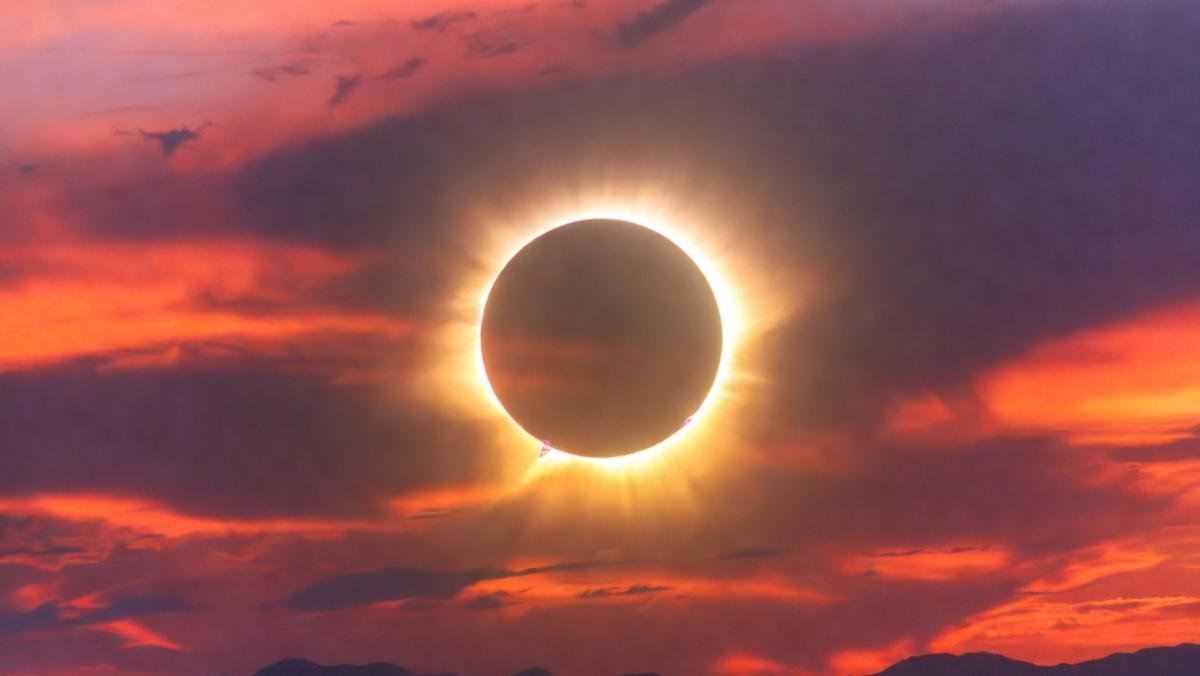

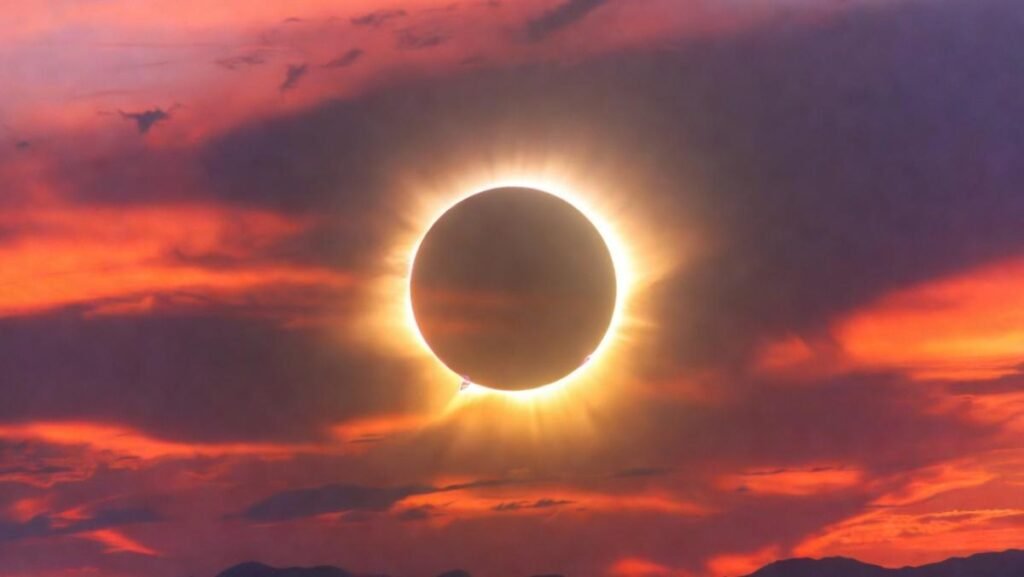
2026 Total Solar Eclipse is taking center stage on Wednesday, August 12, as millions of people prepare for one of the year’s most remarkable astronomical events. The Moon will pass directly between Earth and the Sun, briefly blocking the Sun’s bright disk and creating darkness in the middle of the day for people inside the narrow path of totality.
The eclipse will sweep across parts of Greenland, Iceland, northern Russia, the North Atlantic, northern Spain and a small section of Portugal. Many more people across Europe, northern Africa, Canada and parts of the United States will see a partial eclipse.
What makes this event particularly unusual is its timing. In parts of Spain, the eclipse will happen shortly before sunset, creating the possibility of an extraordinary combination: a darkened Sun sinking toward the horizon while the surrounding sky takes on the colors of evening.
A Rare Event for Europe
The 2026 Total Solar Eclipse is especially significant for European skywatchers.
A total solar eclipse has not crossed mainland Western Europe since 1999. This year’s event will give people in northern Spain a rare opportunity to stand beneath the Moon’s shadow without traveling to another continent.
Cities and communities across Spain have been preparing for large crowds. Reports indicate that as many as 6 million people could gather along the eclipse path, making the event both a scientific spectacle and a major tourism occasion.
Hotels, transportation providers and local businesses have experienced strong demand as visitors travel to find locations with the best chance of seeing totality.
The Moon Will Briefly Hide the Sun
A total solar eclipse occurs when the Moon passes directly between Earth and the Sun and appears large enough in the sky to completely cover the Sun’s visible surface.
During totality, the bright solar disk disappears.
For a brief period, observers can see the Sun’s outer atmosphere, known as the corona. This faint structure normally cannot be seen because the much brighter surface of the Sun overwhelms it.
NASA says totality will last less than two minutes for many locations, although some areas near the center of the eclipse path will experience totality for a little longer. Even at the best locations, the complete event is relatively short.
Spain Could Get a Stunning Sunset Eclipse
One of the most visually exciting features of the 2026 Total Solar Eclipse is its timing over Spain.
The Moon’s shadow will cross northern Spain late in the day, with totality arriving close to sunset.
NASA lists totality beginning at approximately 8:28 p.m. local time in León and around 8:32 p.m. in Valencia. In several Spanish locations, the partial eclipse continues until or beyond sunset.
That low position of the Sun creates an unusual viewing experience.
Instead of looking high into the daytime sky, spectators near the western part of the path may see the eclipsed Sun close to the horizon.
Iceland Is Preparing for a Historic Moment
Iceland is another major destination for eclipse watchers.
For people in Reykjavík, totality is expected to begin at approximately 5:48 p.m. local time. Icelandic authorities describe the event as particularly historic because it will be the first total solar eclipse visible from Reykjavík since 1433.
The Westfjords are expected to experience some of the longest totality on land, reaching approximately 2 minutes and 13 seconds at the westernmost points.
Thousands of visitors have traveled to Iceland hoping for clear skies.
Weather, however, remains one of the biggest variables for eclipse watchers.
Millions Will See at Least a Partial Eclipse
People do not have to be inside the narrow path of totality to experience the eclipse.
A much larger region will see the Moon cover part of the Sun.
NASA says portions of the northern United States, including areas from Alaska to North Carolina, will experience a partial solar eclipse. Canada, much of Europe and northwestern Africa will also see at least some degree of partial coverage.
The amount of the Sun covered will vary considerably depending on location.
For example, NASA’s eclipse timetable shows approximately 16% coverage in Boston, 24% in Bangor, 18% in Montreal and only a few percent in Detroit.
Why a Total Eclipse Looks So Dramatic
The dramatic effect of totality comes from the sudden disappearance of direct sunlight.
Temperatures can fall, shadows change, and the sky becomes noticeably darker.
Bright stars and planets can become visible, while the horizon may glow with unusual colors as sunlight remains outside the path of the Moon’s shadow.
Animals can also respond to the sudden change in daylight, although reactions vary.
For humans, the experience can be surprisingly emotional because the transformation happens so quickly.
One moment it is an ordinary afternoon or evening. Minutes later, the sky appears dramatically different.
Scientists Will Be Watching Closely
The eclipse is not just an attraction for tourists.
Scientists use total solar eclipses to study the Sun’s corona, which is the outermost layer of the solar atmosphere.
The corona contains extremely hot, electrically charged gas and plays an important role in solar activity.
Observations during an eclipse can complement data collected by spacecraft and specialized solar telescopes.
Researchers can also study how the sudden reduction in sunlight affects Earth’s atmosphere and surrounding environment.
A Special Opportunity for Students and Families
The 2026 Total Solar Eclipse is also expected to inspire educational activities.
Schools, astronomy groups, museums and science organizations are organizing viewing events and educational programs.
For children, an eclipse can provide a memorable introduction to astronomy.
It demonstrates concepts that can otherwise feel abstract in a textbook: the movement of the Moon, Earth’s position in the solar system and the geometry required for a total eclipse.
The event also offers an opportunity for families to experience science together.
Eye Safety Is Extremely Important
Despite the excitement surrounding the eclipse, experts are warning viewers not to look directly at the Sun without proper protection.
Ordinary sunglasses are not safe for viewing the partially eclipsed Sun.
NASA advises using specialized solar-viewing glasses or handheld solar viewers that meet the appropriate safety standards. During the brief period of totality, when the Moon completely covers the Sun’s bright disk, people can look directly at the eclipse. However, eye protection must be put back on immediately before the bright Sun reappears.
Parents should pay particular attention to children because staring at the Sun can cause serious eye injury.
Weather Could Make or Break the Experience
For eclipse travelers, one factor remains completely outside their control: weather.
Clouds can block the view even when an observer is positioned directly under the eclipse path.
That is why many experienced eclipse watchers choose locations based not only on totality duration but also on historical cloud conditions, geography and the availability of clear horizons.
In Spain, the low position of the Sun makes an unobstructed western horizon especially important.
A Major Tourism Event
The eclipse is already having an economic impact.
Spain, Iceland and other destinations along the path are expecting large numbers of visitors. Hotels and accommodations in popular viewing areas have seen increased demand, while eclipse glasses have reportedly become difficult to find in some locations.
Local governments have also prepared for increased traffic and large crowds.
In Spain, authorities have paid particular attention to wildfire risks because extreme heat and dry vegetation could create additional hazards during large outdoor gatherings.
A Celestial Event Worth Remembering
For many observers, the 2026 Total Solar Eclipse will be more than a few minutes of darkness.
It will be a rare opportunity to watch the Moon, Earth and Sun align in one of nature’s most spectacular displays.
The event also demonstrates how astronomy can bring people together. Travelers from different countries are gathering in the same locations, waiting for the same moment and looking toward the same sky.
What Happens After the Eclipse?
Once the Moon moves away from the Sun, the unusual darkness will quickly disappear.
Daylight will return, temperatures will gradually recover, and the sky will look ordinary again.
But the experience could remain memorable for years.
For people in northern Spain and Iceland, the opportunity to see totality from their own region is particularly special because such events are rare.
Why This Story Matters
The 2026 Total Solar Eclipse is a major astronomical event because totality will cross parts of Europe at a time when millions of people can realistically travel to viewing locations.
Its sunset timing in Spain adds another layer of visual drama, while Iceland is preparing for its first total eclipse visible from Reykjavík in centuries.
For scientists, tourists, families and astronomy enthusiasts, Wednesday’s eclipse offers a brief but extraordinary reminder of the movement of our solar system.
Summary
The 2026 Total Solar Eclipse will sweep across Greenland, Iceland, northern Russia, the North Atlantic, northern Spain and a small part of Portugal on Wednesday, August 12. Millions of people are expected to watch the event, with northern Spain offering an especially dramatic sunset view as totality occurs close to the end of the day. Iceland will also experience a historic eclipse, including totality in Reykjavík for the first time since 1433. While much of Europe, parts of North America and northern Africa will see a partial eclipse, only people inside the narrow path of totality will experience the Sun completely disappearing. For everyone watching, proper eye protection remains essential throughout the partial phases.
THANKS FOR READING