
Seine River Swimming is making headlines as Parisians and tourists return to the historic river after decades. Discover how Paris transformed the once-polluted Seine into a safe public swimming destination.
- From Polluted Waterway to Public Treasure
- A Multi-Billion-Dollar Cleanup Effort
- Swimming Returns After More Than 100 Years
- Environmental Success Beyond Tourism
- Tourists Discover a New Paris Experience
- Technology Keeps the Water Safe
- Challenges Still Remain
- A Global Model for Urban Rivers
- What This Means for Paris
- Looking Ahead
- Summary
For generations, the Seine River was known more for its pollution than its beauty. Swimming in its waters had been banned for over a century because of poor water quality and health concerns. Today, however, the story has changed dramatically. Seine River Swimming has become one of the biggest success stories in urban environmental restoration, attracting thousands of residents and tourists eager to experience one of Paris’ newest attractions.
The reopening of designated public swimming areas along the Seine marks a historic milestone for the French capital. Following years of environmental cleanup projects, billions of dollars in infrastructure improvements, and extensive water-quality testing, the river has been transformed into a safe recreational space during the summer months.
The achievement is more than just a tourism milestone—it represents a remarkable victory for environmental conservation, public health, and sustainable city planning.
From Polluted Waterway to Public Treasure
For decades, the Seine struggled with severe pollution caused by untreated wastewater, industrial runoff, and stormwater overflows. By the early 20th century, authorities determined that swimming in the river posed serious health risks, leading to a long-standing ban.
That reputation remained for generations.
Despite flowing through some of the world’s most recognizable landmarks—including the Eiffel Tower, Notre-Dame Cathedral, and the Louvre Museum—the Seine was viewed primarily as a scenic waterway rather than a place for recreation.
Everything began to change when Paris launched an ambitious effort to restore the river’s ecosystem and prepare it for future public use.
A Multi-Billion-Dollar Cleanup Effort
The transformation behind Seine River Swimming did not happen overnight.
French national and local governments invested heavily in modernizing sewer systems, improving wastewater treatment plants, constructing massive underground water storage facilities, and reducing pollution entering the river after heavy rainfall.
These improvements became even more important as Paris prepared to host international sporting events that required athletes to compete in the Seine.
Environmental engineers spent years monitoring bacteria levels and water quality, making adjustments whenever testing showed areas that still needed improvement.
The result is one of Europe’s most ambitious river restoration projects.
Swimming Returns After More Than 100 Years
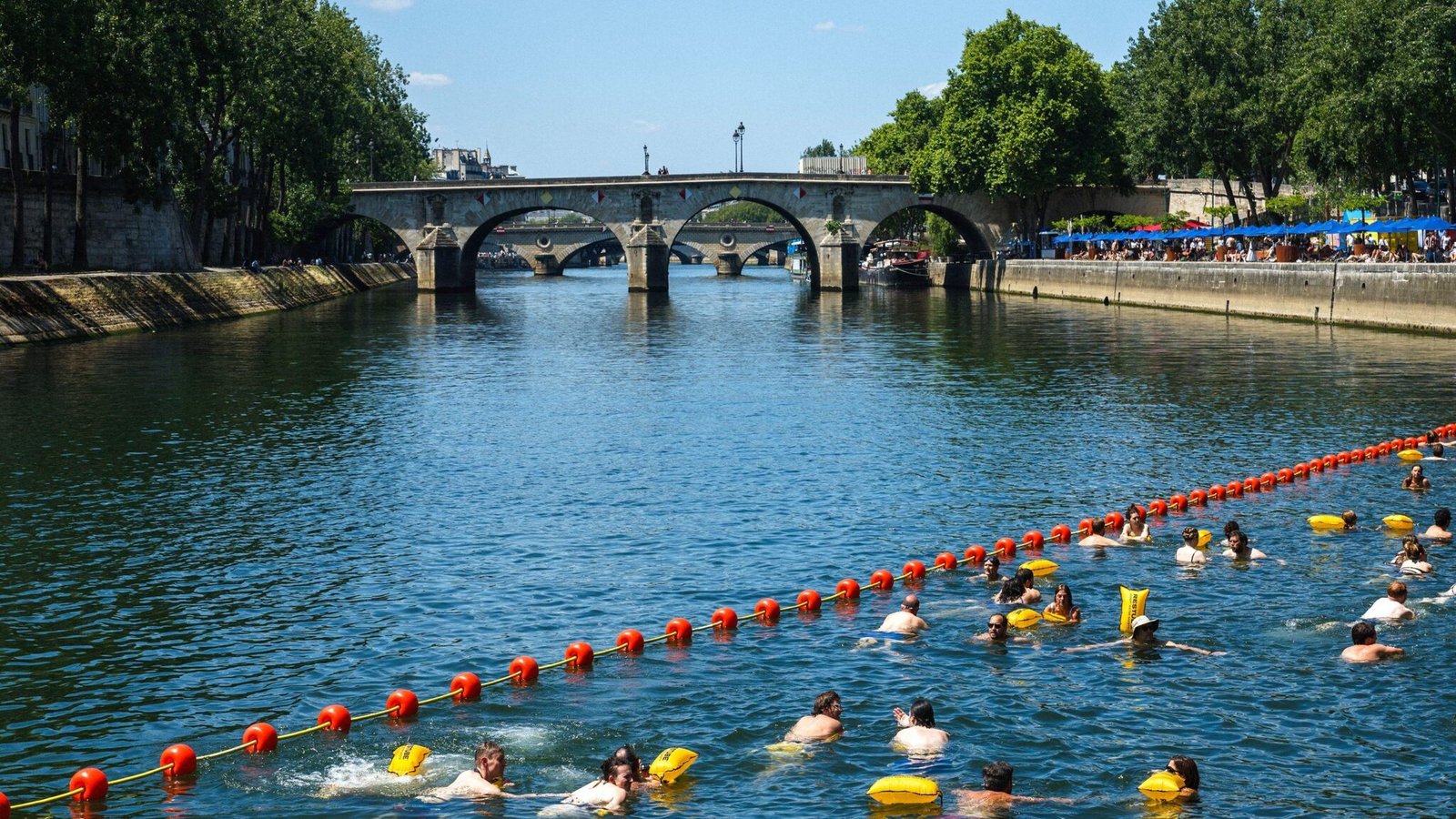
One of the most emotional moments came when public swimming officially returned to selected sections of the Seine.
Families, children, athletes, and visitors lined up to experience something that previous generations could only imagine.
Designated swimming zones now feature:
- Lifeguards on duty
- Safety barriers
- Water quality monitoring
- Floating platforms
- Changing facilities
- Emergency rescue equipment
Officials emphasize that swimming is permitted only in approved areas where conditions are continuously monitored.
For many Parisians, the reopening represents a symbolic reunion with a river that has always defined the city’s identity.
Environmental Success Beyond Tourism
The success of Seine River Swimming reflects much more than improved recreation.
Cleaner water has encouraged the return of fish species and other aquatic wildlife that had largely disappeared decades ago.
Scientists report healthier ecosystems throughout parts of the river, demonstrating how environmental investment can produce long-term ecological benefits alongside economic growth.
The project has become an international example for cities hoping to restore polluted waterways while improving residents’ quality of life.
Tourists Discover a New Paris Experience
Visitors from around the world are now adding Seine River Swimming to their travel itineraries.
Instead of simply taking river cruises or walking along the famous embankments, tourists now have the opportunity to cool off in carefully managed swimming areas with spectacular views of Paris landmarks.
Swimming beneath the skyline of one of the world’s most beautiful cities offers an experience unlike almost anywhere else.
Travel experts believe the attraction will become especially popular during increasingly hot European summers, providing both recreation and relief from rising temperatures.
Technology Keeps the Water Safe
Maintaining safe swimming conditions requires constant monitoring.
Water quality is tested regularly for bacteria levels and other indicators that could affect public health.
If heavy rainfall temporarily reduces water quality, officials can quickly close swimming zones until conditions improve.
Digital monitoring systems allow authorities to respond rapidly, ensuring visitors receive accurate safety information before entering the water.
This technology plays a critical role in maintaining public confidence in Seine River Swimming.
Challenges Still Remain
Although the transformation has been impressive, officials acknowledge that maintaining clean water requires ongoing effort.
Climate change, aging infrastructure, and increasingly intense storms continue creating challenges for urban waterways.
Heavy rainfall can occasionally overwhelm sewer systems, temporarily affecting water quality despite extensive upgrades.
Authorities stress that continued investment, regular maintenance, and environmental protection will remain essential for preserving the Seine’s remarkable recovery.
A Global Model for Urban Rivers
Cities around the world are closely watching Paris’ success.
Many urban rivers—from London’s Thames to Chicago’s Chicago River and waterways across Asia and South America—have faced similar pollution challenges.
Environmental planners believe the Seine demonstrates that even heavily polluted rivers can recover through long-term investment, scientific management, and political commitment.
The project also highlights how environmental restoration can boost tourism, improve public health, and strengthen local economies simultaneously.
What This Means for Paris
The return of Seine River Swimming symbolizes a broader transformation in how cities approach sustainability.
Rather than viewing rivers as barriers or industrial resources, modern urban planning increasingly recognizes them as valuable public spaces that contribute to healthier communities.
For Paris, the Seine has always been its historic heart.
Now, after decades of cleanup, it is once again becoming a place where people can safely gather, relax, exercise, and enjoy one of Europe’s most iconic landscapes.
Looking Ahead
Officials expect Seine River Swimming to remain a popular seasonal attraction while continuing to expand environmental education and public awareness.
Future improvements may include additional swimming areas, enhanced riverfront facilities, and ongoing investments to maintain excellent water quality.
As climate resilience becomes increasingly important for cities worldwide, Paris’ experience offers valuable lessons about balancing environmental protection, tourism, recreation, and public health.
Summary
Seine River Swimming marks one of the most remarkable environmental comeback stories in modern Europe. After more than a century of pollution and swimming bans, the Seine has been transformed into a safe and vibrant public recreation area through years of investment in water treatment, infrastructure, and environmental restoration. Today, residents and tourists alike are enjoying designated swimming zones, while the project stands as a global example of how determined conservation efforts can breathe new life into historic urban waterways.
THANKS FOR READING