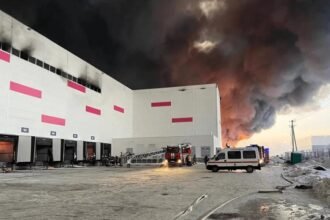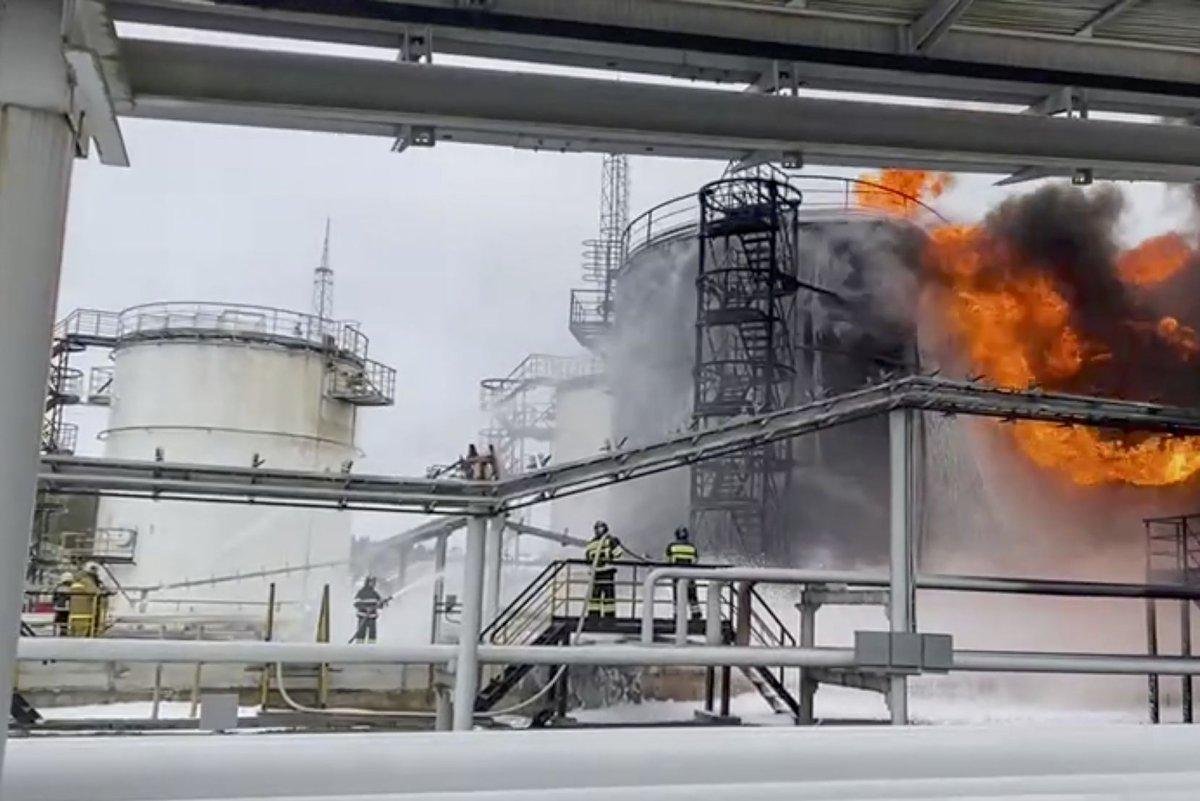

Ukrainian Drone Strike operations have reached another dangerous level after a large attack on Russia’s Tatarstan region killed at least 13 people and wounded dozens, according to Russian officials. The strike hit the city of Nizhnekamsk, around 500 miles east of Moscow, and targeted an important industrial area that includes one of Russia’s major oil refineries.
The attack marks one of the deadliest Ukrainian strikes inside Russia in two years and highlights how increasingly sophisticated long-range drones are changing the geography of the war. Russian authorities said civilians were among those killed, while Ukraine’s military said the operation targeted the TANECO oil refinery, an important part of Russia’s energy infrastructure.
The attack comes as Russia and Ukraine continue exchanging large-scale drone and missile strikes, with neither side showing signs of abandoning its military strategy.
13 People Reportedly Killed in Nizhnekamsk
Russian authorities said the Ukrainian Drone Strike killed 13 people in Nizhnekamsk and injured dozens more.
Reuters reported that the victims included a child and several Central Asian nationals. Seven of those killed were citizens of Uzbekistan, while another victim was from Tajikistan. Russian officials said nine of the fatalities occurred at a hostel, while dozens of people were injured.
The casualty figures have been reported by Russian authorities and could change as emergency crews continue assessing the damage.
The deaths make the attack particularly significant because large numbers of civilians were reportedly caught in the aftermath of strikes aimed at industrial infrastructure.
TANECO Refinery Was Among the Main Targets
Ukraine’s military said its forces targeted the TANECO oil refinery in Tatarstan.
The facility, operated by Russian oil company Tatneft, is an important component of the country’s energy industry and has previously been targeted during the war.
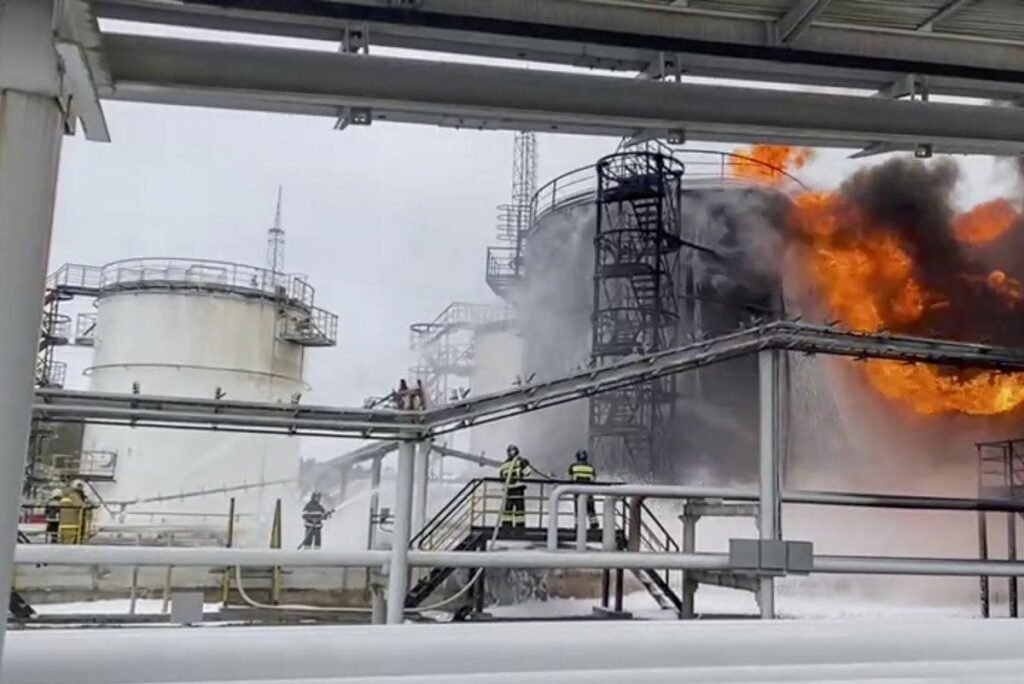
Videos verified by Reuters showed smoke rising from the refinery following the attack. Russian authorities acknowledged the drone attacks but did not independently confirm all of Ukraine’s claims about the targets.
Ukraine has increasingly targeted Russian oil refineries, fuel facilities, and other infrastructure that it says contributes to Moscow’s ability to wage war.
The strategy is intended to put pressure on Russia’s fuel supply and military logistics while demonstrating that Ukrainian forces can reach targets far beyond the front line.
A Strike Hundreds of Miles From the Border
One of the most striking elements of the attack is its distance from Ukraine.
Nizhnekamsk is deep inside Russia, roughly 800 kilometers from Moscow and far from the Ukrainian border.
The ability of Ukrainian drones to travel such distances demonstrates how rapidly long-range unmanned technology has developed during the conflict.
Ukraine has invested heavily in domestic drone production, allowing it to conduct operations without relying exclusively on imported weapons systems.
Modern long-range drones can travel hundreds or even thousands of miles, creating new challenges for Russian air-defense networks.
Civilian Casualties Raise Serious Concerns
The deaths of civilians have added another tragic dimension to the conflict.
Russian officials accused Ukraine of deliberately targeting civilian areas, while Ukrainian officials have said their strikes are aimed at military and industrial targets supporting Russia’s war effort.
Determining responsibility and intent in the immediate aftermath of an attack can be difficult, particularly when explosions affect multiple facilities.
International humanitarian law requires parties to distinguish between military objectives and civilians and to take feasible precautions to minimize civilian harm.
The reported deaths underscore the devastating consequences when attacks occur near residential or civilian facilities.
Ukraine Says the War Must Reach Russia
Ukraine has increasingly argued that Russian territory should not be considered immune from military pressure.
For more than four years, Russian missile and drone attacks have repeatedly struck Ukrainian cities, energy infrastructure, factories, and transportation networks.
Kyiv says its long-range operations are designed to impose costs on Russia and disrupt the infrastructure supporting its military campaign.
The latest Ukrainian Drone Strike fits into that broader strategy.
Rather than limiting operations to the battlefield, Ukraine is attempting to target the economic and industrial systems that help sustain Russia’s war effort.
Russia Faces a Growing Air-Defense Challenge
The attack also illustrates the difficulty Russia faces in defending its enormous territory.
Russian air defenses have intercepted many Ukrainian drones during previous attacks, but the sheer size of the country makes it difficult to protect every industrial facility and city.
Long-range drone operations can also involve multiple aircraft approaching from different directions, potentially forcing defenders to spread their resources across a large area.
The repeated attacks have prompted Russian authorities to increase security around energy infrastructure, airports, military facilities, and industrial sites.
Energy Infrastructure Is Becoming a Major Battlefield
Oil refineries have become increasingly important targets during the conflict.
Russia is one of the world’s largest energy producers, and its refinery network converts crude oil into gasoline, diesel, aviation fuel, and other petroleum products.
Damage to refineries can reduce fuel production, create transportation challenges, and force companies to redirect supplies.
Ukraine has repeatedly attacked Russian energy infrastructure as part of its broader campaign to weaken the economic foundation supporting Moscow’s military operations.
The Attack Was Part of a Wider Drone Campaign
The Ukrainian Drone Strike in Tatarstan was not an isolated incident.
Russian officials reported a large overnight wave of Ukrainian drones across multiple regions, while Ukraine also reported continued Russian attacks on its territory.
The scale of the exchange demonstrates how drones have become a central weapon for both sides.
Unlike traditional aircraft, drones can be produced in large numbers and used for relatively low-cost attacks against expensive infrastructure.
That imbalance is changing military calculations on both sides.
Russia Continues Its Own Attacks
While Ukrainian drones struck deep inside Russia, Russian forces continued launching attacks against Ukraine.
Reuters reported that three people were killed in a Russian strike on Kharkiv around the same period, while other Russian attacks caused additional casualties and infrastructure damage.
The continuing exchange shows that the conflict remains highly active across a broad geographic area.
Each side says its attacks are intended to weaken the other’s military capabilities, but civilians continue to face the consequences.
Foreign Workers Among the Victims
The reported presence of Uzbek and Tajik victims highlights another aspect of the war.
Industrial facilities and construction sites across Russia employ workers from other former Soviet republics and neighboring countries.
When attacks strike workplaces, hostels, or industrial communities, the casualties can extend beyond Russian citizens.
The deaths therefore have implications for countries far beyond the immediate conflict zone.
What the Attack Means for the War
The latest Ukrainian Drone Strike demonstrates that the front line is no longer defined simply by trenches and artillery positions.
The war increasingly involves long-range attacks against:
- Oil refineries
- Fuel depots
- Military facilities
- Industrial plants
- Logistics hubs
- Energy infrastructure
This means civilians far from the traditional battlefield can suddenly find themselves exposed to military operations.
It also increases pressure on governments to strengthen air defenses around strategically important facilities.
A New Phase of Long-Range Warfare
Military analysts have increasingly described the Russia-Ukraine conflict as a testing ground for modern drone warfare.
Both countries are experimenting with longer ranges, larger numbers of drones, improved navigation, electronic warfare, and artificial intelligence-assisted systems.
The result is a rapidly changing battlefield.
Ukraine’s ability to strike targets deep inside Russia could become an increasingly important component of its strategy as the war continues.
Diplomatic Pressure Remains
The latest escalation comes despite continuing international efforts to encourage an end to the war.
The growing number of long-range attacks makes diplomatic progress more difficult because each side has incentives to demonstrate military strength before potential negotiations.
At the same time, the mounting civilian death toll continues to increase pressure for a political solution.
What Happens Next?
Russia is likely to strengthen defenses around major energy and industrial facilities following the attack.
Ukraine, meanwhile, has shown little indication that it intends to stop long-range operations against Russian infrastructure it considers strategically important.
Future attacks could focus on refineries, logistics networks, military facilities, or other parts of Russia’s war economy.
The central question is whether these operations will alter Russia’s military calculations or instead trigger even more intense retaliation against Ukraine.
Why This Story Matters
The latest Ukrainian Drone Strike demonstrates how far the war has expanded from the battlefield.
An attack deep inside Russia that kills civilians and damages major energy infrastructure shows that neither side can easily separate military operations from their broader economic and social consequences.
For Russia, the attacks create a growing security challenge. For Ukraine, they provide a way to strike at infrastructure supporting the Russian war effort.
For civilians on both sides, however, the continuing escalation brings another painful reminder of the war’s human cost.
Summary
The Ukrainian Drone Strike in Nizhnekamsk, Russia, killed at least 13 people and injured dozens, according to Russian authorities. Ukraine said it targeted the TANECO oil refinery, an important energy facility in Tatarstan, while Russian officials reported that a nearby hostel was also hit and that civilians were among the dead. The attack represents one of the deadliest Ukrainian strikes inside Russia in two years and demonstrates the growing reach of long-range drone warfare. As both countries continue targeting infrastructure far behind the front lines, the conflict is becoming increasingly dangerous for civilians and increasingly difficult to contain.
THANKS FOR READING