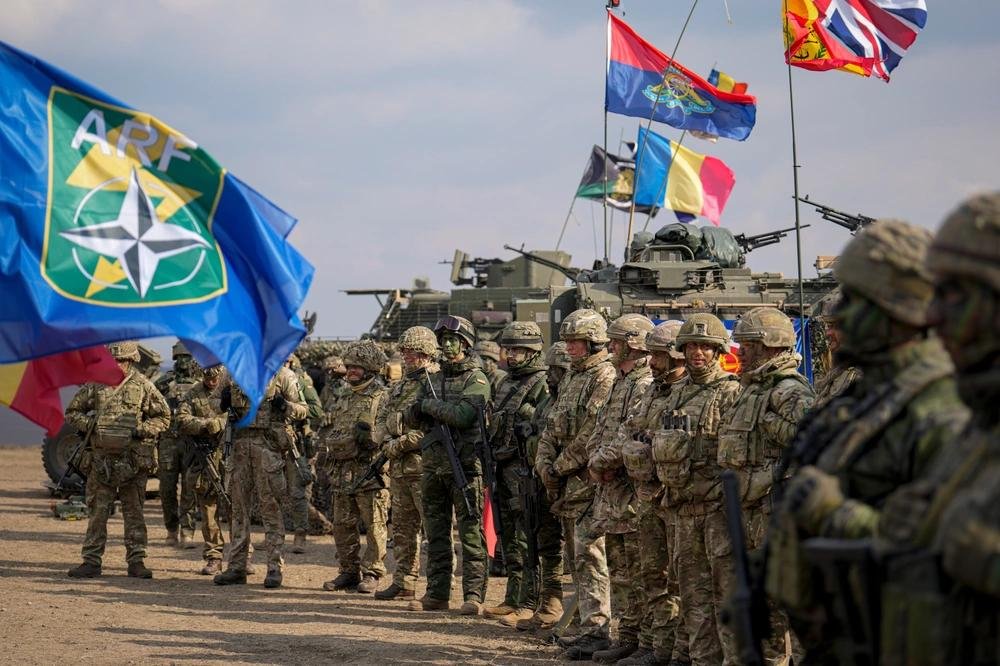
NATO Unity is facing renewed scrutiny after new U.S. intelligence assessments reportedly warned that Russian President Vladimir Putin could consider a limited attack or other aggressive action against a NATO member in an effort to test the alliance’s resolve.
The assessment does not mean that an attack is imminent or that U.S. intelligence has concluded Putin has made a final decision to attack NATO. Instead, officials reportedly see a range of possible scenarios, including cyberattacks, other forms of hybrid aggression, or a limited military incursion designed to determine how quickly and firmly NATO would respond.
The warning comes as Russia’s war in Ukraine continues and tensions between Moscow and the Western alliance remain exceptionally high. It also arrives at a sensitive moment for NATO Unity , which has repeatedly emphasized that its members are committed to collective defense.
A New Concern for the Western Alliance
The central concern behind the intelligence assessment is not necessarily a large-scale Russian invasion of Europe.
Instead, analysts are reportedly examining the possibility of a smaller operation designed to create uncertainty.
A cyberattack, sabotage campaign, drone incident, or limited incursion could potentially force NATO governments to decide how to respond without immediately triggering the kind of large-scale military confrontation that could follow a clear invasion.
That makes the scenario particularly difficult for policymakers.
A limited attack could be designed to test whether NATO Unity governments act together or begin debating different responses.
Why NATO Unity Matters
NATO’s most important security principle is collective defense.
Under Article 5 of the North Atlantic Treaty, an armed attack against one member is considered an attack against all. However, NATO Unity explains that each ally determines what assistance it considers necessary, meaning an Article 5 response does not automatically require every country to respond in exactly the same way.
That distinction is important.
A major conventional invasion would present an obvious threat. A smaller or ambiguous operation could create political disagreement about the appropriate response.
For Russia, if such an operation were ever attempted, the strategic objective could be to expose divisions rather than immediately seek a major military victory.
The Baltics and Poland Draw Particular Attention
Recent reporting indicates that U.S. intelligence officials believe the Baltic states or Poland could be among the locations most vulnerable to a potential test of NATO’s resolve. The reports do not establish that Russia has selected a specific target or that an attack is planned.
The Baltic region is strategically sensitive because Estonia, Latvia, and Lithuania share borders with Russia or Belarus and are located close to the Russian military sphere.
Poland is also a major NATO member on the alliance’s eastern flank and plays a central role in supporting European security and Ukraine.
Any incident involving these countries could therefore have consequences far beyond the immediate location.
Russia Has Already Used Hybrid Pressure
The concern about a possible future attack does not exist in isolation.
European governments have repeatedly accused Russia of using tactics below the threshold of conventional warfare, including cyber operations, disinformation, sabotage, and other forms of pressure.
U.S. intelligence has also warned that Russia has developed significant capabilities for both military and nonmilitary operations. The 2026 Annual Threat Assessment said Russia retains the ability to challenge U.S. interests globally and uses so-called gray-zone tactics to pursue its objectives below the level of open armed conflict.
That history is one reason officials are watching seemingly limited incidents so closely.
NATO Says It Is Prepared
NATO leaders have sought to counter concerns about divisions within the alliance.
At its July 2026 summit in Ankara, NATO members reaffirmed what the alliance described as an “ironclad commitment” to collective defense under Article 5. Leaders said unity, solidarity, and collective strength remain central to NATO’s security strategy.
That message is intended to make clear that an attempt to divide the alliance would face a coordinated response.
NATO has also continued increasing defense investment and strengthening military readiness across Europe.
Russia’s War in Ukraine Remains Central
The intelligence assessment is closely connected to the future of the war in Ukraine.
According to the U.S. intelligence community’s 2026 assessment, Moscow has maintained the upper hand in the conflict while continuing to invest in its defense-industrial base. The report also warned that the most dangerous threat to U.S. interests could involve an escalation from the existing war or a new conflict leading to direct hostilities.
U.S. officials reportedly believe that Russia’s future decisions could depend partly on what happens in Ukraine.
If Moscow believes the war has reached an unfavorable political outcome, officials are assessing whether the Kremlin might seek other ways to demonstrate strength or challenge Western security commitments.
The Risk of Miscalculation
One of the biggest concerns is miscalculation.
A limited incident could begin without either side intending to start a major war. But once military forces become involved, events can move rapidly.
For example, a cyberattack followed by accusations and retaliation could escalate into broader measures. Similarly, a border incident involving drones or unidentified forces could create pressure for governments to respond before all the facts are known.
This is why military communication channels, intelligence sharing, and diplomatic contacts remain important even during periods of intense tension.
Europe Is Strengthening Its Defenses
European NATO members have been increasing defense spending and improving military readiness.
The alliance says European allies and Canada increased investments in core defense requirements by more than $139 billion in 2025. NATO leaders have also committed to further strengthening the alliance’s capabilities.
New investments include air defense, ammunition production, military mobility, intelligence capabilities, and forces positioned along NATO’s eastern flank.
The goal is to make any potential Russian calculation about testing the alliance significantly more difficult.
The United States Faces Its Own Readiness Questions
The latest reports also raise questions about U.S. military resources.
According to reporting on the intelligence assessment, some U.S. officials are concerned about shortages in certain critical munitions after years of military assistance to Ukraine and U.S. operations elsewhere.
That does not mean the United States lacks the ability to defend NATO allies. However, ammunition production and stockpile levels have become important parts of the broader debate about American military readiness.
For NATO planners, maintaining sufficient resources is essential to making deterrence credible.
A Test That Could Have Global Consequences
If Russia were to conduct a limited attack against a NATO member, the consequences could be enormous even if the military operation itself were small.
NATO governments would immediately face difficult questions about the appropriate response.
A weak response could encourage further Russian pressure. An extremely aggressive response could increase the risk of a wider confrontation between Russia and NATO.
Finding the right balance would be one of the most serious security challenges Europe has faced in decades.
No Attack Has Been Announced
It is important to emphasize that the intelligence assessment is a warning about a possible future scenario, not confirmation of an upcoming Russian attack.
There is currently no public evidence establishing that Putin has ordered an operation against a NATO country.
Intelligence assessments are designed to evaluate possibilities and risks so governments can prepare for them.
That distinction is particularly important when dealing with sensitive military intelligence.
What Happens Next?
NATO governments are likely to continue strengthening defenses while monitoring Russia’s military posture and political decisions.
Officials will also watch developments in Ukraine, Russian force movements, cyber activity, and potential incidents along NATO’s eastern border.
For the alliance, maintaining a united political message may be as important as increasing military capabilities.
The stronger the perception of collective resolve, the harder it becomes for any potential adversary to believe that a limited attack could split the alliance.
Why This Story Matters
The latest warning about NATO Unity highlights one of the central security questions facing Europe: Can the alliance remain politically united if confronted with a complicated, limited, or ambiguous attack?
NATO leaders insist that the alliance is stronger and better prepared than before. U.S. intelligence assessments, however, show why officials continue preparing for scenarios that could challenge that confidence.
The coming years could therefore be crucial for European security.
Summary
NATO Unity is under renewed scrutiny after U.S. intelligence reportedly assessed that Vladimir Putin could consider testing the alliance with a limited attack or hybrid operation. Possible scenarios reportedly range from cyberattacks to a small-scale military incursion, potentially involving NATO’s eastern flank. The assessment does not mean an attack is imminent, but it underscores continuing concerns about Russia’s intentions and NATO’s ability to respond collectively. With the alliance reinforcing its defenses and reaffirming Article 5, maintaining unity and credible deterrence will remain central to European security.
THANKS FOR READING