
Flávio Bolsonaro Steps Into His Father’s Political Shadow
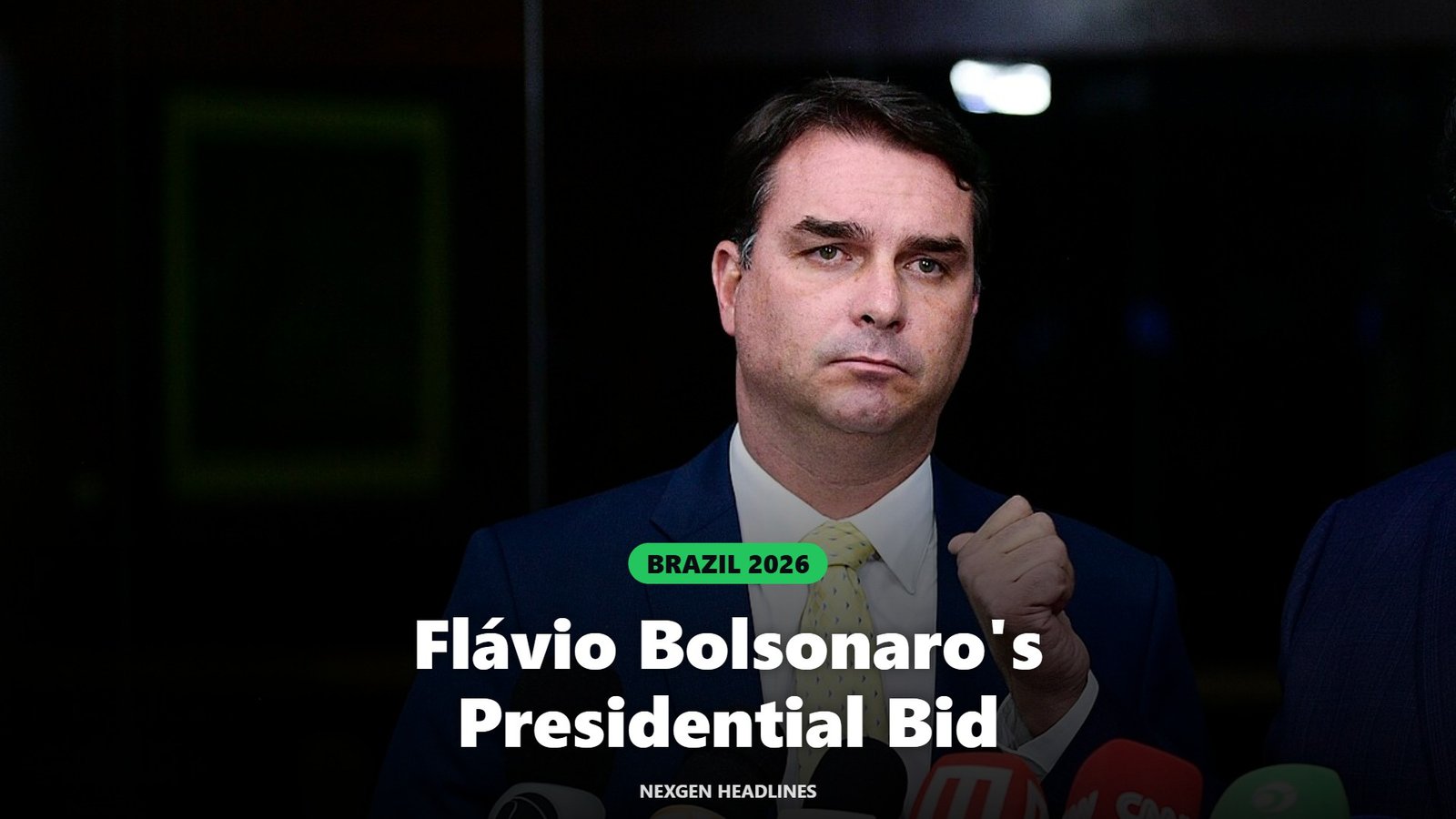
Flávio Bolsonaro has entered the final stretch of Brazil’s 2026 presidential campaign carrying one of the country’s most recognizable political surnames.
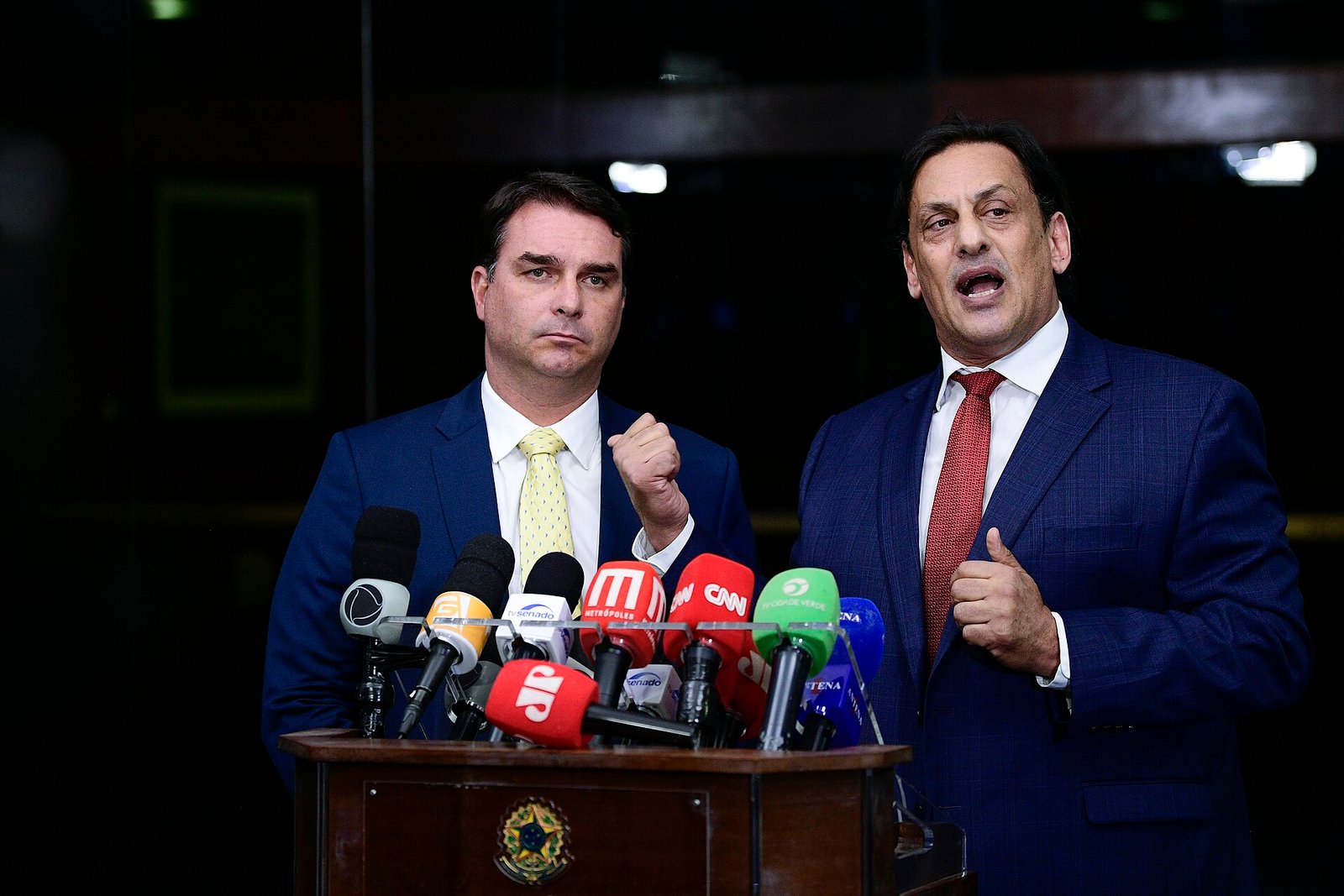
The 45-year-old senator is the eldest son of former President Jair Bolsonaro and has been chosen by his father’s Liberal Party, or PL, as its presidential candidate. His campaign is built around continuing the political project associated with Jair Bolsonaro, but Flávio is also attempting to establish his own identity as a national candidate.
That balance is central to his campaign.
At a rally in Rio de Janeiro, Flávio acknowledged the comparisons with his father, joking that while he may resemble Jair Bolsonaro, comparing the two would be like comparing the son of soccer legend Pelé with Pelé himself. The comment captured the challenge facing his candidacy: using the Bolsonaro name without being completely defined by his father.
A Political Legacy That Still Has a Powerful Base
Jair Bolsonaro remains an influential figure among Brazil’s political right even though he is unable to run in the 2026 election.
Reuters reported that the former president personally passed the political mantle to Flávio, telling his eldest son to take on the presidential campaign. Flávio subsequently presented his candidacy as a continuation of his father’s political mission.
This gives Flávio something many first-time presidential candidates do not have: an established national political brand.
His campaign has repeatedly emphasized continuity, including conservative social positions, tougher crime policies, economic changes and opposition to the Workers’ Party government.
Reuters reported that Flávio has proposed tax cuts and a significant fiscal adjustment intended to reduce long-term borrowing costs. The same report noted that economists have questioned the level of detail behind some of those proposals.
Flávio Bolsonaro’s Security Message
Public security has become one of the most important themes of Flávio Bolsonaro’s campaign.
His political career began in Rio de Janeiro, where he served in the state legislature before entering the Senate in 2018. His political record has frequently focused on law enforcement and support for security forces.
During the presidential campaign, Flávio has called for tougher responses to violent crime and has supported lowering the age of criminal responsibility.
He has also advocated designating Brazil’s two largest criminal organizations as terrorist groups. The issue has become part of his broader argument that Brazil needs a stronger response to organized crime.
The subject has resonance with voters. A Quaest poll cited by CNN found that 33% of Brazilians surveyed in August identified violence as the country’s biggest problem, making it the most frequently cited concern in that survey.
The Challenge of Building a Broader Coalition
While the Bolsonaro name provides a strong political base, it also creates a difficult coalition-building challenge.
Earlier in the campaign, Flávio struggled to attract some prominent conservative figures and potential allies. AP reported that he initially had difficulty finding a high-profile running mate and that several influential political figures kept their distance from his campaign.
Reuters similarly reported that some conservative parties were initially skeptical of his candidacy.
That matters because Brazil’s presidential system often requires candidates to build alliances across parties and political groups. A candidate can have a strong core of supporters while still needing broader support to compete nationally.
Flávio’s campaign therefore has had two goals at once: preserve the loyalty of Bolsonaro supporters and reach voters who may have supported Jair Bolsonaro in the past but are less committed to his political style.
Family Tensions Have Added Another Complication
The Bolsonaro family itself has faced political disagreements during the campaign.
Flávio had a public dispute with his stepmother, Michelle Bolsonaro, who remains an influential figure among conservative and evangelical voters. The disagreement became significant because Michelle has her own political network and has been associated with conservative Christian constituencies.
The two later reconciled publicly, and Michelle returned to the campaign.
The episode nevertheless demonstrated that transferring a political movement from one family member to another is not automatic. Political organizations contain competing personalities, alliances and ambitions, even when they share a common ideological base.
Controversies Surrounding the Campaign
Flávio Bolsonaro has also faced scrutiny over a financial investigation connected to a planned film about his father.
Reuters reported that an investigation examined money associated with the production and that Flávio acknowledged that a banker had financed the project while denying wrongdoing. Brazilian authorities later opened an investigation involving allegations including corruption, money laundering and illicit capital flight. Flávio has rejected the allegations and described the investigation as politically motivated.
These allegations are part of the political environment surrounding the campaign, but they should not be treated as established findings of guilt.
The campaign has also been affected by Brazil’s broader political and institutional conflicts, particularly the long-running confrontation between Bolsonaro supporters and the country’s Supreme Federal Court.
What the Latest Polls Show
The latest polling provides a snapshot of a highly competitive race, rather than a definitive answer about the final result.
A Datafolha poll conducted from September 29 through October 1 among 2,506 people showed Lula with 42% support in a first-round scenario and Flávio with 38%. Other candidates were in single digits.
In a simulated runoff, Lula received 48% and Flávio 45%. Because Datafolha reported a two-percentage-point margin of error, Reuters described the runoff result as a technical tie.
Brazil’s first-round vote is scheduled for October 4. If no candidate receives more than 50% of the valid votes, the two leading candidates advance to a runoff scheduled for October 25.
These figures are a measurement of voter intentions at a particular time, not a prediction of the final result.
Where Flávio Bolsonaro Has Strength
One of Flávio Bolsonaro’s clearest advantages is the loyalty of voters who identify strongly with the Bolsonaro movement.
A September analysis from the Americas Society/Council of the Americas described the race as a technical tie in the broader polling picture and noted that both leading candidates faced high rejection levels.
CNN also reported that Flávio has been particularly competitive among evangelical Christians and higher-income voters, while Lula has remained stronger among lower-income voters and Catholics.
That shows why the election is not simply a contest between two personalities. It also reflects differences in economic concerns, religion, security, political identity and attitudes toward Brazil’s institutions.
The Question of Jair Bolsonaro’s Legacy
The central question surrounding Flávio Bolsonaro is ultimately larger than his personal political career.
Can the Bolsonaro movement remain powerful without Jair Bolsonaro himself appearing on the ballot?
Flávio’s campaign provides an important test of that question.
He has embraced his father’s legacy rather than attempting to completely separate himself from it. At the same time, reporting has described him as more conciliatory and more willing to negotiate with lawmakers than his father.
Whether that combination can attract enough voters beyond the traditional Bolsonaro base will be determined by Brazilian voters.
For now, the available polling shows a close contest heading into the October 4 first round, with Flávio Bolsonaro positioned as the main right-wing challenger to Lula. The final outcome will depend on the votes cast by Brazilians and, if necessary, the October 25 runoff.
THANKS FOR READING