Thanksgiving Storm Brings Flooding, Power Outages and Travel Chaos
Thanksgiving Storm conditions disrupted holiday celebrations across several parts of the United States on November 26, leaving communities dealing with flooded roads, damaged property, power outages, and widespread travel delays.
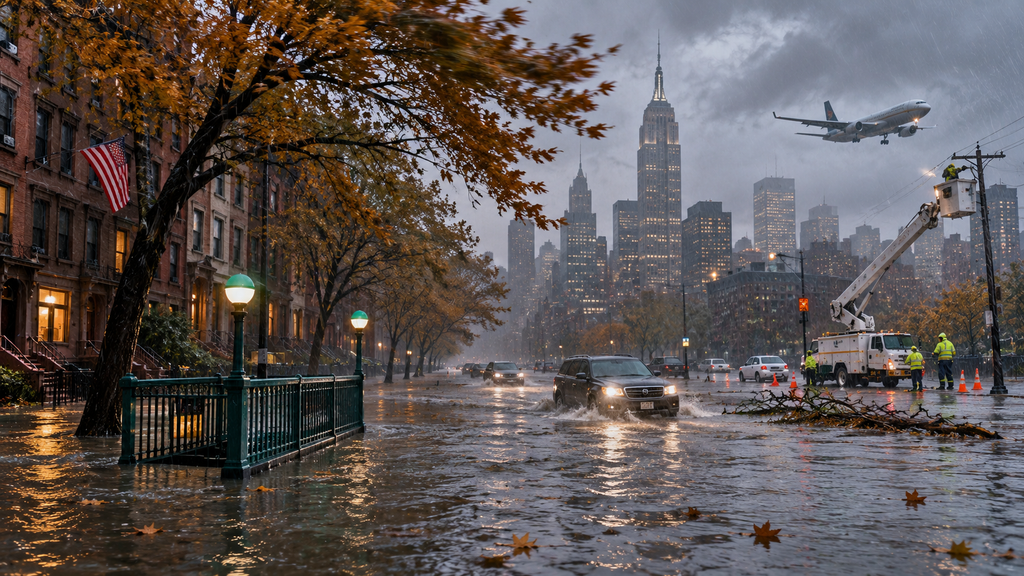
A powerful weather system brought heavy rain and strong winds to the East Coast while winter weather affected parts of the Midwest. Coastal communities also faced flooding as high tides combined with strong onshore winds.
The impact was significant. More than 900,000 homes and businesses were without electricity Thursday evening, according to outage tracking data cited by The Associated Press. Thousands of flights were delayed or canceled, and several states issued emergency warnings.
One of the most unusual developments involved New York City’s famous Macy’s Thanksgiving Day Parade. Organizers postponed the event until Saturday because dangerous winds could have made it unsafe to fly the parade’s enormous balloons.
The weather emergency has affected families, travelers, businesses, and emergency workers during one of the busiest holiday periods of the year.
More Than 900,000 Customers Lose Electricity
Power outages became one of the biggest problems as the storm moved across the country.
According to Reuters, approximately 961,000 utility customers were without electricity at the storm’s peak on Thursday. The number had fallen to more than 908,000 by late Thursday, although restoration work was continuing.
Pennsylvania, New Jersey, Maryland, and Virginia were among the hardest-hit states.
Strong winds damaged trees and power lines, leaving some neighborhoods without electricity during Thanksgiving celebrations. Utility crews worked through difficult conditions to assess damage and restore service.
For families hosting holiday dinners, the outages created unexpected challenges. Some households had to prepare meals without electricity, while others used candles and alternative arrangements to get through the evening.
The Thanksgiving Storm also highlighted how quickly severe weather can affect essential services, particularly when strong winds and flooding happen at the same time.
Macy’s Thanksgiving Day Parade Postponed for the First Time
One of the most widely discussed consequences of the storm was the postponement of New York City’s Macy’s Thanksgiving Day Parade.
The event is a major American holiday tradition, attracting spectators along its route and millions of television viewers.
Organizers decided to move the parade to Saturday, November 28, at 8:30 a.m. Eastern Time. The decision followed concerns that powerful wind gusts could make the giant balloons difficult to control between Manhattan’s tall buildings.
According to NBC New York, this was the first time in the parade’s history that the event had been postponed because of weather.
The decision disappointed many families who had traveled to New York specifically to attend the celebration.
One affected group was the Pride of Pearland High School marching band from Texas. The group had to adjust its travel arrangements after the postponement. Its community reportedly raised $350,000 to help cover the cost of keeping approximately 500 members in New York for two additional nights, according to CBS News.
Although the schedule changed, organizers and performers continued preparing for Saturday’s celebration.
Flight Delays and Cancellations Disrupt Holiday Travel
Air travel was another major casualty of the severe weather.
Flight-tracking figures cited by Reuters showed 2,411 delays and 454 cancellations involving U.S. flights during Thursday’s disruption.
Airports in the Washington and New York metropolitan areas experienced particularly difficult conditions.
Strong winds, reduced visibility, and weather-related operational restrictions made it harder for airlines to maintain normal schedules.
Travelers heading home after Thanksgiving or trying to reach family gatherings faced unexpected delays. Some passengers had to rebook flights, arrange overnight accommodation, or change their travel plans entirely.
Rail transportation also experienced problems. Amtrak Northeast warned passengers about delays after downed power lines near Trenton, New Jersey, affected train operations.
The Thanksgiving Storm serves as a reminder that holiday travel plans can change quickly when severe weather affects several transportation systems at once.
Passengers are encouraged to check directly with airlines and rail operators before leaving for the airport or station.
Flooding Creates Dangerous Conditions Along the East Coast
Heavy rainfall and coastal flooding affected communities from North Carolina toward New York and New Jersey.
New Jersey was placed under a state of emergency as officials responded to flooding and transportation problems.
Parts of New York also experienced serious weather-related disruptions. In New York City, emergency responders rescued people from vehicles caught in floodwater.
Coastal locations faced additional problems as strong onshore winds pushed water toward the shoreline. When these winds combine with unusually high tides, flooding can become especially severe in low-lying neighborhoods.
Road closures, damaged vehicles, and water-covered streets made travel dangerous in several communities.
Officials urged residents to avoid flooded roads and follow local emergency instructions. Even shallow-looking water can conceal road damage or become deep enough to move a vehicle.
Emergency services also reminded residents that driving through floodwater can put both motorists and rescue workers at risk.
Midwest Faces Heavy Snow and Dangerous Winds
The storm was not limited to the East Coast.
Parts of the Midwest experienced heavy snowfall, strong winds, and difficult road conditions.
Missouri received particularly significant snowfall, with some locations reporting approximately 14 inches. Parts of Illinois also experienced winter weather that complicated travel.
In Wentzville, Missouri, the roof of an ice arena collapsed amid the severe weather. The incident added to concerns about the structural risks created by heavy snow.
Snow-covered roads and reduced visibility made driving more difficult, especially for people traveling during the holiday period.
The combination of rain, flooding, snow, and high winds demonstrated how one large weather system can produce very different hazards across different regions.
California Also Deals With Coastal Flooding
The West Coast experienced a separate set of weather-related problems.
California faced strong coastal conditions and unusually high tides, creating flooding concerns in shoreline communities.
High waves and powerful water movement affected coastal infrastructure. Reports described damage to a pier and disruptions to transportation services.
Amtrak service was also affected by weather-related problems in parts of the region.
Coastal flooding can occur even when rainfall is not especially heavy. Strong winds and high tides can push seawater into areas that are normally above the waterline.
Residents in vulnerable coastal locations were advised to follow evacuation notices and stay away from dangerous shorelines.
Emergency Officials Continue Monitoring Conditions
As the storm system moves away from some affected areas, emergency agencies and utility companies are concentrating on recovery.
Power restoration, road inspections, floodwater removal, and transportation repairs remain important priorities.
Residents who experienced outages should avoid approaching fallen power lines and report them to utility companies. People returning to flooded homes should also be careful around electrical equipment, damaged structures, and contaminated water.
Weather conditions can improve before every hazard disappears. Flooded roads, weakened trees, and damaged power infrastructure may remain dangerous even after rainfall slows.
Local emergency alerts and National Weather Service updates remain important sources of information for people living in affected areas.
What Travelers and Families Should Do Next
The Thanksgiving Storm has disrupted plans for thousands of Americans, but practical precautions can reduce further risks.
Travelers should:
- Check flight and train status before leaving home.
- Allow additional time for airport and road journeys.
- Avoid driving through standing or moving floodwater.
- Follow state and local emergency alerts.
- Keep phones charged and emergency supplies available.
- Stay away from fallen power lines and damaged trees.
- Confirm updated event schedules before traveling to large public gatherings.
Families planning to attend the rescheduled parade should check official Macy’s and New York City announcements for the latest arrangements.
Recovery Efforts Offer Hope After a Difficult Holiday
Despite the disruption, emergency workers, utility crews, local authorities, and community volunteers have been working to help affected residents.
The storm created difficult conditions during a holiday when many people expected to spend time with family. However, the response has also demonstrated the importance of preparation and cooperation during extreme weather.
For communities dealing with power outages and flooding, recovery may take longer than the storm itself. Repairing infrastructure, clearing debris, and restoring normal transportation will require continued work.
The rescheduled parade also offers a chance for New York to continue one of its best-known holiday traditions, even if the celebration arrives a day later than planned.
Important News Takeaway
The Thanksgiving Storm caused widespread disruption across the United States on November 26, 2026. More than 900,000 homes and businesses lost electricity at one point, thousands of flights were delayed or canceled, and flooding affected communities along the East Coast.
New Jersey declared a state of emergency, while parts of the Midwest experienced heavy snowfall. California also faced coastal flooding and transportation problems.
New York City’s Macy’s Thanksgiving Day Parade was postponed for the first time because of weather and rescheduled for Saturday, November 28, at 8:30 a.m. ET.
As recovery efforts continue, residents and travelers should remain alert to local weather warnings, transportation updates, and safety instructions.
The storm has changed holiday plans for many Americans, but coordinated recovery efforts and community support are helping affected areas move toward normal conditions.
THANKS FOR READING