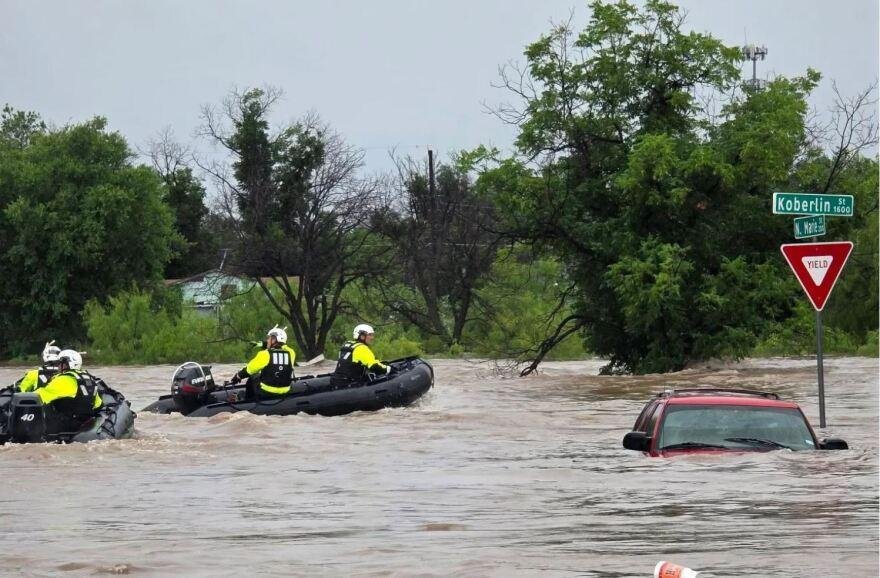
Texas Floods have claimed at least two lives while hundreds of people were rescued in the same Hill Country region devastated by the Camp Mystic disaster last year. Here’s the latest on the emergency response and ongoing flood threat.
The latest Texas Floods have once again brought heartbreak to communities across the state’s Hill Country, where relentless rainfall triggered life-threatening flash floods that killed at least two people and forced emergency crews to rescue hundreds of stranded residents. The flooding struck many of the same areas devastated by last year’s Camp Mystic disaster, reviving painful memories while highlighting both the region’s vulnerability and improvements in emergency preparedness.
State officials say more than 230 people have been rescued using helicopters, boats, and high-water vehicles as rivers overflowed, roads disappeared beneath rushing water, and neighborhoods were cut off by rapidly rising floodwaters. Governor Greg Abbott declared that protecting lives remains the state’s top priority, with thousands of emergency personnel deployed across affected counties.
A Familiar Region Faces Another Disaster
The hardest-hit areas include parts of the Texas Hill Country, a region well known for its scenic rivers but also for its susceptibility to flash flooding.
Communities near Kerrville, Uvalde, Comfort, and surrounding areas received extraordinary amounts of rainfall over several days. In some locations, rainfall totals approached 20 inches, causing rivers such as the Guadalupe, Nueces, Frio, and Pedernales to rise rapidly and overflow their banks.
The flooding occurred almost exactly one year after the catastrophic Camp Mystic flood disaster, making this latest emergency especially emotional for local residents still recovering from last year’s tragedy.
Lives Lost Despite Massive Rescue Effort
Authorities confirmed that at least two people died during the flooding.
According to state officials, one victim was swept away while inside a recreational vehicle, while another died after floodwaters overtook a vehicle during the storm. Officials continue searching damaged areas and caution that conditions remain dangerous in some locations.
Search-and-rescue teams remain active, checking isolated homes, flooded roadways, and rural communities where communication remains difficult.
Hundreds Rescued by Air and Water
Despite the tragic loss of life, emergency officials credit an enormous rescue operation with preventing a much larger disaster.
More than 230 rescues have been completed using Black Hawk helicopters, rescue boats, high-water vehicles, and specialized swift-water teams. Some rescues involved families trapped on rooftops, stranded motorists, and residents surrounded by rapidly rising floodwaters.
Governor Abbott said over 2,300 emergency personnel, 1,400 vehicles, dozens of boats, and aircraft were deployed across Texas to support local responders.
Remembering the Camp Mystic Disaster
The latest Texas Floods struck the same general region where Camp Mystic suffered one of the state’s worst natural disasters last year.
That flood claimed more than 100 lives, including campers and staff at the historic summer camp, prompting major reviews of emergency planning, flood warning systems, and evacuation procedures.
Officials say lessons learned from that tragedy helped improve emergency coordination during this week’s flooding, allowing authorities to issue warnings earlier and deploy rescue resources more quickly.
Why Texas Hill Country Floods So Quickly
Experts often refer to the Texas Floods Hill Country as “Flash Flood Alley.”
Several natural factors contribute to its flood risk:
- Steep hills accelerate runoff.
- Thin soils absorb little rainfall.
- Narrow river valleys channel water rapidly.
- Slow-moving thunderstorms can dump enormous amounts of rain over small areas.
When these conditions combine, rivers can rise several feet within hours, leaving little time for evacuation.
Meteorologists say this week’s flooding resulted from repeated rounds of heavy rain moving across already saturated ground.
Road Closures and Infrastructure Damage
Floodwaters have damaged roads, bridges, and public infrastructure throughout south-central Texas.
State transportation officials reported more than 100 roadway impacts, with dozens of roads closed because of flooding, washouts, or structural concerns. Drivers have been repeatedly warned not to attempt crossing flooded roadways.
Utility crews are also working to restore electricity and assess damage to water systems and other essential services.
Emergency Officials Urge Continued Caution
Although rainfall has decreased in some areas, officials warn that the danger has not ended.
Flooded rivers remain hazardous, weakened roads may collapse unexpectedly, and additional isolated showers could slow recovery efforts.
Emergency management agencies continue urging residents to:
- Avoid flooded roads.
- Follow evacuation orders.
- Monitor official weather alerts.
- Never drive through moving water.
- Stay away from swollen rivers and creeks.
These safety measures remain essential even after rainfall begins to diminish.
Communities Come Together
As rescue operations continue, communities across Texas are responding with remarkable generosity.
Volunteers are helping displaced families, local churches are opening temporary shelters, and relief organizations are distributing food, drinking water, clothing, and emergency supplies.
Many residents who experienced last year’s floods have returned to assist neighbors now facing similar hardships.
Emergency officials say community cooperation has played an important role throughout the response.
Climate and Future Flood Risks
Scientists continue studying whether climate change is contributing to increasingly frequent and intense rainfall events.
While no single storm can be directly attributed to climate change alone, warmer air can hold more moisture, increasing the potential for heavier rainfall under favorable weather conditions.
Experts emphasize that improving flood forecasting, expanding warning systems, and strengthening community preparedness will become increasingly important as extreme weather events continue affecting vulnerable regions.
Recovery Will Take Time
Once floodwaters recede, attention will shift toward damage assessments and rebuilding.
Emergency crews will inspect bridges, highways, homes, businesses, and public facilities while local governments coordinate disaster assistance for affected residents.
Insurance claims, infrastructure repairs, and cleanup efforts are expected to continue for weeks or even months.
Why This Story Matters
The latest Texas Floods demonstrate both the destructive power of extreme weather and the importance of emergency preparedness.
While the loss of life is heartbreaking, the successful rescue of hundreds of people reflects major improvements in emergency coordination since last year’s Camp Mystic tragedy.
Officials hope those lessons will continue saving lives as Texas faces future flood seasons.
Summary
The Texas Floods have claimed at least two lives while prompting one of the state’s largest rescue operations in recent months. More than 230 people were rescued across the Texas Hill Country, the same region devastated by last year’s Camp Mystic disaster. Emergency crews, supported by helicopters, boats, and thousands of responders, continue assisting affected communities as rivers slowly recede. Although the immediate weather threat is easing in some areas, officials warn that flood dangers remain and urge residents to stay alert while recovery efforts continue.
THANKS FOR REAEDING