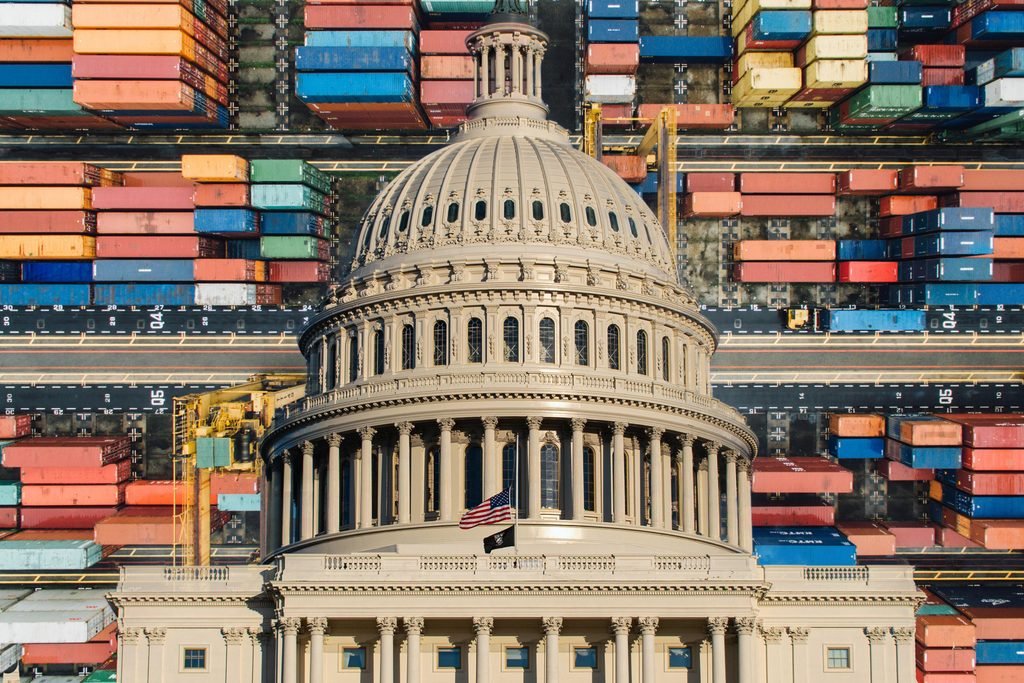
Trump Tariff Debate Creates a New Political Challenge in Washington
Trump Tariff Debate is gaining fresh attention in Washington as several Republican lawmakers signal that they may reconsider parts of President Donald Trump’s trade policy following major election losses.
The development could create an unexpected political opening for Democrats, who are preparing to take control of Congress. Some Republicans who previously supported Trump’s tariff strategy are now expressing interest in reviewing certain import taxes, particularly those affecting trade with Canada.
The shift does not mean Republicans are abandoning Trump’s broader economic agenda. However, it suggests that rising consumer costs and concerns from American businesses are creating pressure within the party.
According to an Associated Press report published November 27, several congressional Republicans interviewed after the election said they were willing to examine tariffs on a case-by-case basis. Some also argued that Congress should play a greater role in decisions involving trade policy.
The discussion could become one of the first major economic policy battles when the new Congress takes office.
Why Republicans Are Rethinking Trump’s Tariffs
President Trump has made tariffs a central part of his second-term economic strategy.
His administration argues that import taxes can encourage companies to manufacture products in the United States, protect domestic industries, and strengthen America’s negotiating position with foreign trading partners.
However, tariffs have also created concerns among businesses and consumers.
Companies that depend on imported materials or finished products may face higher costs when new taxes are introduced. Those expenses can eventually affect retail prices, business investment, and household budgets.
Following the recent election losses, some Republican lawmakers appear increasingly interested in examining whether the current tariff structure is achieving its intended goals.
Sen. Todd Young of Indiana said a reassessment was necessary and expressed support for more consumer-friendly approaches. Rep. Michael Guest of Mississippi also indicated that he could agree with Democrats on certain tariff issues.
The Trump Tariff Debate is therefore becoming more complicated than a simple disagreement between Republicans and Democrats. It is also exposing differences within the Republican Party itself.
Canada Tariffs Could Become the First Major Test
One area receiving particular attention is the United States’ trade relationship with Canada.
Canada is one of America’s closest economic partners, with businesses on both sides depending on cross-border trade.
Tariffs between the two countries can affect manufacturers, farmers, transportation companies, retailers, and consumers.
Democratic lawmakers have identified Canadian tariffs as a possible starting point for challenging Trump’s trade policy.
Incoming Senate Finance Committee Chairman Ron Wyden has described the issue as an important target. Other Democratic leaders believe that securing bipartisan support to remove certain Canadian tariffs could create momentum for broader discussions.
Some Republicans have also questioned whether these particular tariffs make economic sense.
Sen. John Kennedy of Louisiana said he did not see a strong justification for tariffs on Canada, although he continues to support certain tariffs involving countries such as China.
This difference is important because it shows that lawmakers may support different trade policies depending on the country involved.
New Tariff Plans Add More Pressure
The political debate is developing as the Trump administration considers additional tariffs.
According to the Associated Press, the administration proposed new tariffs on Wednesday targeting China, the European Union, Japan, South Korea, Taiwan, and nine other major trading partners.
The announcement adds another layer of uncertainty for companies that rely on international supply chains.
Businesses often need predictable trade rules to make decisions about manufacturing, hiring, transportation, and investment.
When tariffs change frequently, companies may delay expansion plans or search for alternative suppliers.
Some Republican lawmakers have argued that the administration should focus on clearer and more predictable policies instead of applying broad import taxes.
Sen. Todd Young has suggested that tariffs should be more carefully targeted toward specific goals, such as bringing strategically important manufacturing back to the United States.
The Trump Tariff Debate may therefore influence not only existing trade agreements but also future decisions involving American industries and global markets.
How Tariffs Can Affect American Consumers
Although tariffs are often discussed as a trade policy issue, their effects can reach ordinary households.
A tariff is generally a tax imposed on imported goods. Importers pay the tax when products enter the country, and businesses may respond by absorbing the expense, changing suppliers, or raising prices.
For example, a company importing electronic components could face higher costs after a tariff increase. If domestic alternatives are unavailable or more expensive, the business may pass some of those costs to customers.
Similar effects can occur in industries involving clothing, furniture, machinery, household products, and food-related supplies.
This does not mean every tariff automatically produces an identical price increase. The final effect depends on competition, exchange rates, supply chains, business decisions, and whether alternative products are available.
However, the possibility of higher costs has become an important concern as American families continue paying attention to affordability.
The Trump Tariff Debate is closely connected to this issue because lawmakers are increasingly being asked whether trade policies are helping businesses and consumers or creating additional financial pressure.
Republican Lawmakers Want More Congressional Influence
Another important part of the discussion involves the constitutional authority of Congress.
The U.S. Constitution gives Congress the power to regulate foreign commerce. Over the years, lawmakers have delegated certain trade authorities to the executive branch through legislation.
Some Republican senators now say Congress should reconsider how much authority the president has to impose tariffs.
Sen. Mike Rounds of South Dakota has suggested that lawmakers could review whether existing presidential powers should be modified, limited, or reconsidered.
This discussion is significant because it involves more than individual tariff rates.
It raises a broader question about how much control the president should have over economic decisions that affect American companies and international trade relationships.
Nevertheless, several Republicans remain reluctant to support sweeping restrictions on presidential authority.
They may prefer reviewing individual tariffs rather than introducing legislation that broadly limits the White House.
Republican Voters Are Divided on Tariff Policies
The disagreement among lawmakers reflects mixed opinions among Republican voters.
The Associated Press reported that approximately half of voters who supported Republican candidates in their local House races believed Trump’s tariffs had helped the national economy.
About three in 10 said the policies had hurt the economy, while roughly one-quarter said they had made no difference.
When asked about their local economies, fewer Republican voters identified a positive effect. Around three in 10 said tariffs had helped their local economy, while approximately one-quarter believed they had caused harm.
These findings suggest that voters do not necessarily view national trade policies and their local economic consequences in the same way.
A policy may be popular as a national strategy but create concerns among particular businesses, farmers, or communities.
For Republican lawmakers, understanding these differences could become increasingly important when deciding how closely to support the administration’s trade agenda.
Democrats See an Opportunity for Bipartisan Cooperation
Democrats are preparing to take control of Congress and are looking for areas where they can work with Republicans.
Tariffs could provide an early opportunity.
If lawmakers from both parties agree that certain import taxes should be removed, they may be able to build support for targeted changes.
However, Democrats may also want to use any early agreement as a starting point for a broader examination of Trump’s trade strategy.
Incoming House Ways and Means Committee Chairman Richard Neal has indicated that removing tariffs on Canada could be a useful beginning, while also arguing that the wider tariff policy deserves attention.
The Trump Tariff Debate could therefore become an important test of whether bipartisan economic cooperation is possible in the new Congress.
Why a Major Policy Reversal Is Not Guaranteed
Despite growing interest in reviewing tariffs, major changes are far from certain.
President Trump remains a strong supporter of his trade policy and has repeatedly argued that tariffs can strengthen American manufacturing and improve the country’s negotiating position.
The White House has also defended the administration’s broader economic approach, saying it remains focused on rebuilding American communities, lowering costs, and expanding opportunities for working families.
Another major obstacle is the president’s veto power.
If Congress passes legislation repealing certain tariffs, Trump could reject it. Overriding a presidential veto requires a two-thirds majority in both chambers, making that route difficult.
Sen. Rand Paul of Kentucky, who has frequently opposed tariffs, has suggested that repeal efforts may have a better chance if attached to legislation that Congress must pass.
These political and procedural challenges mean that discussions about changing tariffs may take considerable time.
What Happens Next?
The next major stage will come when the new Congress begins its work.
Lawmakers could introduce proposals to review specific tariffs, increase congressional oversight, or negotiate changes with the administration.
Canada-related tariffs may receive early attention because some Republicans and Democrats have already expressed concerns about them.
Businesses will also be watching closely. Companies need to understand whether current trade rules will remain in place or change under the new political environment.
For consumers, the most important question is whether any future changes help reduce costs without weakening American industries.
The Trump Tariff Debate could influence the direction of U.S. economic policy well beyond the opening months of the new Congress.
Important News Takeaway
The Trump Tariff Debate is entering a new phase as some Republican lawmakers express interest in reconsidering parts of President Donald Trump’s trade policy.
Following major election losses, several Republicans have indicated that they are open to reviewing tariffs on a case-by-case basis. Canadian tariffs could become an early area of bipartisan discussion.
Democrats see an opportunity to work with Republicans when they take control of Congress. However, a major reversal remains uncertain because Trump continues to support tariffs and could veto legislation designed to remove them.
The coming months will reveal whether the changing political environment leads to meaningful adjustments in America’s trade policy or simply creates another debate in Washington.
For American consumers and businesses, the central issue remains the same: finding a trade strategy that supports domestic industries while keeping costs manageable.
THANKS FOR READING