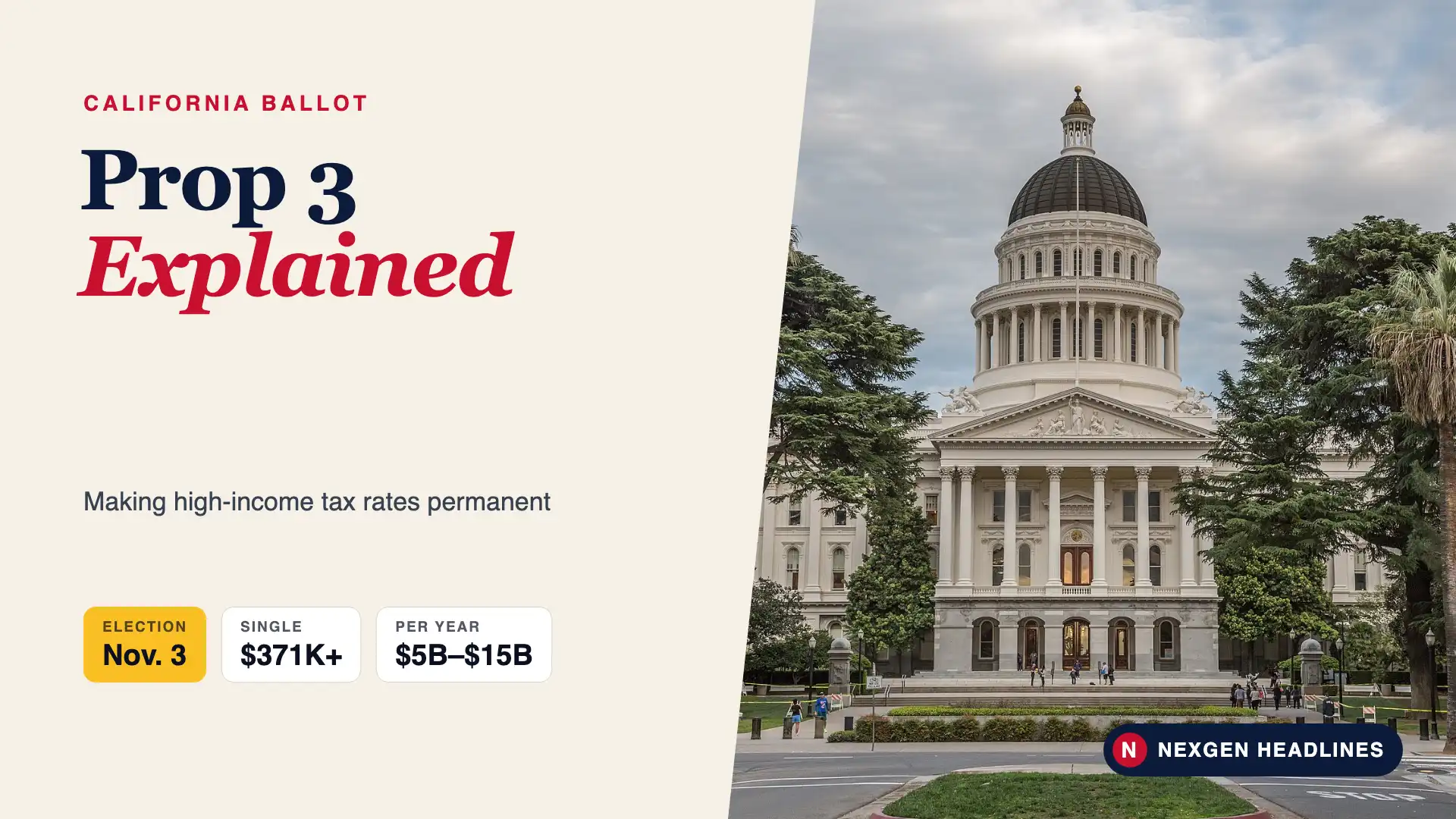

Updated Oct. 26, 2026: rewritten as a voter guide to California’s Proposition 3, with who pays, what it funds and key election dates.
Quick answer: Proposition 3 on California’s Nov. 3, 2026, ballot would make permanent the extra income tax rates on high earners that voters first approved in 2012. It keeps the 10.3%, 11.3% and 12.3% rates on income above about $371,000 for single filers and $743,000 for couples. The tax is set to expire otherwise, and California’s Legislative Analyst estimates it brings in $5 billion to $15 billion a year. Most Californians would see no change in their own taxes.

Prop 3 at a glance
| Question | Answer |
|---|---|
| Election date | Tuesday, Nov. 3, 2026 |
| What it does | Makes the existing high-income tax rates permanent |
| Who pays | Income above about $371,000 (single) or $743,000 (married filing jointly), adjusted for inflation |
| Tax rates kept | 10.3%, 11.3% and 12.3% brackets |
| Yearly revenue | $5 billion to $15 billion, per the Legislative Analyst |
| Main backers | California Teachers Association and school groups |
| Main argument against | Already-high taxes may push wealthy residents and jobs out of state |
Where this tax came from
In 2012, voters passed Proposition 30, a temporary tax increase on high earners to help schools after the Great Recession. In 2016, voters extended it with Proposition 55. Under current law, the higher rates are scheduled to end; CalMatters reports they are set to expire in 2031.
Prop 3 asks voters to remove the end date. If it passes, the rates stay in place with no expiration.
Who would actually pay?
Only income above the high-income thresholds is taxed at the higher rates. If you are single and earn $100,000, or a couple earning $300,000, Prop 3 does not change your California income tax.
California also has an extra 1% tax on income over $1 million for mental health services. Combined, the state’s top rate is 13.3%, among the highest in the US.
Made-up example (not real people): These are made-up examples to show who is affected. Real tax bills depend on deductions and filing status.
Elena, a nurse in Sacramento, earns $110,000. Prop 3 does not affect her tax rate at all.
A married couple in San Jose earns $900,000 in taxable income. Only the part above the couple threshold is taxed at the higher rates. If Prop 3 fails, those rates would drop when the current law ends.
What the money pays for
Supporters say the revenue is a key source of funding for K-12 public schools and community colleges, with some money able to support public health care. Under California’s school funding rules, a large share of new state revenue must go to education.
Sources differ on the exact split, so read the official Legislative Analyst’s Office (LAO) analysis in your voter guide for the details. Revenue also swings a lot from year to year because it depends on top earners’ income and the stock market.
The arguments for and against
| Supporters say | Opponents say |
|---|---|
| Schools need stable funding and could face cuts if the tax ends | California already has some of the highest income taxes in the US |
| Only the highest earners pay | High earners may leave for lower-tax states, taking jobs and revenue |
| Voters approved this tax twice before | It was promised as temporary in 2012 |
| Permanent funding helps districts plan | Revenue is volatile and should not be locked in |
Why educators worry about a crowded ballot
California’s November 2026 ballot has many statewide measures. School advocates have worried that a long ballot could confuse voters or split attention. Prop 3 also appears alongside a separate, more controversial proposal: a one-time tax on billionaires’ wealth. The two are different measures. Prop 3 only extends existing income tax rates.
Also read: Election Day 2026: How to Check Your Voter Registration
Timeline: California’s high-income tax
| Year | What happened |
|---|---|
| 2012 | Voters pass Proposition 30, a temporary tax on high incomes to help schools after the recession. |
| 2016 | Voters pass Proposition 55, extending the high-income rates. |
| 2026 | Proposition 3 asks voters to make the rates permanent. |
| Nov. 3, 2026 | Election Day. |
| 2031 | When the rates are set to expire if Prop 3 fails, per CalMatters. |
How California’s income tax works
California uses tax brackets, like the federal government. Each rate applies only to the slice of income in that bracket, not your whole income. That is why a person just above the high-income threshold pays the higher rate only on the dollars above it.
California does not tax capital gains at a lower rate the way the federal system does. Gains from selling stock or property are taxed as regular income. That is one reason state revenue from top earners rises and falls with the stock market.
Who decides and who counts
| Who | Role |
|---|---|
| California voters | Decide Prop 3 with a simple majority |
| Legislative Analyst’s Office | Provides the neutral cost and revenue estimate |
| Secretary of State | Runs the statewide election and certifies results |
| County election offices | Count ballots; results are certified weeks after Election Day |
| Franchise Tax Board | Collects state income tax |
How to vote on Prop 3: 5 steps
- Check your registration at the California Secretary of State website.
- Read your Official Voter Information Guide, which includes the LAO analysis and arguments on both sides.
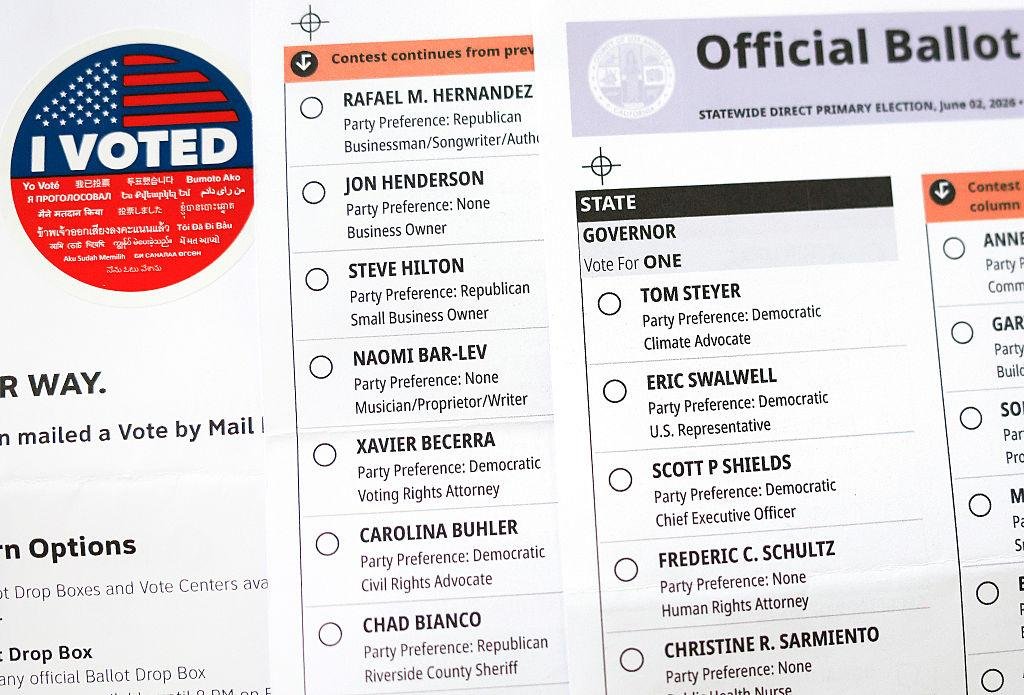
- Return your mail ballot. Every registered California voter gets one. It must be postmarked by Election Day and received within seven days.
- Or drop it off at a secure drop box or vote center by 8 p.m. on Nov. 3.
- Track your ballot with the state’s free “Where’s My Ballot?” service.
What Prop 3 means for school districts
School districts plan budgets years ahead. Leaders often say an end date on a big revenue source makes it hard to sign multiyear teacher contracts or plan programs. Supporters argue a permanent tax gives districts that certainty.
Critics counter that tying school budgets to a tax on a small group of very high earners is risky. When the stock market drops, that revenue can fall sharply. California has built reserve rules to cushion those swings, but budgets can still tighten in down years.
What it does not do
- It does not raise tax rates; it keeps current ones.
- It does not change sales tax or property tax.
- It does not create a wealth tax.
- It does not change federal taxes.
- It does not affect people below the high-income thresholds.
How to find your polling place and results
Find your vote center or drop box on your county election office website or through the Secretary of State. On election night, the Secretary of State posts unofficial results. Many mail ballots are counted after Election Day, so close races can take days or weeks to call.
Common mistakes voters make
- Thinking Prop 3 raises taxes on everyone. It only affects income above the high thresholds.
- Mixing it up with the billionaire tax. They are separate measures.
- Forgetting to sign the ballot envelope. Unsigned ballots can be rejected unless you fix it in time.
- Missing the postmark deadline. Mail it early or use a drop box.
- Relying only on ads. Read the neutral LAO analysis.
What happens if it passes or fails?
- If it passes: The high-income rates stay permanently. Lawmakers could still change tax law later through the normal process or another vote.
- If it fails: The rates expire under current law. Schools and the state budget would lose that revenue unless replaced.
FAQ
Does Prop 3 raise my taxes?
Not unless your taxable income is above about $371,000 (single) or $743,000 (married filing jointly). It keeps existing rates rather than creating new ones.
How much money does Prop 3 raise?
The Legislative Analyst estimates $5 billion to $15 billion a year, depending on the economy and the stock market.
Is Prop 3 the billionaire tax?
No. The billionaire wealth tax is a separate measure. Prop 3 only extends income tax rates on high earners.
When is the deadline to vote?
Election Day is Nov. 3, 2026. Mail ballots must be postmarked by that day and arrive within seven days. Drop boxes close at 8 p.m.
Who supports Prop 3?
The California Teachers Association leads support. Business and taxpayer groups have argued against it.
Bottom line
Prop 3 asks Californians whether to make permanent a tax on very high incomes that funds schools and other services. It would not change taxes for most people. Read the LAO analysis, weigh stable school funding against concerns about high taxes, and make sure your ballot is signed and returned by Nov. 3.
Last reviewed: Oct. 26, 2026. Nexgen Headlines does not endorse ballot measures. This is general information, not tax advice.
Sources: California Legislative Analyst’s Office: Proposition 3; California Secretary of State: Quick Guide to Props; CalMatters voter guide; LAist; KPBS.
Featured image: California State Capitol, Sacramento. Photo: Tony Webster / Wikimedia Commons, CC BY-SA 2.0; edited by Nexgen Headlines.