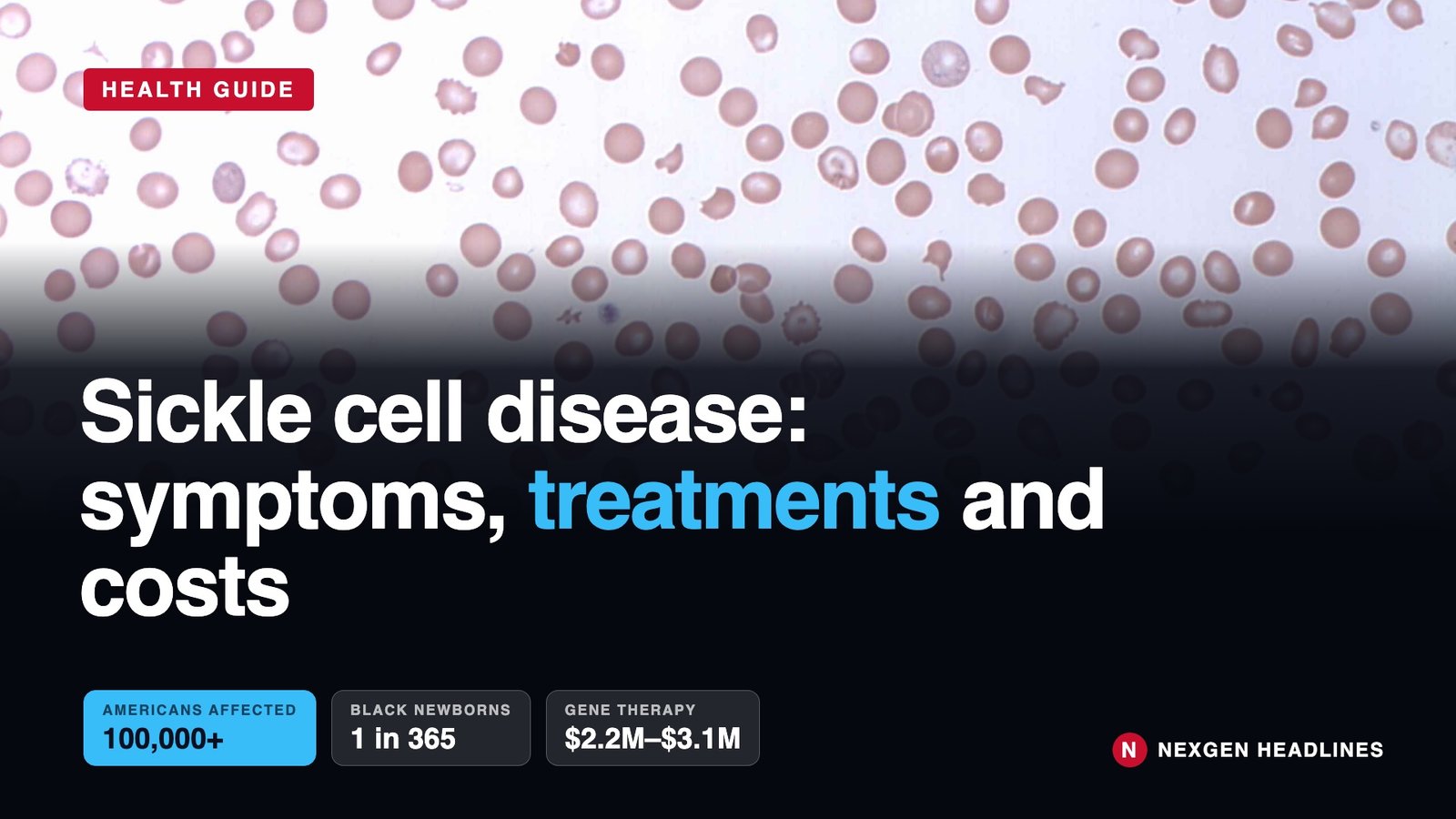

Quick answer: Sickle cell disease is an inherited blood disorder that affects more than 100,000 people in the U.S., according to the CDC. It makes red blood cells stiff and curved, which blocks blood flow and causes pain, infections and organ damage. Every U.S. baby is screened for it at birth. Treatments range from daily medicine to FDA-approved gene therapies that list for $2.2 million to $3.1 million, which Medicaid now covers in most states through a federal program.
This guide is general health information, not medical advice. Talk to a doctor or a sickle cell center about your own care.
Sickle cell disease at a glance
| Question | Answer |
|---|---|
| What is it? | An inherited disorder of hemoglobin, the protein in red blood cells that carries oxygen |
| How many Americans have it? | More than 100,000 (CDC estimate) |
| Who is most affected? | People of African descent; also people with Hispanic, Middle Eastern, South Asian and Mediterranean ancestry |
| How common at birth? | About 1 in 365 Black or African American newborns (CDC) |
| Is it contagious? | No. You’re born with it. |
| How is it found? | Newborn screening in every state, or a simple blood test |
| Is there a cure? | A bone marrow (stem cell) transplant or gene therapy can cure or nearly cure some patients |
What sickle cell disease does to the body
Healthy red blood cells are round and flexible. They slide through small blood vessels easily. In sickle cell disease, an abnormal form of hemoglobin makes the cells hard, sticky and shaped like a crescent or “sickle.”
These cells get stuck in blood vessels and block blood flow. They also die early, usually in 10 to 20 days instead of about 120. That leaves a constant shortage of red blood cells, called anemia.
The most common form is sickle cell anemia (HbSS). Other types include HbSC and sickle beta-thalassemia, which can be milder or more severe.
Sickle cell disease vs. sickle cell trait
This is the most common point of confusion.
| Sickle cell trait | Sickle cell disease | |
|---|---|---|
| Genes | One sickle gene, one normal gene | Two sickle (or related) genes |
| Symptoms | Usually none | Pain crises, anemia, infections, organ damage |
| How common | About 1 in 13 Black or African American babies, per the CDC | About 1 in 365 Black or African American babies |
| Main concern | Can pass the gene to children; rare problems with extreme exercise, dehydration or high altitude | Lifelong medical care |
If both parents have the trait, each pregnancy has a 1 in 4 chance that the baby will have sickle cell disease, a 1 in 2 chance of the trait, and a 1 in 4 chance of neither.
Common symptoms and complications
- Pain crises: sudden, severe pain in the chest, back, arms or legs when blocked blood vessels starve tissue of oxygen. This is the most common reason people with sickle cell go to the ER.
- Anemia and fatigue: feeling tired, weak or short of breath.
- Infections: the spleen gets damaged early in life, so children are at higher risk of serious infections.
- Acute chest syndrome: chest pain, fever and trouble breathing. It’s a medical emergency.
- Stroke: children with sickle cell anemia have a higher stroke risk. A yearly ultrasound of the head (TCD screening) helps spot children at risk.
- Swelling of hands and feet in babies and toddlers.
- Long-term damage to the kidneys, lungs, eyes, joints and heart.
When to go to the ER right away
- Fever of 101°F (38.3°C) or higher
- Chest pain or trouble breathing
- Sudden weakness, numbness, trouble speaking or a severe headache (possible stroke: call 911)
- Pain that home treatment doesn’t control
- A swollen belly or sudden paleness in a child
Many sickle cell centers give patients an emergency care plan letter to show ER staff. Ask your care team for one.
How sickle cell disease is diagnosed
Every state screens newborns for sickle cell disease with a heel-prick blood test. Results usually come back within the first weeks of life, and babies who test positive are referred to a specialist.
Adults and older children can get a hemoglobin electrophoresis blood test. It’s also the test to ask for if you’re planning a family and want to know whether you carry the trait.
Also read: Medicare open enrollment guide, if you or a family member with a chronic condition is on Medicare and comparing plans.
Treatments available in 2026
| Treatment | What it does | Who it’s for |
|---|---|---|
| Hydroxyurea | Daily pill that raises fetal hemoglobin and cuts pain crises and hospital stays | Many children (from about 9 months) and adults |
| L-glutamine (Endari) | Oral powder that can reduce pain crises | Ages 5 and up |
| Crizanlizumab (Adakveo) | Monthly IV infusion that may reduce pain crises | Ages 16 and up |
| Blood transfusions | Add healthy red cells; regular transfusions help prevent stroke | High-risk patients |
| Stem cell (bone marrow) transplant | Can cure the disease | Mainly children with a matched donor, often a sibling |
| Gene therapy (Casgevy, Lyfgenia) | One-time treatment using the patient’s own edited stem cells | Ages 12 and up with repeated pain crises |
One drug, Oxbryta (voxelotor), was pulled from the market by Pfizer in September 2024 over safety concerns. If you still have it at home, don’t take it; talk to your doctor about other options.
Daily basics still matter too: penicillin for young children, all recommended vaccines, folic acid, drinking plenty of water and avoiding extreme heat or cold.
Gene therapy: what it costs and who pays
The FDA approved two gene therapies for sickle cell disease in December 2023: Casgevy (Vertex and CRISPR Therapeutics) and Lyfgenia (originally from bluebird bio). Both use the patient’s own stem cells, modified in a lab and returned after strong chemotherapy.
- List prices: about $2.2 million for Casgevy and $3.1 million for Lyfgenia, according to CMS. That doesn’t include the hospital stay, chemotherapy and follow-up care.
- Medicaid: the federal Cell and Gene Therapy Access Model lets state Medicaid programs pay for these treatments under outcomes-based deals. CNBC reported in October 2026 that 32 states, D.C. and Puerto Rico take part.
- Private insurance: coverage varies by plan. Expect prior authorization and treatment only at certain centers.
- Time commitment: the full process, from collecting cells to recovery, can take many months, with a hospital stay of several weeks.
Gene therapy is not right for everyone. The chemotherapy can affect fertility and carries real risks. Ask a sickle cell specialist whether you’re a candidate and whether your state takes part in the Medicaid model.
Paying for everyday care
- Medicaid and CHIP cover many children and adults with sickle cell disease. Check eligibility at HealthCare.gov or your state Medicaid office.
- SSI and Social Security Disability: sickle cell disease is listed in Social Security’s disability rules. Severe cases may qualify. Apply at SSA.gov or call 1-800-772-1213.
- Drug costs: generic hydroxyurea is usually low cost. Ask about manufacturer assistance programs for brand-name drugs.
- Sickle cell centers and community groups can help with insurance appeals, school plans and travel costs.
Made-up example: a family’s first year
This is a made-up example. Keisha and Marcus in Atlanta both have sickle cell trait but didn’t know it. Their newborn’s screening comes back positive for sickle cell anemia. The baby’s pediatrician refers them to a children’s sickle cell clinic. The baby starts daily penicillin at 2 months, gets every vaccine on time, and later begins hydroxyurea. The family keeps a thermometer at home and a written ER plan, and they know that a fever of 101°F means an immediate trip to the hospital.
Living well with sickle cell disease
- Drink water all day. Dehydration can trigger a crisis.
- Dress for the weather. Sudden cold and extreme heat are common triggers.
- Get a yearly flu shot and stay current on other vaccines.
- Keep regular checkups, including eye exams and, for children, yearly TCD stroke screening.
- Plan for school and work: a 504 plan at school or workplace accommodations can allow water breaks and missed days.
- Look after mental health. Chronic pain is hard. Counseling and support groups help.
Common mistakes
- Waiting out a fever at home. In sickle cell disease, a fever can mean a life-threatening infection.
- Skipping hydroxyurea because you feel fine. It works by preventing problems.
- Not knowing your trait status before having children. A simple blood test answers it.
- Going to an ER without your care plan. It speeds up the right treatment.
- Assuming gene therapy isn’t covered. Many state Medicaid programs now pay for it.
FAQ
Can adults develop sickle cell disease?
No. You’re born with it. Some adults find out later because they were born before universal newborn screening or in another country.
Is sickle cell disease only in Black Americans?
No. It’s most common in people of African descent, but it also affects people with Hispanic, Middle Eastern, South Asian and Mediterranean ancestry.
What is the life expectancy with sickle cell disease?
It varies widely by type and care. Life expectancy has improved with newborn screening, penicillin, vaccines and hydroxyurea, but it’s still shorter than average. Regular care at a specialty center makes a big difference.
How do I find out if I have sickle cell trait?
Ask your doctor for a hemoglobin electrophoresis blood test. Your newborn screening result may also be on file with your state health department.
Does Medicare cover sickle cell treatment?
Medicare covers doctor visits, hospital care and many medicines under Parts A, B and D. Coverage for gene therapy depends on the plan and medical criteria, so check with your plan.
Bottom line
Sickle cell disease is a lifelong inherited condition, but care is better than ever. Know your trait status, get every newborn screened, treat fever as an emergency and stay connected to a sickle cell center. If you’re 12 or older with frequent pain crises, ask about gene therapy, which Medicaid now covers in most states.
Sources: CDC – About Sickle Cell Disease; CDC – Sickle cell data; NIH NHLBI – Sickle Cell Disease; FDA – First gene therapies for sickle cell disease; CMS – Cell and Gene Therapy Access Model; CNBC, Oct. 16, 2026; NPR, Jan. 20, 2026.
Last reviewed: Oct. 23, 2026. This article is for general information and is not a substitute for advice from your doctor.