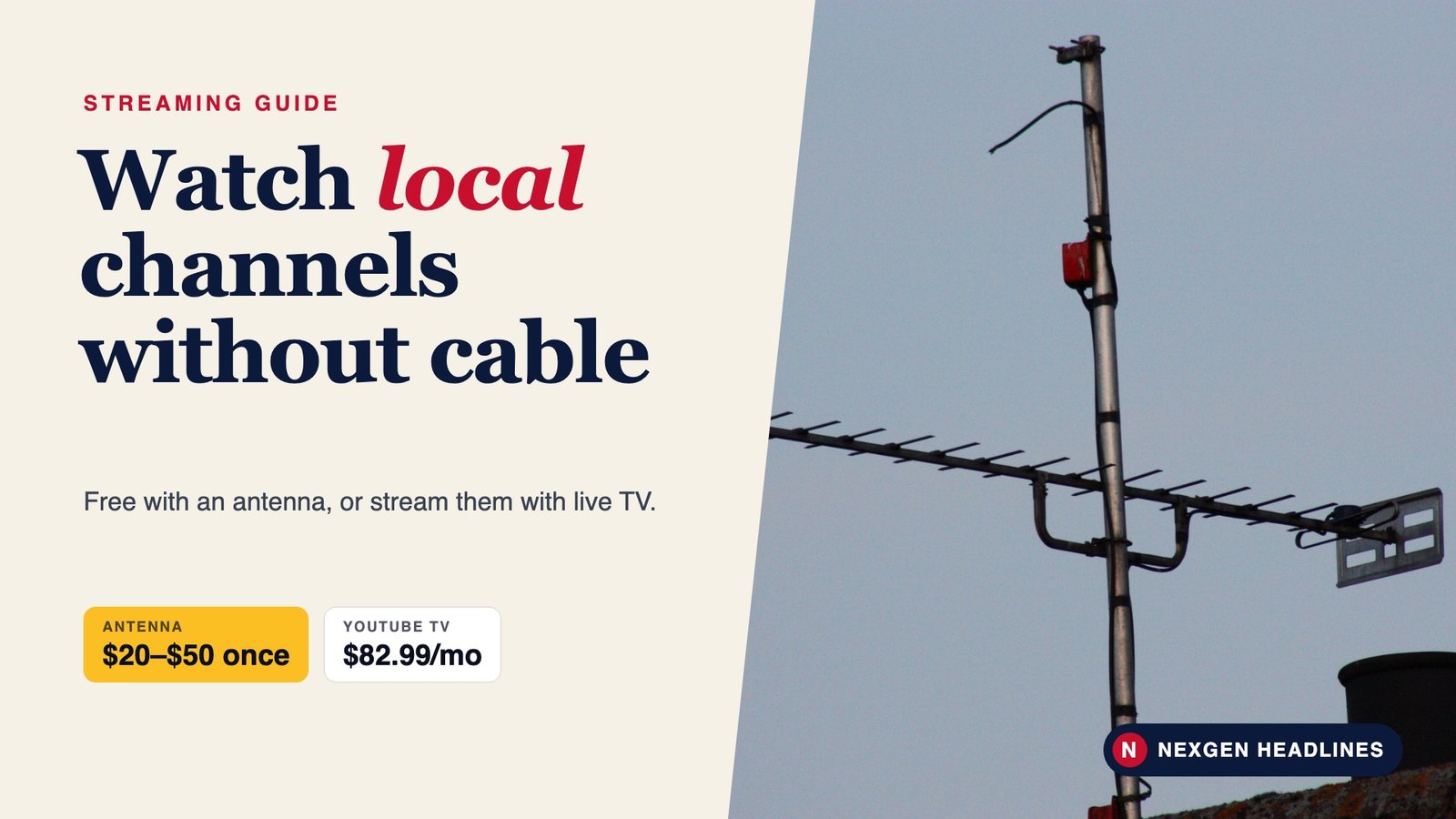

Quick answer: The cheapest way to watch local channels without cable is a TV antenna. It costs about $20 to $50 once and picks up ABC, CBS, NBC, FOX, PBS and more for free. If an antenna won’t work where you live, a live TV streaming service such as YouTube TV ($82.99/month) includes local channels in most areas. For CBS alone, Paramount+ Premium streams your local station live.
Your options at a glance
| Option | Cost | Channels you get | Best for |
|---|---|---|---|
| Indoor or outdoor antenna | About $20–$50, one time | ABC, CBS, NBC, FOX, PBS, CW and more, depending on your area | Almost everyone within range of TV towers |
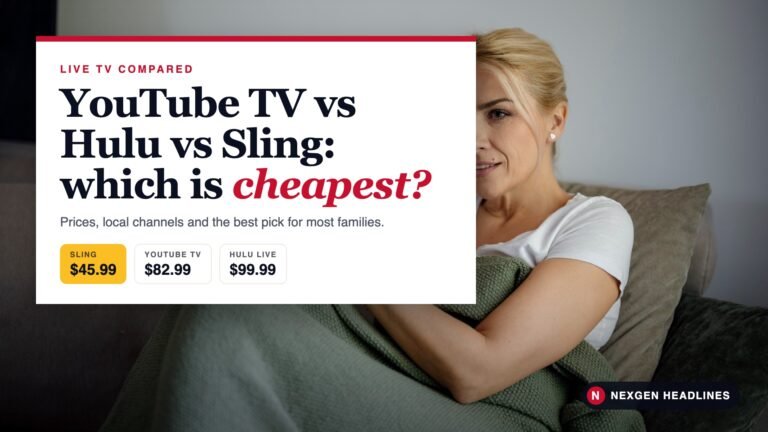
| YouTube TV | $82.99/mo | Local ABC, CBS, NBC, FOX in most markets, plus 100+ cable channels | People who also want cable channels |
| Hulu + Live TV | About $99.99/mo (with ads) | Locals in most markets, plus Disney+ and ESPN content | Disney and sports fans |
| Sling Blue | $45.99/mo | Some local channels, only in select markets | Budget cable channels; check your ZIP first |
| Paramount+ Premium | $13.99/mo | Your local CBS station, live | CBS shows and NFL games on CBS |
| Free local news apps | $0 | Local newscasts, not full channels | Weather and local news |
Prices as of Oct. 23, 2026. YouTube TV and Sling prices are from their official sites. Other prices are from recent reporting by Fortune and Tom’s Guide. Prices change often, so check before you sign up.
Option 1: A TV antenna (free after you buy it)
Local stations still broadcast their signals over the air for free. An antenna catches them, just like in the old days, but the picture is now digital and often sharper than cable because it isn’t compressed.
Step 1: Check which channels you can get
Before you buy anything, go to the FCC’s DTV Reception Maps (fcc.gov/media/engineering/dtvmaps). Type your address. The map lists every station near you and rates the signal as strong, moderate, weak or none. It also shows which direction the towers are.
- Mostly strong signals: a cheap flat indoor antenna will likely work.
- Moderate or weak signals: try an amplified indoor antenna, or mount one in the attic.
- Towers 40+ miles away: you’ll probably need an outdoor or rooftop antenna.
Step 2: Pick the right antenna
| Type | Typical price | Works best when |
|---|---|---|
| Flat indoor antenna | $20–$40 | You live in or near a city |
| Amplified indoor antenna | $30–$60 | Signals are moderate or there are walls in the way |
| Attic or outdoor antenna | $50–$150 | You’re in the suburbs or countryside |
Ignore boxes that promise “300-mile range.” No antenna can do that. Real range depends on hills, buildings and how far you are from the towers.
Step 3: Set it up
- Plug the antenna’s cable into the “Antenna/Cable In” port on your TV.
- Place it near a window, as high as you can, facing the towers shown on the FCC map.
- Open your TV’s settings and run a channel scan (sometimes called “Auto Program”).
- Move the antenna a few feet and scan again if channels are missing. Small moves make a big difference.
- Rescan every few months. Stations sometimes change frequencies.
Watching antenna TV on every TV in the house
One antenna can feed several TVs with a splitter, but you lose signal strength with each split. Another option is a network tuner box that sends antenna TV over your Wi-Fi to phones, tablets and streaming devices. Some of these also let you record shows, like a DVR.
Also read: Best free streaming services in 2026 (no subscription, no card). Pair them with an antenna and you may not need to pay for TV at all.
What is NextGen TV (ATSC 3.0)?
NextGen TV is a newer broadcast standard rolling out across many U.S. markets. It can carry sharper pictures, better sound and better reception indoors. You need a TV or tuner box that supports ATSC 3.0 to use it. Your regular antenna still works; the tuner is what matters.
You don’t have to upgrade. Stations still send the standard signal that every digital TV can pick up.
Option 2: A live TV streaming service
If an antenna won’t work where you live, or you also want cable channels like ESPN, CNN and HGTV, a live TV streaming service is the closest thing to cable. Most include your local ABC, CBS, NBC and FOX stations, but coverage depends on your ZIP code.
- YouTube TV: $82.99 a month for 100+ channels and unlimited DVR. New users can get $59.99 a month for the first 2 months through Nov. 16, 2026, according to YouTube.
- Hulu + Live TV: about $99.99 a month with ads, per recent reports. It includes Disney+ and Hulu’s library.
- Sling: Orange or Blue costs $45.99 a month. Sling says some locals are only in select markets, so enter your ZIP on its site first.
- Fubo and DirecTV: both offer locals in many markets, usually at higher prices. Check their sites for current rates.
Every service has a channel lookup tool. Always enter your ZIP code before you pay.
Option 3: Single-network apps
- CBS: Paramount+ Premium ($13.99/mo) includes your local CBS station live. The cheaper Essential plan ($8.99/mo) does not.
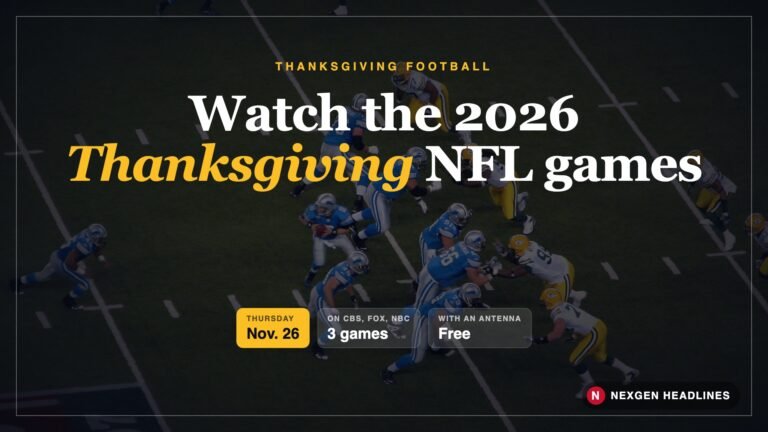
- NBC: Peacock carries many NBC shows the next day and some live events, like Sunday Night Football. Live local NBC isn’t its main feature, so check your market.
- ABC and FOX: next-day episodes often show up on Hulu (ABC) and Hulu or Tubi (FOX). Live local ABC and FOX generally need an antenna or a live TV service.
- PBS: the free PBS app streams many local PBS stations live.
Option 4: Free local news
If you mainly want local news and weather, you may not need any paid service:
- Your local stations’ own apps and websites often stream newscasts live for free.
- NewsON is a free app that collects local newscasts from many U.S. markets.
- Free streaming channels on Pluto TV, Tubi, Sling Freestream and Roku include some local news channels.
Which option is right for you?
| If you… | Choose |
|---|---|
| Want locals for the lowest cost | An antenna |
| Mainly watch CBS and NFL on Sundays | Antenna, or Paramount+ Premium |
| Want locals plus ESPN and cable news | YouTube TV or Hulu + Live TV |
| Live in a rural area far from towers | Outdoor antenna, or a live TV service |
| Only care about local weather and news | Free station apps |
Made-up examples
These are made-up examples to show how the choice works.
Denise in Columbus, Ohio paid about $95 a month for cable but mostly watched local news and NFL games. The FCC map showed strong signals for every major network. She bought a $30 indoor antenna and added Paramount+ Premium for streaming. Her TV bill dropped to $13.99 a month.
Tom in rural Montana found his nearest towers were more than 60 miles away and blocked by hills. An antenna wasn’t realistic. He chose YouTube TV during its new-user promo and kept his locals plus ESPN.
Common mistakes
- Buying an antenna without checking the FCC map. It takes two minutes.
- Forgetting to run a channel scan. The TV won’t find stations by itself.
- Paying for a streaming service without checking your ZIP. Not every service carries locals everywhere.
- Using a cheap amplifier near strong towers. Too much signal can cause dropouts. Try it unplugged first.
- Not rescanning. If a channel disappears, rescan before you blame the antenna.
FAQ
Can I get local channels for free?
Yes. With an antenna, local broadcast channels are free. You only pay for the antenna once.
Do smart TVs have local channels built in?
Smart TVs have a built-in tuner, but you still need an antenna plugged in to receive local stations. Some smart TVs also offer free streaming channels with local news.
Will an antenna work in an apartment?
Often, yes. Place it high on a wall or window that faces the towers. Apartments on higher floors usually get better signals.
Which streaming service has the most local channels?
YouTube TV and Hulu + Live TV carry locals in most U.S. markets. Sling’s local coverage is more limited. Check each service’s ZIP code tool.
Can I record shows from an antenna?
Yes, with an over-the-air DVR or a network tuner that supports recording. Some need a small subscription for the program guide.
Bottom line
Start with the free FCC map. If the signals are good, a $20 to $50 antenna gives you local channels free for years. If they aren’t, pick a live TV service that carries locals in your ZIP code, and use any new-user promo to test it before you commit.
Recommended products
- Indoor HDTV antenna – For homes near TV towers.
- Amplified indoor antenna – Helps with moderate or weak signals.
- Outdoor/attic TV antenna – For suburbs and rural areas.
- Over-the-air DVR / network tuner – Record and stream antenna TV around the house.
Disclosure: As an Amazon Associate, Nexgen Headlines earns from qualifying purchases. Prices and availability can change.
Sources: FCC – DTV Reception Maps; FCC – Antennas and Digital Television; YouTube TV; Sling TV; Fortune – Streaming prices 2026; Tom’s Guide – What streaming costs in 2026.
Last reviewed: Oct. 23, 2026.