
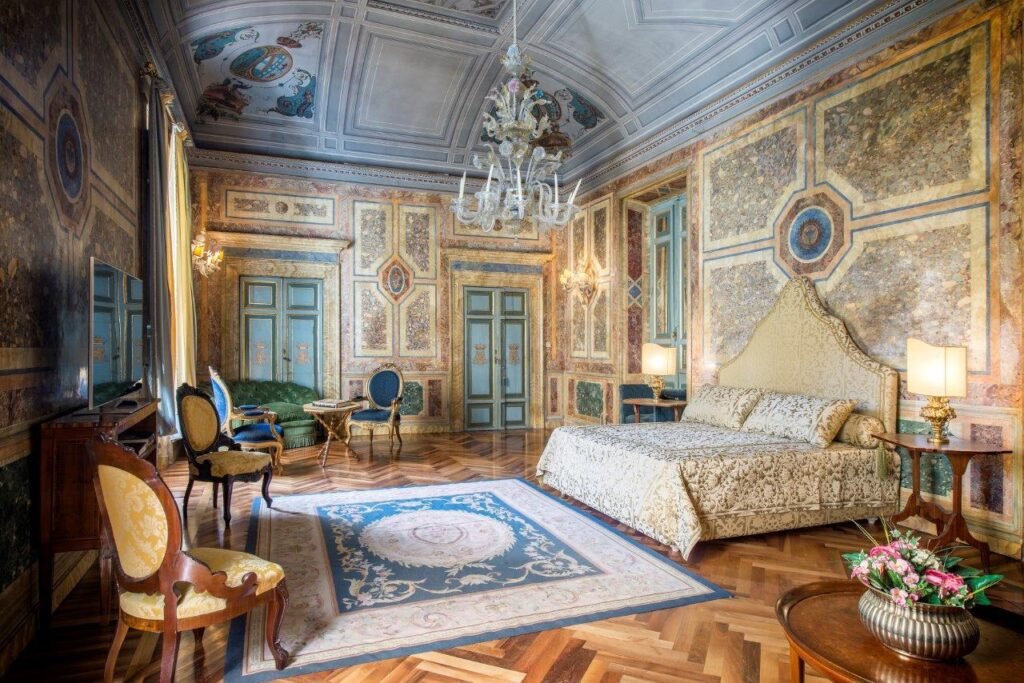
Ruspoli Bonaparte Residence
Ruspoli Bonaparte Residence Offers Tourists a Royal Experience
Ruspoli Bonaparte Residence is offering travelers something far beyond a typical hotel stay: the chance to sleep inside an authentic Roman palazzo while meeting members of the aristocratic family who still live there.
- Ruspoli Bonaparte Residence
- Ruspoli Bonaparte Residence Offers Tourists a Royal Experience
- A Palace Where History Is Part of the Stay
- The Princesses Actually Meet Their Guests
- A Family History Stretching Back Centuries
- What Does It Cost to Sleep Like Royalty?
- Inside the Palace, the Design Is the Main Attraction
- Tourists Are Paying for More Than Luxury
- Keeping a Historic Palace Alive Is Extremely Expensive
- The Family Has Another Castle Near Rome
- A Different Kind of Italian Vacation
- The New Luxury Is Personal
- Why This Palace Is Capturing Attention
In the heart of Rome, Princess Giacinta Ruspoli and her mother, Princess Maria Pia, have opened parts of their historic family residence to paying guests.
Their philosophy is surprisingly personal.
Rather than keeping the centuries-old property behind closed doors, they want visitors to experience it, hear its stories and interact with the people connected to its history.
“We do not live shut in our castello,” Giacinta explained. She says her family wants to share the beauty and history they inherited rather than simply preserve it as a private home.
That unusual approach has transformed the historic property into one of Rome’s most distinctive luxury accommodations.
A Palace Where History Is Part of the Stay
The Ruspoli Bonaparte Residence dates back to the 16th century and sits in the center of Rome’s historic shopping district.
The property combines the atmosphere of a Renaissance palazzo with the services of a luxury hotel.
Guests stay in four enormous suites, each measuring more than 1,000 square feet when halls and other spaces are included.
The rooms feature antique furniture, tapestries, marble decorations, enormous fireplaces and elaborate historic details.
The experience is intentionally different from staying at a modern five-star hotel.
Here, the walls themselves are part of the attraction.
Visitors can see old portraits, decorated ceilings, frescoes, elaborate mirrors, crystal chandeliers and furniture made with precious materials.
The palace does not simply provide a room.
It provides an opportunity to temporarily become part of an aristocratic world.
The Princesses Actually Meet Their Guests
One of the most unusual aspects of the Ruspoli Bonaparte Residence is that guests may encounter its owners during their stay.
Giacinta Ruspoli, a lawyer and journalist who later moved into hospitality and event organization, handles bookings and guest requests.
Her mother, Princess Maria Pia, remains closely connected to the property as well.
The two are not trying to create distance between themselves and visitors.
Instead, they often speak with guests and share stories about the family and the palace.
Those conversations can cover everything from famous ancestors to scandals, romantic stories, battles and even tales of ghosts.
That personal interaction is a major part of what makes the experience different from a traditional luxury hotel.
A Family History Stretching Back Centuries
The Ruspoli family’s history is extensive.
The family traces its lineage back to the Middle Ages and has historical connections with powerful figures and institutions in Italy.
The family accumulated wealth and influence partly through connections with the Vatican, while members of the wider family history became associated with religious and political figures.
The palace’s name also reflects an extraordinary connection to the Bonaparte family.
Napoleon III, the nephew of Napoleon Bonaparte, spent part of his childhood at the residence with his mother, Hortense de Beauharnais, who was once queen of Holland.
That connection gives the building a fascinating place in European history.
Guests are therefore not simply staying in an old building.
They are staying in a place connected to generations of European aristocracy.
What Does It Cost to Sleep Like Royalty?
The royal experience comes at a price, but it is not necessarily limited to ultra-wealthy travelers.
A night in one of the residence’s suites starts at roughly $470, including breakfast and butler service, according to recent reporting.
Guests can also arrange additional services, including private meals prepared by chefs and customized Italian menus.
For visitors seeking the ultimate experience, the entire palace can reportedly be rented exclusively, with rates beginning around 4,000 euros, or approximately $4,700, per night.
That makes the property suitable not only for individual travelers but also for private celebrations, special events and groups looking for an extraordinary Roman setting.
Inside the Palace, the Design Is the Main Attraction
The visual experience at the Ruspoli Bonaparte Residence is difficult to replicate.
Some suites feature purple and green canopy beds, silk-covered walls, plush sofas and enormous crystal chandeliers.
There are also enameled mirrors, wooden statues transformed into lamps and tables made from materials including black onyx and green malachite.
Above the rooms are historic ceilings decorated with elaborate designs.
Frescoes and family symbols provide reminders that the property was built for a very different world.
One of the most notable features is the palace’s marble staircase.
According to a long-standing Roman tradition, the staircase is considered one of the city’s “four wonders of Rome.”
For modern travelers accustomed to standardized hotel rooms, the experience is almost theatrical.
Every hallway and room has another historical detail waiting to be discovered.
Tourists Are Paying for More Than Luxury
Giacinta says many American visitors are particularly attracted to the opportunity to experience aristocratic life.
For American travelers, the idea of spending a night in a functioning European aristocratic residence can feel almost like stepping into a movie.
But the princess says the motivation goes beyond glamour.
Visitors want to understand the history of the building and meet the people connected to it.
That personal element is becoming increasingly important in luxury travel.
Instead of simply collecting photographs of famous landmarks, travelers are increasingly interested in experiences that feel authentic and difficult to reproduce.
The Ruspoli Bonaparte Residence fits that trend perfectly.
Keeping a Historic Palace Alive Is Extremely Expensive
There is another reason the family has opened the property to travelers: maintaining an ancient building is expensive.
Historic palaces require constant repairs and restoration.
Even relatively small renovations can involve complicated approval procedures because of Italy’s strict protections for historic buildings.
Giacinta has described the costs of maintaining the family’s properties as overwhelming.
Opening the residence to guests therefore serves a practical purpose.
Tourism helps generate money that can be reinvested into preserving the building.
In that sense, visitors are not simply paying for luxury.
They are helping keep an important piece of Italian architectural history alive.
The Family Has Another Castle Near Rome
The Ruspoli family’s hospitality project extends beyond Rome.
About 30 miles north of the capital, in the village of Cerveteri, stands Castello Ruspoli, another historic family property.
The 16th-century castle was once used as a hunting retreat and sits near the Tyrrhenian coast.
The family has been renovating the property into a boutique hotel with 10 suites.
Although the hotel was still being prepared for bookings at the time of the recent report, guests staying in Rome can visit the castle and arrange special dining experiences there.
The castle also hosts weddings, celebrations, private parties and other events.
Its large terraces and loggia provide dramatic views over the surrounding village.
A Different Kind of Italian Vacation
The castle allows visitors to experience another side of Italy.
Rome offers famous monuments, busy streets, restaurants and shopping.
Cerveteri provides something much quieter.
The castle sits within an old village district surrounded by historic walls and landscapes connected to the ancient Etruscan region.
The combination gives guests an opportunity to experience both sides of Italian travel.
One day can involve walking through the center of Rome.
The next can mean dinner in a centuries-old castle overlooking the countryside.
That contrast is part of the family’s vision for its hospitality business.
The New Luxury Is Personal
The story of the Ruspoli Bonaparte Residence reflects a broader change in luxury tourism.
For years, luxury travel was often associated with large international hotels, private pools and expensive restaurants.
Today, many travelers are looking for something more personal.
They want stories.
They want access.
They want places that cannot simply be copied somewhere else.
Staying in a historic palace where the owners themselves may greet guests offers exactly that.
It is luxury based not only on comfort, but also on history and human connection.
Why This Palace Is Capturing Attention
The appeal of the Ruspoli Bonaparte Residence is ultimately easy to understand.
It offers travelers something that ordinary hotels cannot provide.
Guests can sleep inside a centuries-old palace, walk through rooms filled with historic artwork, hear stories from an aristocratic family and explore another noble residence outside Rome.
The experience combines hospitality, architecture and living history.
And perhaps most importantly, Princess Giacinta Ruspoli does not seem interested in keeping that history locked away.
She wants people to see it.
She wants visitors to ask questions.
She wants them to mingle.
That philosophy may be the property’s greatest attraction.
For travelers searching for an unforgettable Italian adventure, the Ruspoli Bonaparte Residence offers a rare opportunity: not simply to visit Rome, but to spend a night inside one of its remarkable aristocratic stories.
THANKS FOR READING
