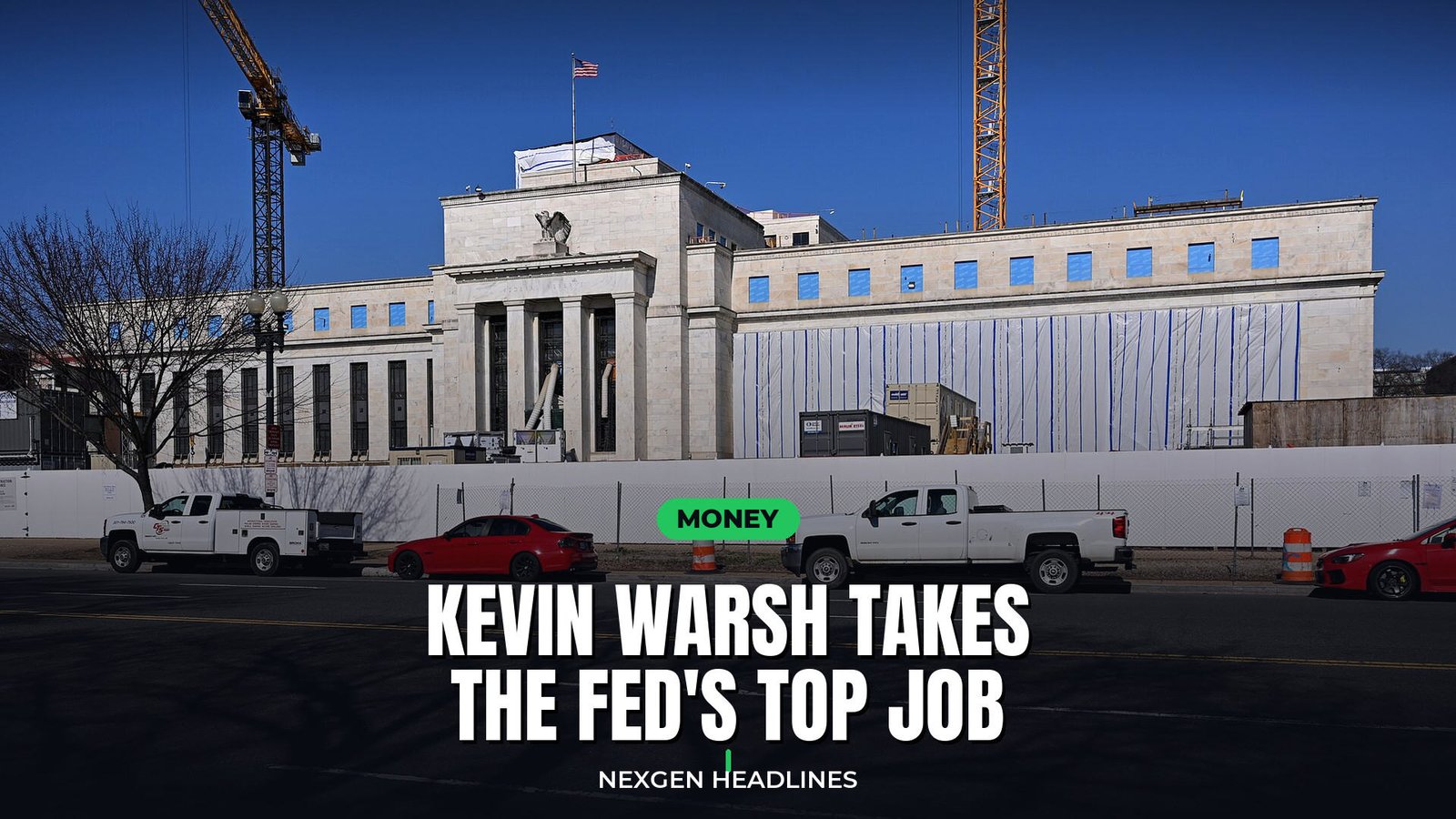

Update (Oct. 24, 2026): This story first ran when Kevin Warsh was sworn in on May 22, 2026. We have updated it with his record so far, including the September rate hike and what to watch next.
Quick answer: As of Oct. 24, 2026, Kevin Warsh has led the Federal Reserve for five months. Under him, the Fed held its key rate at 3.50%–3.75% in June and July. On Sept. 16, 2026, it raised the rate a quarter point to 3.75%–4.00%, its first hike since July 2023. The next decision is due Oct. 28.
Warsh at the Fed: timeline so far
| Date | What happened |
|---|---|
| May 13, 2026 | Senate confirms Warsh as Fed chair, 54-45, the slimmest margin ever for the job (Bloomberg). |
| May 22, 2026 | Warsh is sworn in at the White House and replaces Jerome Powell as chair. |
| June 16–17 | First meeting as chair. Rates stay at 3.50%–3.75%. |
| July 28–29 | Rates held again. |
| Sept. 15–16 | The Fed votes 12-0 to raise rates to 3.75%–4.00%, effective Sept. 17. |
| Oct. 14 | Labor Department: consumer prices up 3.7% over 12 months in September; core prices up 2.6%. |
| Oct. 27–28 | Next Fed meeting. Decision and Warsh press conference on Oct. 28. |
| Dec. 8–9 | Last meeting of 2026, with new economic projections. |
Dates and rate decisions are from the Federal Reserve. Inflation figures are from the Bureau of Labor Statistics.
Below is our original May 22 report, followed by new sections on what Warsh’s first months mean for your money.
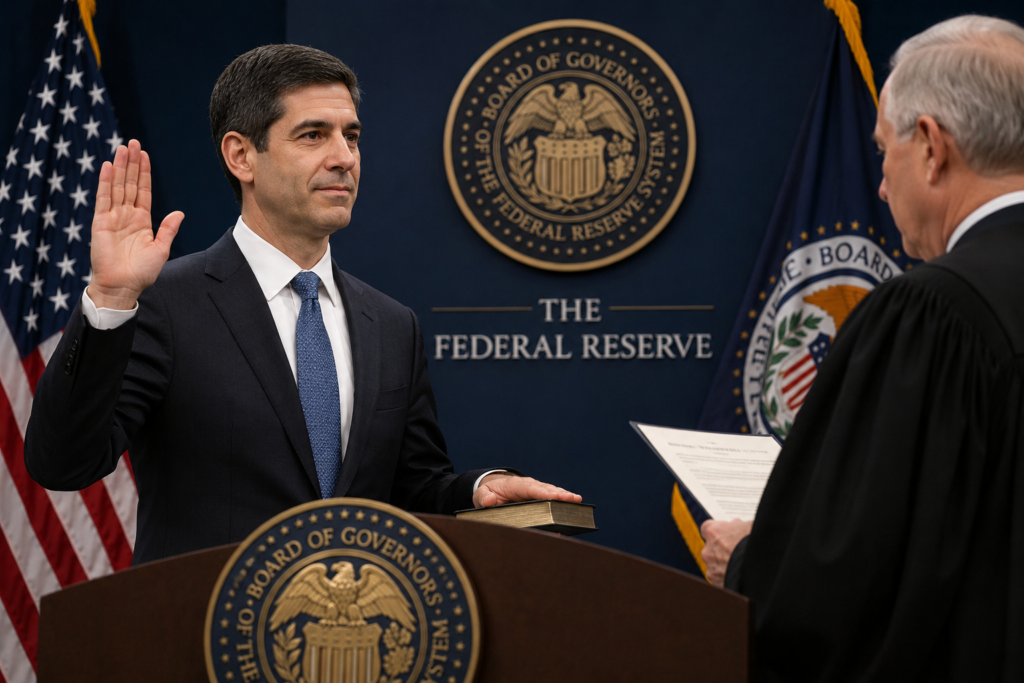
The United States economy entered a new chapter this week as Kevin Warsh officially took oath as the new chair of the Federal Reserve. His appointment comes at one of the most sensitive moments for the American economy, where inflation concerns, high interest rates, slowing consumer spending, and global uncertainty are all colliding at once.
Warsh, a former Federal Reserve governor and longtime Wall Street insider, now carries the enormous responsibility of guiding the nation’s central bank through a period filled with economic pressure and political scrutiny. Financial markets, businesses, and everyday Americans are all watching closely to see what direction he will take.
A Challenging Economy Awaits
The US economy has shown mixed signals over the past year. While unemployment remains relatively low and businesses continue hiring in many sectors, inflation has still not fully returned to the Federal Reserve’s target level. Americans are also dealing with high borrowing costs on mortgages, credit cards, and auto loans.
For many families, daily expenses continue to rise faster than wages. At the same time, economists fear that keeping interest rates high for too long could slow growth and increase the risk of recession.
This difficult balancing act is now Warsh’s biggest challenge.
Experts believe the new Fed chair must carefully decide whether to continue aggressive inflation-fighting policies or begin easing rates to support economic growth. Any wrong move could shake financial markets and impact millions of jobs across the country.
Who Is Kevin Warsh?
Before becoming Fed chair, Kevin Warsh built a strong reputation in both finance and government. He previously served as a governor at the Federal Reserve during the 2008 financial crisis, where he worked closely with policymakers to stabilize the banking system during one of the worst economic collapses in modern history.
Warsh also worked at Morgan Stanley and later became known for his strong views on inflation control and financial stability.
Supporters say his experience during past crises makes him a strong choice for the role. Critics, however, argue that his ties to Wall Street may raise concerns about how closely the Fed will align with large financial institutions.
Still, many investors welcomed his appointment, believing his leadership could bring stability during uncertain times.
Markets React Carefully
Financial markets responded cautiously after Warsh’s swearing-in ceremony. Stock indexes moved slightly higher as investors looked for clues about future interest rate decisions.
Analysts say traders are especially focused on whether the new Fed chair will maintain current policies or signal possible rate cuts later this year.
The bond market also reacted, with Treasury yields fluctuating as investors adjusted expectations about inflation and economic growth.
Some economists believe Warsh may initially avoid major policy shifts while he studies economic data more closely. Others expect him to take a firmer stance against inflation if prices remain stubbornly high.
Political Pressure Growing
The Federal Reserve is designed to operate independently from politics, but that independence is increasingly being tested. Leaders from both political parties have voiced strong opinions about interest rates and economic policy in recent months.
Some lawmakers want faster rate cuts to boost business activity and reduce borrowing costs for consumers. Others argue inflation remains too dangerous to ease policy too quickly.
Warsh now steps into a role where every decision could trigger political reactions, market volatility, and public debate.
Maintaining confidence in the Federal Reserve while making difficult economic choices may become one of the defining challenges of his leadership.
What Happens Next?
The coming months will likely define Kevin Warsh’s tenure as Fed chair. Upcoming inflation reports, job numbers, and consumer spending data will heavily influence the Federal Reserve’s next moves.
If inflation continues cooling, the Fed could begin lowering interest rates later this year. However, if prices remain elevated or global economic risks increase, policymakers may choose to keep rates higher for longer.
For American households, businesses, and investors, the stakes could not be higher.
As Kevin Warsh officially begins leading the nation’s central bank, the entire world economy will be watching his next steps carefully.
Why the Fed raised rates in September
The short version: inflation stayed too high. Consumer prices rose 3.4% over the 12 months ending in July 2026, according to the Bureau of Labor Statistics. That is well above the Fed’s 2% goal.
The minutes of the September meeting say Fed staff estimated overall PCE inflation at 3.8% in August, with core PCE at 3.4%. PCE is the inflation gauge the Fed watches most closely.
At the same time, the job market held up. Unemployment was 4.1%, and the minutes describe growth as solid, helped by business spending on AI.
That mix gave the Fed room to tighten. Officials said a higher rate should help bring inflation back to 2% faster. Several also argued that rates at 3.50%–3.75% were not doing much to slow the economy.
The vote was unanimous. That matters, because Warsh was picked by a president who has pushed for lower rates. The September hike showed the committee acting as a group, not on political demand.
What Warsh’s Fed means for your wallet
A Fed rate change does not set your loan rate directly. But it moves the rates banks charge and pay.
- Credit cards: Most card rates follow the prime rate. Banks usually set prime 3 points above the top of the Fed’s range, which puts it at about 7% now. Card APRs rose by about a quarter point after the hike.
- Mortgages: These follow long-term bond yields, not the Fed directly. Still, the 30-year fixed rate averaged 7.32% on Oct. 22, 2026, up from 6.51% the week Warsh was sworn in, according to Freddie Mac.
- Home equity lines and adjustable loans: These usually move with prime, so payments rise soon after a hike.
- Savings: The upside. High-yield savings accounts and CDs tend to pay more when the Fed raises rates.
Also read: How to pay off credit card debt, our step-by-step plan.
What it costs: two made-up examples
These are made-up examples to show the math. Your rates and balances will differ.
| Situation | Before | After | Difference |
|---|---|---|---|
| $5,000 card balance, APR up 0.25 point | — | — | About $12.50 more interest a year |
| $350,000 30-year mortgage at 6.51% vs 7.32% | $2,214.54 a month | $2,404.26 a month | About $190 more a month |
The card change is small for one hike. The mortgage gap is bigger because rates rose for months, not just on Fed day. Payments shown are principal and interest only.
What happens next: key dates to watch
- Oct. 28, 2026: The Fed announces its decision at 2 p.m. ET, and Warsh holds a press conference. Futures markets tracked by CME FedWatch pointed to a pause, according to Yardeni Research in mid-October. That is a market expectation, not a forecast from the Fed.
- Mid-November: The October inflation report from the Labor Department.
- Dec. 8–9, 2026: The last meeting of the year, with a new set of Fed projections. In September, officials projected one more hike in 2026 and one in 2027. Those are projections and can change.
- 2027: The Fed’s tentative calendar starts with a Jan. 26–27 meeting.
The September CPI report gave the Fed a mixed signal. Overall prices rose 3.7% over 12 months, but core prices, which leave out food and energy, rose only 2.6%. That gap points to energy costs as a big driver.
Who decides: the Fed’s rate committee
| Who | Role |
|---|---|
| Kevin Warsh | Fed chair; leads the Federal Open Market Committee (FOMC) |
| Fed Board of Governors | Seven members, all voting members of the FOMC |
| New York Fed president | Permanent voting member |
| Four other regional Fed presidents | Vote on a rotating basis each year |
The chair has one vote but sets the agenda and speaks for the Fed. A chair rarely loses a vote, which is why markets hang on Warsh’s words.
Frequently asked questions
When did Kevin Warsh become Fed chair?
He was sworn in on May 22, 2026, after the Senate confirmed him 54-45 on May 13.
Did the Fed raise or cut rates under Warsh?
It raised them. The Fed held at 3.50%–3.75% in June and July, then raised its range to 3.75%–4.00% on Sept. 16, 2026.
When is the next Fed meeting?
Oct. 27–28, 2026, with the decision on Oct. 28. The final 2026 meeting is Dec. 8–9.
Will mortgage rates go down soon?
No one knows. Mortgage rates follow the 10-year Treasury yield and inflation hopes. The 30-year average was 7.32% on Oct. 22, per Freddie Mac.
How does a Fed hike affect my credit card?
Most card APRs are tied to the prime rate, so they usually rise within a billing cycle or two after a hike.
Bottom line
Kevin Warsh’s first five months brought a clear turn: the Fed’s first rate hike in more than three years. Inflation near 3.7% is the reason. For households, that means pricier credit cards and home loans, but better savings rates. Watch Oct. 28 and Dec. 9 for the next moves, and pay down variable-rate debt while you can.
Last reviewed: Oct. 24, 2026
Sources: Federal Reserve – FOMC minutes, Sept. 15–16, 2026; Federal Reserve – FOMC meeting calendar; Bureau of Labor Statistics – Consumer Price Index, September 2026; Freddie Mac 30-year rate via FRED; Atlanta Fed – Warsh sworn in; Bloomberg Law; Yardeni Research.