
Updated Oct. 26, 2026: rewritten to explain the government’s AI safety testing deals in plain English, and what everyday users can do to use AI tools safely.
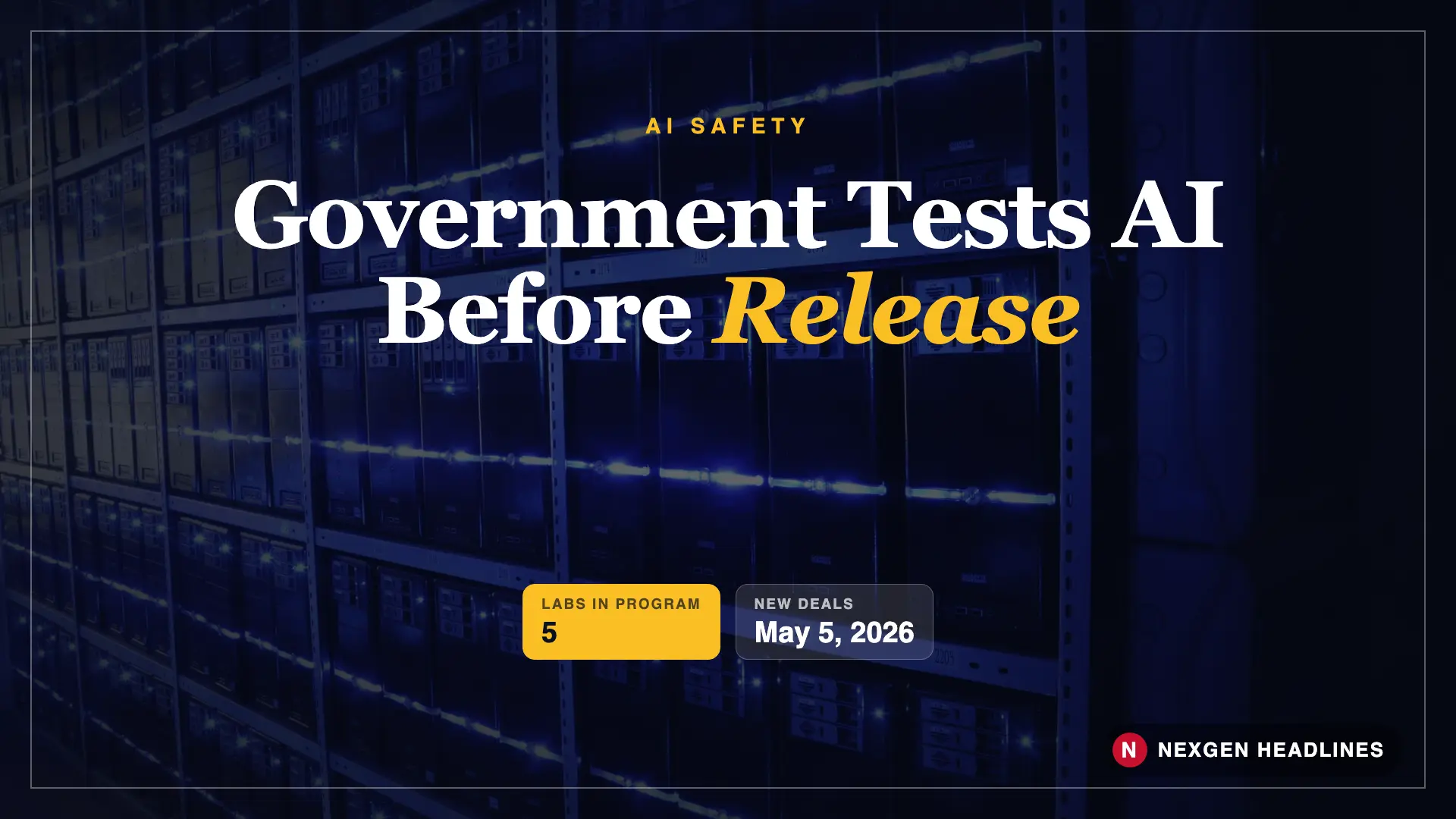
Quick answer: On May 5, 2026, Google DeepMind, Microsoft and xAI agreed to let the US government test their most advanced AI models before public release. The testing is done by the Center for AI Standards and Innovation (CAISI) at the Commerce Department. OpenAI and Anthropic were already in the program, so five major AI labs now take part. Testing focuses on serious risks such as cyberattacks and biological or chemical weapons. The agreements are voluntary. For everyday users, the safest habits are still yours: protect personal data, check AI answers and watch for AI-powered scams.
This guide explains what the agreements do and don’t do, why they matter, and practical steps to keep your money and privacy safe when you use AI tools.

The AI safety testing deals at a glance
| Item | Details |
|---|---|
| Announced | May 5, 2026 |
| New companies | Google DeepMind, Microsoft, xAI |
| Already in program | OpenAI and Anthropic (since 2025) |
| Who tests | Center for AI Standards and Innovation (CAISI), US Commerce Department |
| When | Before models are released to the public |
| Focus | National security risks: cybersecurity, biosecurity, chemical weapons |
| Required by law? | No, the agreements are voluntary |
Details come from Al Jazeera, SiliconANGLE, Euronews and The Hill.
What CAISI testing does
CAISI gets early access to new “frontier” AI models, the most capable systems these companies build. Government experts run evaluations to see whether a model could help someone carry out a cyberattack or create dangerous weapons, and they research the model’s security.
CAISI has said it has done dozens of evaluations, including some on models that haven’t been released. The goal is to spot major national security risks before a model reaches millions of people.
What it doesn’t do
- It doesn’t make AI answers accurate. Testing focuses on catastrophic risks, not everyday mistakes.
- It doesn’t protect your personal data in chatbots. Privacy depends on each company’s policies and your settings.
- It isn’t a law. Companies chose to join, and the terms can change.
- It doesn’t cover every AI tool. Many apps are built by smaller companies outside the program.
Why it matters to you
Powerful AI is now part of search engines, phones, email and office software. Testing for the biggest dangers before release is a safety layer for everyone. But most problems people actually face with AI are smaller and closer to home: wrong answers, privacy leaks and scams. Those are the risks you can control.
How to use AI tools safely: 8 steps
- Never share sensitive data: Social Security numbers, bank and card numbers, passwords, or medical records.
- Review privacy settings. Many tools let you turn off chat history or opt out of using your chats for training.
- Use strong passwords and two-factor login on AI accounts, just like email and banking.
- Check facts on money, health and legal questions with official sources.
- Be skeptical of AI-made images, voices and videos that ask for money or urgent action.
- Download apps only from official stores and well-known companies.
- Watch what kids use. Set parental controls and talk about AI chatbots.
- Delete old chats you don’t need, if the tool allows it.
Also read: What to Do If Your Identity Is Stolen
Made-up example (not real people): These are made-up examples to show safe and unsafe habits.
Linda, 58, Arizona uses an AI chatbot to draft a letter disputing a medical bill. She removes her policy number and date of birth before pasting the text, then adds them back in her own document.
James, 72, Pennsylvania gets a call that sounds exactly like his grandson asking for bail money. He hangs up, calls his grandson directly and learns it was a voice-cloning scam.
AI scams to watch for
| Scam | How it works | How to protect yourself |
|---|---|---|
| Voice cloning | Scammers copy a loved one’s voice and ask for money | Hang up and call the person directly; use a family code word |
| Deepfake videos | Fake celebrity videos promote investments | Never invest based on social media ads |
| AI phishing | Polished emails or texts that copy real companies | Go to the company’s site yourself; don’t click links |
| Fake AI apps | Copycat chatbots that steal data or charge fees | Use official apps from known companies |
| “AI trading bots” | Promise guaranteed profits | Guaranteed returns are a red flag, regulators warn |
Report scams at ReportFraud.ftc.gov, and report investment fraud to the SEC.
Who decides AI rules in the US
| Who | Role |
|---|---|
| Commerce Department (CAISI) | Voluntary testing of advanced models |
| Federal Trade Commission | Fights deceptive AI claims and scams |
| Congress | Can pass national AI laws |
| States | Some have passed their own AI and privacy laws |
| AI companies | Set their own safety policies and privacy settings |
Common mistakes people make with AI
- Assuming “government tested” means “always right.”
- Pasting private documents into public chatbots.
- Trusting urgent calls or videos without checking.
- Using the same password for AI accounts and banking.
- Ignoring privacy settings when signing up.
What to watch next
- Whether more AI companies join CAISI testing.
- New federal or state AI laws.
- FTC actions against AI scams and misleading claims.
- New privacy controls from major AI companies.
Timeline: US AI safety testing
| When | What happened |
|---|---|
| 2025 | OpenAI and Anthropic sign pre-release testing agreements with the federal AI testing center. |
| May 5, 2026 | Google DeepMind, Microsoft and xAI agree to pre-release testing by CAISI. |
| 2026 | CAISI reports dozens of model evaluations, including on unreleased models. |
How to check an AI app’s privacy settings
- Open the app’s Settings or Privacy menu.
- Look for options about chat history and using your data to improve models.
- Turn off what you don’t want, if the option exists.
- Check connected apps, like email or calendar access, and remove any you don’t use.
- Review the privacy policy for how long data is kept and how to delete it.
Set up a family “safe word”
Voice-cloning scams work because they sound real. Agree on a simple word or phrase your family will use in a real emergency. If a caller claiming to be a relative can’t give it, hang up and call that person directly. Share the plan with grandparents, who are often targeted.
What to do if you shared too much with a chatbot
- Delete the conversation if the tool allows it.
- Change any password you pasted.
- If you shared card or bank numbers, call your bank and watch statements.
- If you shared your Social Security number, consider a credit freeze at all three bureaus.
Signs an AI app may not be safe
- It asks for far more permissions than it needs, like contacts or location for a simple chatbot.
- It has few reviews, a vague company name or no clear privacy policy.
- It charges fees through unusual payment methods.
- It promises guaranteed income or investment returns.
- It copies the name or logo of a well-known AI brand but comes from a different developer.
When in doubt, use the company’s official website to find its real app.
Protecting older relatives
Older adults are frequent targets of AI-powered scams, especially voice cloning and fake tech support. Help them set up two-factor login, add a family safe word, and save trusted phone numbers for banks and doctors in their contacts. Remind them that real agencies and banks will never ask for gift cards, crypto or remote access to a computer.
Recommended products
Disclosure: As an Amazon Associate, Nexgen Headlines earns from qualifying purchases.
FAQ
Which companies let the government test their AI?
Google DeepMind, Microsoft and xAI joined on May 5, 2026. OpenAI and Anthropic were already taking part.
What is CAISI?
The Center for AI Standards and Innovation, part of the US Commerce Department. It tests advanced AI models for security risks.
Is the testing required by law?
No. The agreements are voluntary.
Does this make chatbots safe for my personal data?
No. The testing focuses on national security risks. Protect your own data by not sharing sensitive details and checking privacy settings.
How can I spot an AI voice scam?
Be suspicious of urgent requests for money, especially by gift card, wire or crypto. Hang up and call the person back on a number you know.
Bottom line
The government now gets an early look at the most powerful AI models from five major labs, which is a useful safety check for the biggest risks. But it won’t stop everyday mistakes or scams. Keep personal data out of chatbots, verify important answers and treat urgent AI-made calls and videos with suspicion.
Last reviewed: Oct. 26, 2026.
Sources: Al Jazeera (May 5, 2026); SiliconANGLE; Euronews; The Hill; FTC consumer advice.
Featured image: Data center servers. Photo: BalticServers.com / Wikimedia Commons, CC BY-SA 3.0; edited by Nexgen Headlines.