
Quick answer: To file a homeowners insurance claim, make the home safe and stop further damage, take photos and video, and call your insurer or file in its app as soon as you can. Then make a list of damaged items, keep every receipt, meet the adjuster, and review the settlement before you sign. Most claims take a few weeks to a few months. Your deadline is set by your policy and state law, so read the “Duties after loss” section today.
Filing a claim is stressful, especially right after a storm, fire or burst pipe. The good news: a few smart moves in the first 48 hours can make the difference between a fair payout and a fight. Here’s the full process in plain English.
How to file a homeowners insurance claim: 9 steps
| Step | What to do | Why it matters |
|---|---|---|
| 1 | Get everyone safe. Call 911 for fire, gas leaks or injuries. | Safety first; police and fire reports help your claim. |
| 2 | Stop more damage (shut off water, tarp the roof, board windows). | Policies require you to protect the property. |
| 3 | Photograph and video everything before cleanup. | Proof of damage is your strongest evidence. |
| 4 | Call your insurer, agent or use the app. Get a claim number. | Starts the clock and assigns an adjuster. |
| 5 | Save receipts for repairs, hotels and meals. | Many costs are reimbursed. |
| 6 | Make a detailed list of damaged belongings. | Needed for the personal property part of the claim. |
| 7 | Meet the adjuster and walk through the damage. | The adjuster’s report drives the payout. |
| 8 | Get your own contractor estimates. | Lets you check the adjuster’s numbers. |
| 9 | Review the settlement offer before cashing any check. | You can question or appeal a low offer. |
Step 1: Make it safe and stop the damage
Your policy almost certainly says you must take “reasonable steps” to protect your property after a loss. If you don’t, the insurer can refuse to pay for damage that gets worse later.
- Water: shut off the main water valve and call a water mitigation company.
- Roof: put a tarp over holes. Many roofers offer emergency tarping.
- Windows and doors: board them up to prevent theft and weather damage.
- Fire: don’t go back in until the fire department says it’s safe.
Keep the receipts. Emergency repairs are usually covered as part of the claim. Don’t do permanent repairs until the adjuster has seen the damage, unless your insurer approves.
Step 2: Document everything
Before you throw anything away, take wide shots of each room, then close-ups of damage. Video works well: walk slowly and describe what you see. Keep samples of damaged carpet or drywall if you can. Photograph serial numbers on electronics and appliances.
If you have a home inventory from before the loss, great. If not, look through old photos, bank and card statements, Amazon order history and email receipts.
Step 3: Contact your insurer
Most insurers let you file by phone, online or in their app 24/7. Have this ready:
- Your policy number
- Date, time and cause of the loss
- A short description of damage
- Police or fire report number, if any
- A phone number where you can be reached
Write down your claim number, the adjuster’s name and every call (date, who you talked to, what they said). Follow up important calls with an email.
Also read: Does homeowners insurance cover water damage?
Step 4: Ask about living expenses
If you can’t live in your home, most standard policies include additional living expenses (ALE), also called “loss of use.” It pays the extra costs above your normal spending, such as a hotel or rental, extra meals out and higher commuting costs. Ask your insurer for an advance if you need cash right away. Keep every receipt.
Step 5: Meet the adjuster
The insurance company’s adjuster inspects the damage and writes an estimate. Be there for the visit. Point out every problem, including hidden ones like wet insulation or smoke smell in the HVAC. Give them your photos and list.
You can also hire your own public adjuster, who works for you, not the insurer. They usually charge a percentage of the settlement, often around 10% to 20%, and some states cap the fee. A public adjuster can help on big or complex claims. On a small claim, the fee may cost more than they add.
Made-up example (for illustration):
Dana has a $1,000 deductible. A pipe bursts under her kitchen sink. She shuts off the water, pays $850 for emergency drying and takes 60 photos. The adjuster estimates $9,400 in repairs. Dana’s contractor quotes $11,200, because the adjuster missed damaged subflooring. She sends the contractor’s estimate and photos. The insurer agrees to $11,000. After the $1,000 deductible, she receives $10,000, plus $850 for the drying bill.
How the payout works
- Deductible: subtracted from the payout. Many policies have a separate, higher percentage deductible for wind, hail or hurricanes (for example, 2% of your dwelling coverage).
- Replacement cost vs. actual cash value (ACV): ACV pays what an item was worth after depreciation. Replacement cost pays to replace it new. Many replacement cost policies pay ACV first, then the rest after you finish repairs.
- Mortgage company: big checks for the house are often made out to you and your lender. The lender may release money in stages as work is done.
- Limits: jewelry, cash, firearms and collectibles often have low sub-limits unless you added a rider.
What homeowners insurance usually doesn’t cover
- Flood. You need a separate flood policy from FEMA’s National Flood Insurance Program (NFIP) or a private insurer.
- Earthquake. Needs separate coverage in most states.
- Wear and tear, mold from long-term leaks, pests.
- Sewer backup, unless you added an endorsement.
Flood claims follow NFIP rules. The NFIP generally asks for a signed proof of loss within 60 days of the flood, so start early.
What if your claim is denied or the offer is too low?
- Ask for the denial or estimate in writing, with the exact policy language they relied on.
- Send your own evidence: contractor estimates, photos, expert reports.
- Ask for a re-inspection or a different adjuster.
- Use the appraisal clause. Many policies let each side hire an appraiser to settle disputes over the amount.
- File a complaint with your state insurance department. It’s free. Find yours through the NAIC website.
- Talk to an attorney if you suspect bad faith or the claim is large.
Should you even file a claim?
Not always. Claims go into a database called CLUE (Comprehensive Loss Underwriting Exchange), and insurers can see up to 7 years of your claim history. Several claims can raise your premium or lead to non-renewal.
- File if damage is well above your deductible, or if someone was hurt.
- Consider paying yourself if the repair is close to your deductible.
- Ask your agent a “what if” question carefully. In some cases even a question can be noted, so ask whether it will be recorded as a claim.
Common mistakes to avoid
- Throwing away damaged items before the adjuster sees them.
- Signing a contractor’s “assignment of benefits” without reading it. It can hand control of your claim to the contractor.
- Hiring storm chasers who knock on your door after a disaster. Check licenses and reviews.
- Cashing a check marked “final payment” before you agree with the amount.
- Missing deadlines in your policy’s “Duties after loss” section.
Make a home inventory before you need it
The best time to prepare for a claim is today. Walk through your home with your phone and record a video of every room. Open closets and drawers. Say the brand and rough age of big items out loud. Save the video in cloud storage, not just on your phone, so a fire can’t destroy it too. Update it once a year or after big purchases. Many insurers have free inventory tools in their apps.
Recommended products
Handy items for documenting and protecting your home.
Disclosure: As an Amazon Associate, Nexgen Headlines earns from qualifying purchases.
FAQ
How long do I have to file a homeowners insurance claim?
It depends on your policy and state. Many policies say “promptly,” and some set a hard deadline, often one to two years for certain steps. Report the loss as soon as possible.
How long does a homeowners claim take?
Simple claims can close in a few weeks. Large losses can take several months. Many states set deadlines for insurers to acknowledge, decide and pay claims.
Will filing a claim raise my rates?
It can. Weather claims usually hurt less than water or liability claims, but several claims in a few years often raise premiums.
Can I keep the insurance money and not make repairs?
Sometimes, if you own the home outright. With a mortgage, the lender usually controls repair money. With replacement cost coverage, you may only get the depreciation holdback after repairs are done.
Bottom line
Stop more damage, document everything, report the claim fast and keep every receipt. Get your own contractor estimate, read your policy’s duties section, and don’t accept a low offer without pushing back. Your state insurance department is a free referee if things go wrong.
Last reviewed: Nov. 13, 2026. This is general information. Your policy and state law decide the details.
Sources: NAIC: Homeowners insurance, Insurance Information Institute: Filing a claim, FEMA FloodSmart: Start a flood claim, FEMA: Flood insurance, LexisNexis: Request your CLUE report.
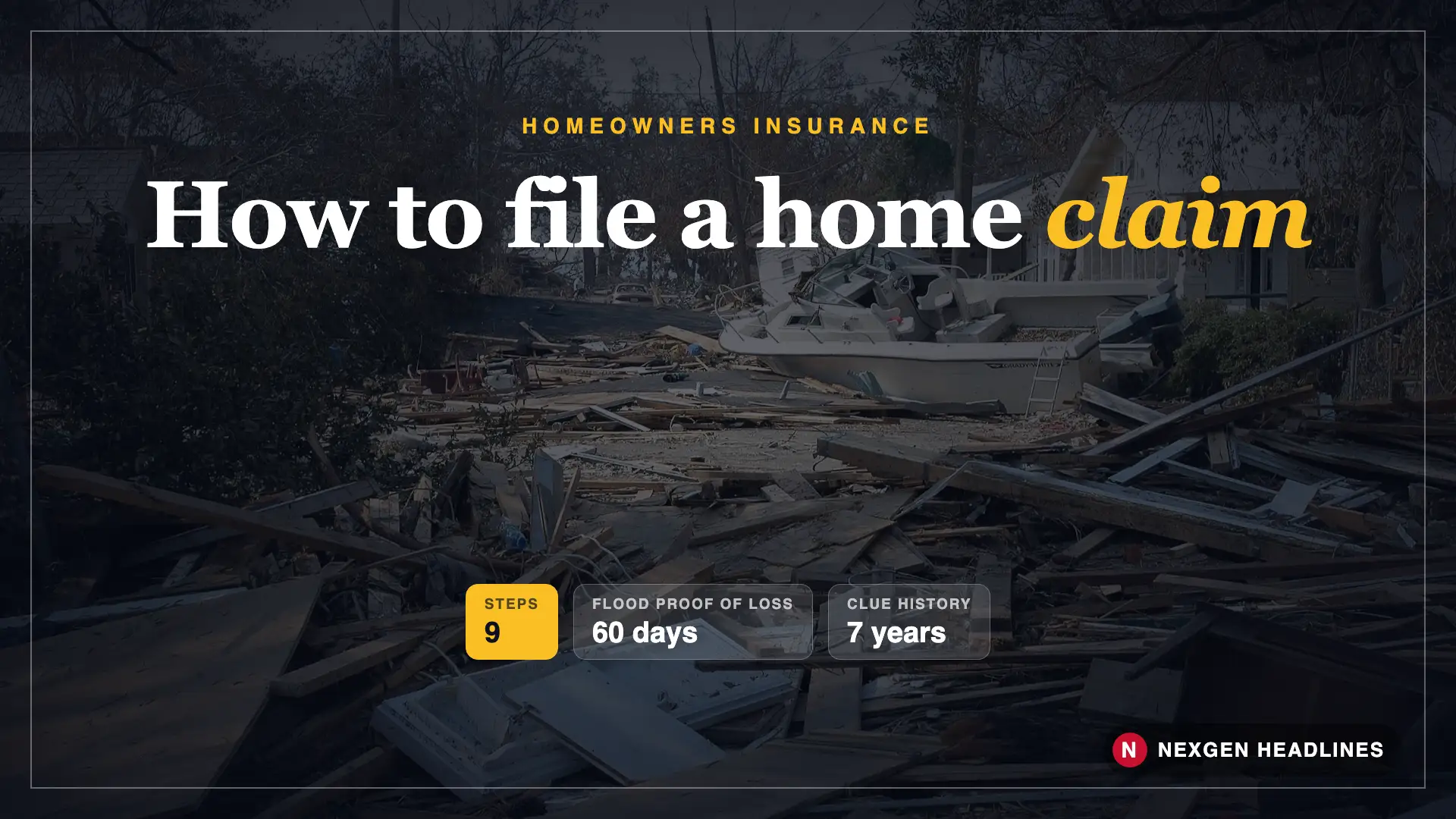
Featured image: Hurricane Katrina house damage in Biloxi, Mississippi. Photo: Mark Wolfe / FEMA, public domain, via Wikimedia Commons; edited by Nexgen Headlines.