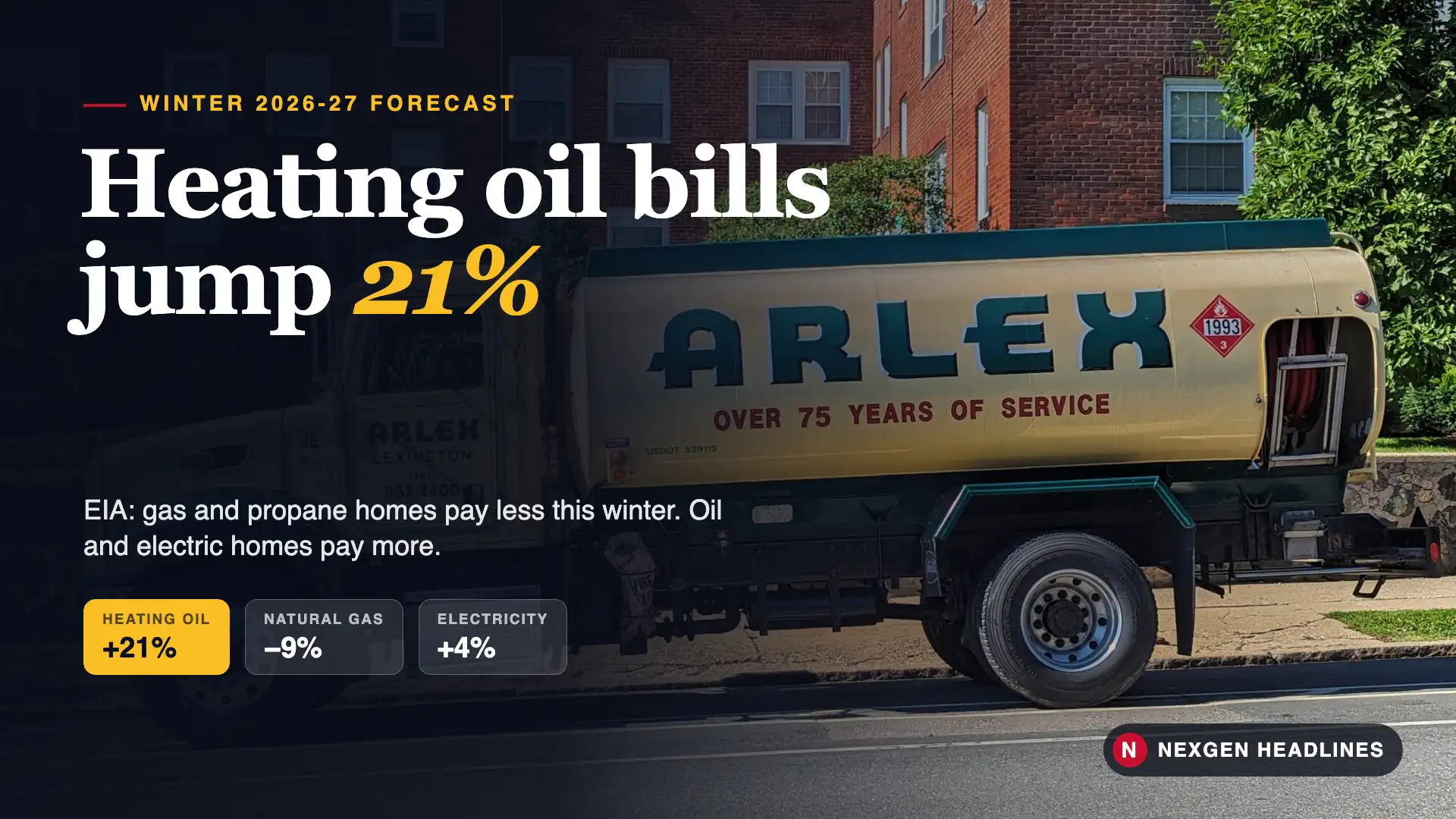

Quick answer: The U.S. Energy Information Administration (EIA) expects a split winter. Homes that heat with heating oil should pay about 21% more (around $2,115 for November to March), and electric-heat homes about 4% more. Homes on natural gas should pay about 9% less, and propane homes about 3% less. These are forecasts, not bills, and your cost depends on your weather and your local price.
The forecast at a glance
The EIA published its Winter Fuels Outlook on Oct. 6, 2026. It covers the five main heating months, November through March, and compares them with last winter.
| Main heating fuel | Forecast spending, Nov.–March | Change vs. last winter |
|---|---|---|
| Heating oil | About $2,115 | Up about 21% |
| Propane | About $1,246 | Down about 3% |
| Electricity | About $1,196 | Up about 4% |
| Natural gas | About $640 | Down about 9% |
Source: EIA Winter Fuels Outlook, October 2026. All figures are national averages and projections. They are not a quote from your utility.
A quick word on what these numbers mean. They are average household spending on the main heating fuel for the whole season. A small apartment in Georgia and a drafty farmhouse in Maine are both inside that average, so your number can be far higher or lower.
Why heating oil is the big jump
Heating oil is the outlier this year. The EIA assumes an average price of about $5.26 a gallon this winter, roughly 34% higher than last winter. It also expects homes to burn a bit less oil, about 402 gallons, which is why the bill rises less than the price does.
The main reason is supply. The EIA reported that East Coast stocks of distillate fuel, the group that includes heating oil and diesel, were about 32% below their 2021–2025 average for September. Low stocks going into winter tend to push prices up, especially during cold snaps.
Only about 3% of U.S. homes heat mainly with oil, but they are concentrated in the Northeast. In states like Maine, New Hampshire, Vermont, Massachusetts and Connecticut, oil heat is common, so this one line in a federal report matters a lot for those households.
Not every estimate agrees. The National Energy Assistance Directors Association (NEADA), which tracks costs for low-income programs, put out a steeper estimate in late September: about $2,627 for oil-heat homes, up about 50%. Forecasts differ because they use different price and weather assumptions. Treat both as a range, not a promise.
Why gas and propane homes may catch a break
About half of U.S. homes heat mainly with natural gas or propane, and both should cost a little less this winter, according to the EIA. Lower expected gas use and steady supply are behind the drop.
That does not mean your gas bill will shrink. Utilities also charge delivery fees, and many have raised those separately. Read your bill: the “supply” or “commodity” line is the part this forecast is about. The “delivery” line is set by your state’s utility regulators.
Electric heat: a small rise
Homes that heat mainly with electricity are expected to spend about 4% more this winter. That includes heat pumps and electric baseboard heat. Electric rates have been climbing in many states, so the rise follows a trend, not a one-time shock.
If you have a heat pump, you already have one of the most efficient ways to heat a home. The savings tips below still apply. Keeping filters clean and not cranking the thermostat up and down all day both help a heat pump run better.
A real-life example (illustrative)
Here is how I would think about it if I were in my friend’s shoes. Picture Linda, a retired teacher in central Massachusetts with an oil furnace and a 275-gallon tank. (Linda is an illustrative example, not a real person.)
Last winter she paid about $3.90 a gallon. If this winter’s price lands near the EIA’s $5.26 average, the same 400 gallons would cost her about $2,104 instead of about $1,560. That is roughly $544 more over five months, or about $109 a month.
What I would tell Linda: call two or three local dealers now and ask about a pre-buy or budget plan, get the furnace serviced before the first cold snap, and turn the thermostat back at night. None of that is dramatic, but together it can claw back a real share of that $544.
9 ways to cut your heating bill this winter
- Turn the thermostat back at night. The U.S. Department of Energy says turning it back 7°F to 10°F for 8 hours a day can save as much as 10% a year on heating and cooling.
- Use a smart or programmable thermostat. It does the setback for you, so you don’t wake up to a cold house or forget to turn it down.
- Get the furnace or boiler serviced. A tune-up before the cold months helps it run efficiently and catches problems before an emergency call.
- Change the furnace filter. A clogged filter makes the system work harder. Check it monthly during heavy use.
- Seal drafts. Weatherstripping on doors, caulk around window frames and a door sweep are cheap and fast.
- Use the sun. Open south-facing curtains during the day and close all curtains at night.
- Heat the room you’re in. A safe space heater in one room, with the main thermostat turned down, can save money. Running one on top of full central heat does not.
- Oil customers: shop around. Prices vary a lot between dealers. Ask about cash prices, pre-buy contracts and budget plans that spread the cost over 10 or 12 months.
- Ask about help before you fall behind. If money is tight, contact your utility and your state’s Low Income Home Energy Assistance Program (LIHEAP) office early. Funding and dates vary by state, and some programs run out.
Our full list is in how to lower your heating bill this winter.
Recommended products
- Smart or programmable thermostat – Automates the nightly setback.
- Door weatherstripping kit – A cheap fix for the biggest drafts.
- Window insulation film – Helps with old single-pane windows.
- Thermal curtains – Keep heat in at night.
- Furnace filters – Check your size before you buy.
Disclosure: As an Amazon Associate, Nexgen Headlines earns from qualifying purchases. Prices and availability can change.
Who should worry most
- Oil-heat homes in the Northeast. This is where the biggest increase lands.
- Older homes with poor insulation. They use more fuel, so any price rise hits harder.
- Households on fixed incomes. A $100-a-month jump is hard to absorb on Social Security alone.
- Anyone in a region that gets a colder-than-normal winter. The EIA’s base case assumes weather close to last winter and the 10-year average. A colder winter means more fuel and higher bills for every type of heat.
What could change the forecast
Two things move heating bills more than anything else: weather and prices. The EIA’s numbers rest on inputs it locked in on Oct. 1. A long cold spell, a supply problem or a big move in crude oil prices could push costs above the forecast. A mild winter could pull them below it. The EIA updates its Short-Term Energy Outlook every month, so check back in December for a fresher read.
Also read: Do space heaters actually save money?
Frequently asked questions
Will my heating bill go up this winter?
It depends on your fuel. The EIA expects oil-heat homes to pay about 21% more and electric-heat homes about 4% more. Gas homes should pay about 9% less and propane homes about 3% less.
How much will heating oil cost per gallon this winter?
The EIA’s forecast average is about $5.26 a gallon for November through March. Local prices vary by dealer and by week.
Is it worth locking in a heating oil price?
A pre-buy contract protects you if prices rise, but you can lose out if they fall. Compare the locked price to today’s cash price and read the fine print on fees.
How do I get help paying my heating bill?
Start with your utility and your state’s LIHEAP office. Many utilities also offer budget billing and payment plans. Ask before you fall behind.
What is the cheapest way to heat a house?
Across the country, natural gas is usually the cheapest main fuel, according to the EIA’s averages. In your own home, the cheapest heat is the heat you don’t lose, so sealing drafts and setting back the thermostat come first.
The bottom line
This is a two-speed winter. Gas and propane homes should get a small break, and oil homes face the biggest jump in years. Whatever fuel you use, the plan is the same: service the system, seal drafts, set the thermostat back at night and, if you burn oil, shop dealers now instead of in January.
Last reviewed: Oct. 27, 2026. Figures are EIA projections and can change.
Sources: U.S. Energy Information Administration, Winter Fuels Outlook (Oct. 2026); U.S. Department of Energy, Thermostats; HHS, LIHEAP; NEADA estimate as reported by CNBC.
Featured photo: Arlex heating oil delivery truck, Arlington, Mass. Daderot / Wikimedia Commons, CC0. File photo used for illustration.