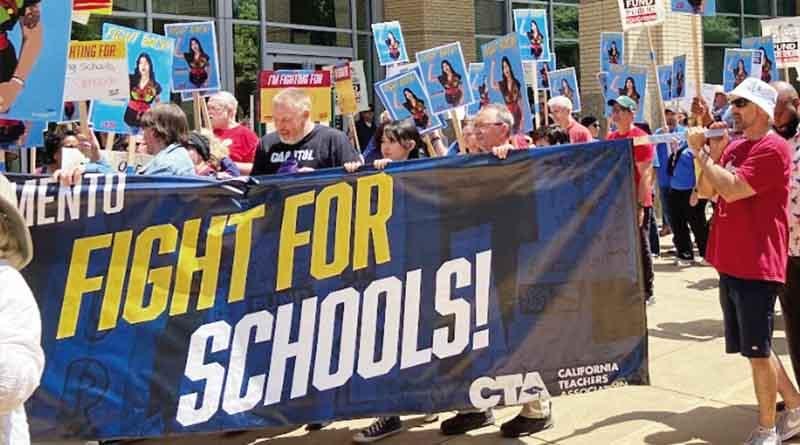
California School Funding
California School Funding Faces a Crucial Ballot Test
California School Funding is at the center of a growing political debate as educators and school advocates prepare for a November ballot that includes a large number of statewide measures.
The concern is focused especially on Proposition 3, a constitutional amendment that would make permanent an existing state income-tax increase on high-income Californians. The measure would preserve an estimated $5 billion to $15 billion in annual state revenue, according to California’s Legislative Analyst.
Supporters say that money is important for public education and health care.
But the political environment around the measure is becoming more complicated.
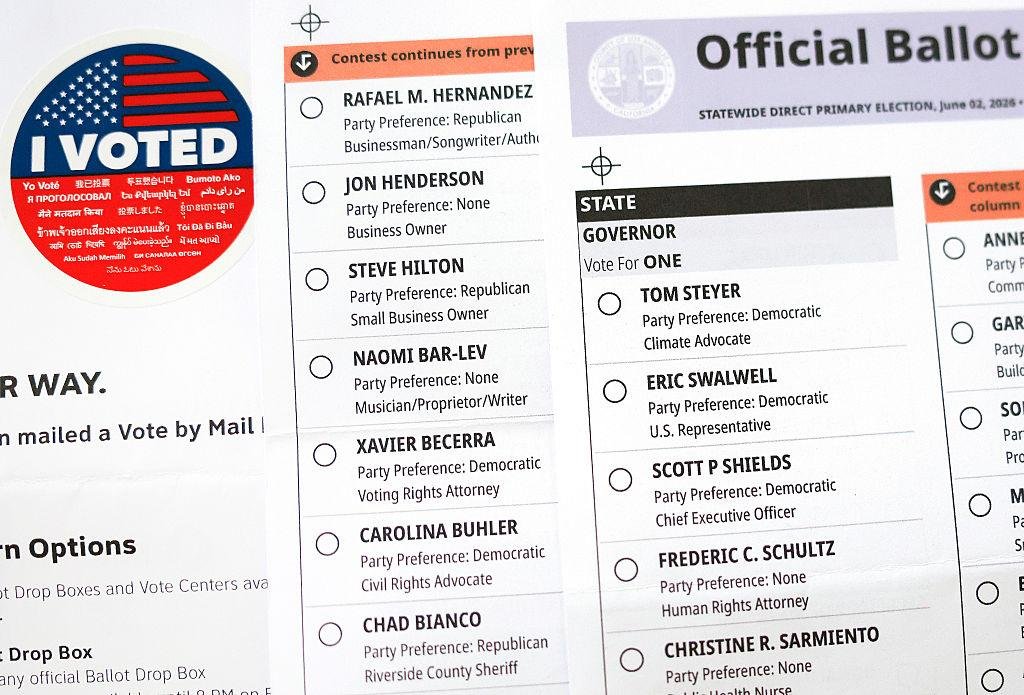
California voters will decide 14 statewide measures on November 3, 2026. Nine qualified through the citizen initiative process, while five were placed on the ballot by the Legislature.
Educators and their allies are concerned that voters could face too many competing issues, making it harder for a school-funding measure to receive enough attention.
What Is Proposition 3?
Proposition 3 would make permanent tax rates that California voters approved in 2012.
Those rates apply to higher-income Californians and are currently scheduled to expire in 2031.
Under Proposition 3, the existing rates would continue instead of ending in 2031.
The official state summary says the measure would allocate 89% of the revenue to K-12 schools and 11% to community colleges. Local school boards would have authority over how the education money is spent, while the measure would prohibit using the funds for administrative costs.
The Legislative Analyst estimates that making the tax increase permanent would maintain approximately $5 billion to $15 billion per year in state income-tax revenue, measured in today’s dollars.
That makes Proposition 3 particularly important for the future of California School Funding.
Why Educators Are Paying Attention
Teachers, school nurses, parent organizations and education advocates are among the groups supporting Proposition 3.
The official voter guide lists the California Teachers Association, California School Nurses Organization and California State PTA among its supporters.
Supporters argue that the measure would provide a continuing revenue source for schools rather than allowing the existing tax rates to expire.
Their argument is based on long-term budget planning.
School districts need to make decisions about teachers, classroom sizes, student programs, transportation, technology and other services years in advance.
If a major source of state revenue is scheduled to disappear, districts may have to prepare for lower funding in the future.
Proposition 3 would change that timeline by making the existing tax rates permanent.
Why the Number of Ballot Measures Matters
The debate is not happening in isolation.
California’s November ballot contains measures covering taxes, education, healthcare, housing, elections, government spending and other major issues.
The state’s Secretary of State certified 14 statewide measures for the November 3 election.
That creates a crowded political environment.
For voters, multiple complicated propositions can require significant time to understand.
For campaigns, it can also mean competing for attention, volunteers, advertising money and media coverage.
Education advocates therefore face the challenge of explaining Proposition 3 while voters are simultaneously considering many other proposals.
The concern is not that voters cannot handle multiple measures.
Rather, educators worry that the sheer number of proposals could make it harder for a single school-funding issue to stand out.
Proposition 3 Is Not a New Tax
One important detail is often lost in the political debate.
Proposition 3 would not create a new income-tax increase.
Instead, it would make permanent tax rates that were approved by California voters in 2012 and are currently scheduled to expire in 2031.
Supporters describe this as preserving existing revenue rather than imposing a new tax.
Opponents use a different framing.
The California Taxpayers Association and Family Business Association of California are listed in the official voter guide as opponents. They argue against making the higher rates permanent.
That distinction is important because voters are being asked to decide whether the existing tax rates should continue beyond their current expiration date.
How Much Money Could Schools Receive?
The exact amount available to schools would vary with the state’s economy and income-tax collections.
The Legislative Analyst estimates that keeping the tax rates in place could preserve between $5 billion and $15 billion annually in state revenue in today’s dollars.
Because 89% of the revenue from the measure would be directed to K-12 schools, the education system would receive the largest share.
Community colleges would receive the remaining 11%.
The money would therefore create a continuing revenue stream rather than a one-time school funding program.
That distinction matters for districts planning long-term budgets.
What Educators Say Is at Stake
Supporters of Proposition 3 have warned that losing the revenue could create difficult choices for schools.
The official voter guide’s argument in favor says that without the measure, California’s public schools and community colleges could face billions of dollars in potential cuts. Supporters specifically point to risks including teacher layoffs and larger class sizes.
Those are campaign arguments, rather than guaranteed outcomes.
The actual effect would depend on future state budgets, economic conditions and decisions made by lawmakers.
Still, the potential loss of billions of dollars gives the school-funding debate significant financial importance.
Opponents Raise Tax and Economic Concerns
Opponents of Proposition 3 have a different concern.
They argue that making the tax rates permanent would maintain a higher tax burden on high-income Californians rather than allowing the rates to expire as currently scheduled.
The California Taxpayers Association and Family Business Association of California are among the groups listed as opposing the measure in the official voter guide.
Their position reflects a broader debate over California’s tax structure.
The question is not simply how much money schools need.
It is also about where that money should come from and how long a tax policy approved in 2012 should remain in place.
California’s Education Budget Depends on the Broader Economy
California School Funding
Another factor is California’s reliance on income-tax revenue.
The Legislative Analyst notes that the personal income tax is the state’s largest tax source and provides much of the revenue used for public services through the General Fund.
California’s tax collections can fluctuate significantly with economic conditions.
High-income taxpayers can have particularly large effects on state revenue because their income may include salaries, investment gains and other sources that can vary from year to year.
That makes stable education funding a complicated issue.
Proposition 3 supporters emphasize predictability.
Opponents emphasize the long-term implications of keeping higher tax rates.
Both sides are therefore focusing on different parts of the same fiscal question.
Other Ballot Measures Could Shape the Debate
Proposition 3 is not the only measure connected to state finances and public services.
Proposition 2, for example, would increase California’s Rainy Day Fund and change rules governing state reserves and debt payments.
The official voter guide says the measure would double the reserve cap from 10% to 20% of General Fund revenues and require additional savings during years when revenues are high.
Although Proposition 2 does not directly create new school funding, its budget-reserve rules could affect how California manages money during economic downturns.
That is another reason voters may need to consider several measures together when thinking about the future of California School Funding.
Why the November Election Could Matter
California voters will receive ballots for the November 3 general election.
County election officials began mailing ballots on or before October 5, while October 19 is the registration deadline listed in the official voter guide. Election Day is November 3.
For education advocates, the next several weeks will be critical.
Campaign groups will likely increase advertising and outreach as they try to explain the financial consequences they associate with Proposition 3.
Opponents will also have opportunities to make their case about taxation and state finances.
The result will ultimately be determined by voters.
The Bigger Question: Stability or Flexibility?
At its core, the Proposition 3 debate involves a familiar government-budget question.
Should California preserve a large, dedicated stream of revenue for education by keeping existing high-income tax rates in place?
Or should those tax rates expire as currently scheduled, leaving future lawmakers to decide how to address education funding needs?
There are no simple answers.
Stable revenue can make long-term school planning easier.
At the same time, permanent tax policies reduce future lawmakers’ ability to change those revenue sources without another legislative or electoral process.
That tension is likely to remain central to the debate.
What Happens if Proposition 3 Passes?
If voters approve Proposition 3, the existing high-income tax rates would become permanent instead of expiring in 2031.
The measure would continue directing revenue toward public education and community colleges under the formula established in the initiative.
The state would also retain an estimated $5 billion to $15 billion in annual income-tax revenue in today’s dollars.
That would give policymakers and school districts a longer-term revenue source.
However, the exact annual amount would continue to depend on California’s tax collections and economic performance.
What Happens if It Fails?
If voters reject Proposition 3, the existing higher income-tax rates would remain scheduled to expire in 2031 under current law.
That would not immediately eliminate school funding.
Instead, it would mean California would eventually lose the revenue associated with those temporary tax rates unless lawmakers or voters later approved another approach.
The state would have several years to address the issue.
Future legislatures could consider different tax policies, spending changes or other ways of supporting schools.
A Major Test for California School Funding
The debate over Proposition 3 shows why ballot initiatives can have significant consequences for public education.
California has a large and complex education system that depends heavily on state funding.
At the same time, voters are being asked to make decisions on a wide range of other issues.
For educators, the challenge is making sure the financial implications of Proposition 3 are understood amid the larger election debate.
For voters, the key questions involve the measure’s tax consequences, its education funding formula and what could happen if the existing rates expire.
The outcome will not only affect the state’s tax structure.
It could also influence how California plans for public education funding in the years ahead.
Important News Takeaway
The California School Funding debate is entering an important phase ahead of the November 3, 2026 election.
Proposition 3 would make permanent existing higher income-tax rates that are scheduled to expire in 2031. The measure would direct 89% of its revenue to K-12 schools and 11% to community colleges, with the Legislative Analyst estimating that it could preserve $5 billion to $15 billion annually in state revenue.
Educators and their supporters see the measure as a way to provide longer-term funding stability, while opponents are raising concerns about permanently maintaining higher income-tax rates.
The crowded November ballot adds another layer to the debate, with 14 statewide measures going before California voters.
The final decision will be made by California voters, and the outcome could shape the state’s approach to education funding for years to come.
THANKS FOR READING