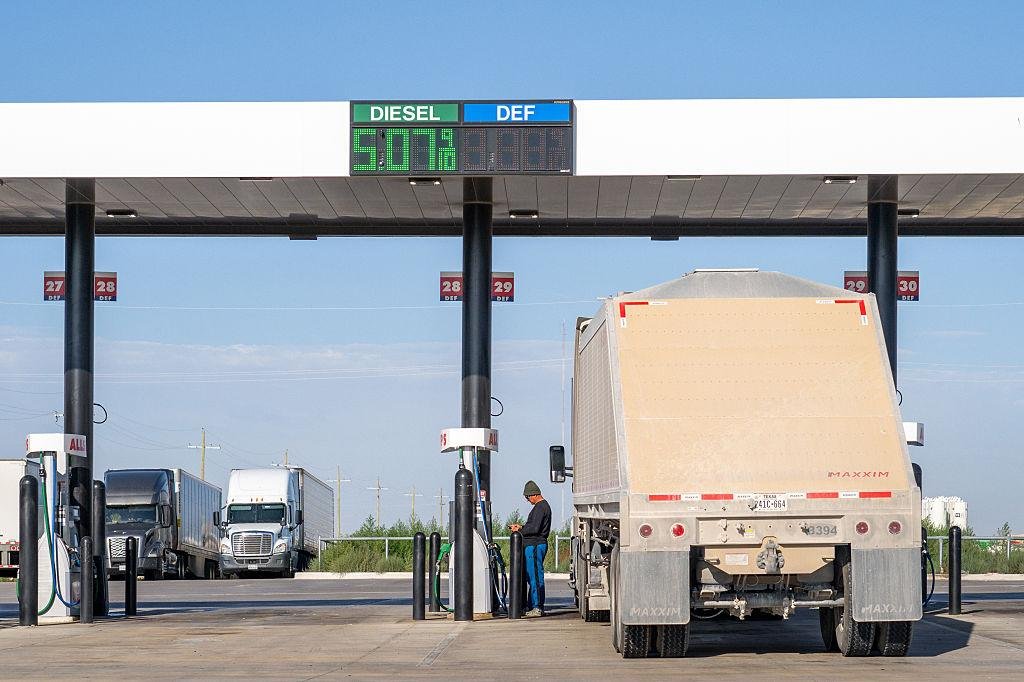
Trump Diesel Order
Trump Diesel Order is aimed at reducing the pressure of record-high diesel costs for American farmers, truckers and other businesses that depend heavily on fuel. President Donald Trump signed an executive order on October 5, temporarily easing federal restrictions on tax-exempt dyed diesel and directing agencies to provide limited tax relief through the end of 2026.
- Trump Diesel Order
- What Trump’s Executive Order Does
- Why Diesel Prices Are Such a Big Issue
- The Federal Diesel Tax Is 24.4 Cents Per Gallon
- The Supply Problem Behind High Diesel Prices
- What the Agriculture Department Will Do
- States Have an Important Role
- Could the Order Lower Prices for Consumers?
- G7 Fuel Releases Add Another Supply Boost
- Critics Question How Much the Order Can Do
- Political Timing Draws Attention
- What Truckers and Farmers Should Know
- Important News Takeaway
The move comes as diesel prices have climbed sharply, putting additional pressure on transportation, agriculture, construction and the wider U.S. economy.
The administration says the action is designed to provide immediate financial relief. However, analysts and industry observers have noted that taxes are only one part of the reason diesel prices are so high.
What Trump’s Executive Order Does
The Trump Diesel Order focuses heavily on a fuel commonly known as dyed diesel or “red diesel.”
Red diesel is essentially diesel fuel containing a red dye that identifies it as fuel intended for uses that are generally exempt from the federal highway fuel tax. It has traditionally been used by farmers, construction operators and other off-road users.
Under the new order, the administration is temporarily allowing broader highway use of dyed diesel while directing the Treasury Department to defer certain federal diesel tax obligations where legally authorized.
The order applies to the period from October 5 through December 31, 2026, subject to the legal authorities and determinations described in the order.
The administration is also encouraging states to take corresponding action.
Why Diesel Prices Are Such a Big Issue
Diesel is especially important to the American economy because it powers much more than personal vehicles.
Long-haul trucks rely on diesel to transport food, manufactured goods and other products across the country. Farmers use diesel-powered equipment during planting and harvest seasons. Construction companies also depend heavily on diesel machinery.
When diesel becomes more expensive, businesses can face higher operating costs.
Those costs can eventually affect transportation prices and, in some cases, the prices consumers pay for goods.
The White House says the new policy is intended to put money back into the pockets of farmers, truckers and workers affected by high fuel costs.
The Federal Diesel Tax Is 24.4 Cents Per Gallon
One of the key numbers behind the administration’s argument is the federal diesel tax.
The White House says the federal diesel tax is 24.4 cents per gallon. The administration estimates that this equals roughly $60 on a 250-gallon fill.
If states also provide comparable relief, the administration says the savings could exceed $100 per fill in some circumstances.
However, consumers should not assume that every driver will immediately see a 24.4-cent-per-gallon reduction at every gas station.
The executive order’s tax relief depends on federal legal authority and state policies, while the final retail price also depends on fuel supply, refining costs, transportation and local market conditions.
The Supply Problem Behind High Diesel Prices
The Trump Diesel Order comes at a time when the U.S. and global fuel markets are dealing with significant supply pressures.
Reuters reported that diesel recently reached a record of about $6.53 per gallon, according to AAA data. Supply disruptions, refinery problems and geopolitical tensions have contributed to the increase.
That means reducing taxes alone may not completely solve the problem.
If there is not enough diesel available, lowering the tax can reduce the cost burden on users but may not dramatically increase the physical supply of fuel.
This distinction is important when evaluating what the executive order can realistically accomplish.
What the Agriculture Department Will Do
Trump Diesel Order
The executive order directs the Agriculture Department to help ensure farmers have access to dyed diesel in areas experiencing high demand.
That is particularly relevant because the policy arrives during the fall harvest season.
Farmers use large amounts of diesel for tractors, combines, trucks and other equipment. A temporary reduction in fuel costs could therefore provide meaningful savings for agricultural operations that consume hundreds or thousands of gallons.
The administration has also directed the Transportation Department to coordinate with states, industry groups and labor organizations on access to dyed diesel.
States Have an Important Role
The federal government cannot simply assume that every state will adopt identical fuel-tax policies.
The executive order therefore directs White House officials to encourage states to take corresponding action where legally permitted.
That means the actual impact for truckers and businesses could differ depending on where they operate and purchase fuel.
Some states have already taken steps related to diesel costs, while others may decide how to respond based on their own laws and budget considerations.
For consumers, this means the federal announcement does not necessarily translate into the same savings everywhere.
Could the Order Lower Prices for Consumers?
The administration argues that cheaper diesel can eventually help lower the cost of transporting goods.
That could provide a positive effect beyond truck drivers and farmers.
For example, trucking companies that spend less on fuel may face lower operating costs. Transportation is built into the price of many products, so lower freight costs can potentially reduce some inflationary pressure.
But the size and speed of that effect remain uncertain.
Fuel prices are influenced by global oil markets, refinery capacity, inventories, transportation costs and regional supply conditions.
G7 Fuel Releases Add Another Supply Boost
The diesel order is part of a broader effort to address fuel shortages.
Reuters reported that G7 countries agreed to release 100 million barrels of diesel and crude oil from emergency reserves after pressure from the Trump administration.
The White House has presented the international release as another step toward increasing available fuel supplies.
The combination of additional supply and temporary tax relief could provide greater support than either measure alone, although the ultimate effect will depend on how quickly fuel reaches markets.
Critics Question How Much the Order Can Do
The administration has described the policy as a major affordability measure, but some energy analysts have pointed to supply constraints as the bigger problem.
GasBuddy analyst Patrick De Haan told The Associated Press that the fundamental issue is supply rather than simply fuel taxes.
That argument highlights an important limitation.
If wholesale diesel prices remain extremely high, a temporary tax adjustment may provide only partial relief.
The order also expires at the end of 2026 unless additional action is taken.
Political Timing Draws Attention
The Trump Diesel Order was signed during Trump’s visit to Nebraska, just weeks before the November 3 midterm elections.
The timing has attracted political attention because high fuel and grocery prices have become major economic concerns for voters.
Trump has emphasized the policy’s benefits for farmers and truckers, while critics have questioned both its potential economic impact and its timing.
Regardless of the political debate, the immediate policy question is whether the temporary change can meaningfully reduce costs for businesses that rely on diesel.
What Truckers and Farmers Should Know
The new policy does not mean every diesel user should immediately switch to dyed diesel.
Fuel users need to follow the rules that apply to their particular vehicles and state. The executive order directs federal agencies to determine the extent of relief permitted under existing law.
Businesses should also keep proper records and follow tax guidance issued by the Treasury Department and IRS.
Consumers should rely on official government information rather than social-media posts or unofficial claims about the new fuel rules.
Important News Takeaway
The Trump Diesel Order is designed to provide temporary relief from high diesel costs by expanding access to tax-exempt dyed diesel for highway use and deferring certain federal diesel tax obligations through the end of 2026 where legally authorized.
The White House says the federal diesel tax is 24.4 cents per gallon and argues that the policy can provide meaningful savings for farmers, truckers and other fuel-intensive businesses.
But the order is not a guarantee that diesel prices will immediately fall by 24.4 cents per gallon nationwide. Global supply, refinery capacity, crude oil prices and state-level policies will continue to influence what consumers actually pay.
The measure is therefore best viewed as a temporary cost-relief effort, rather than a complete solution to the underlying diesel supply problem.
THANKS FOR READING