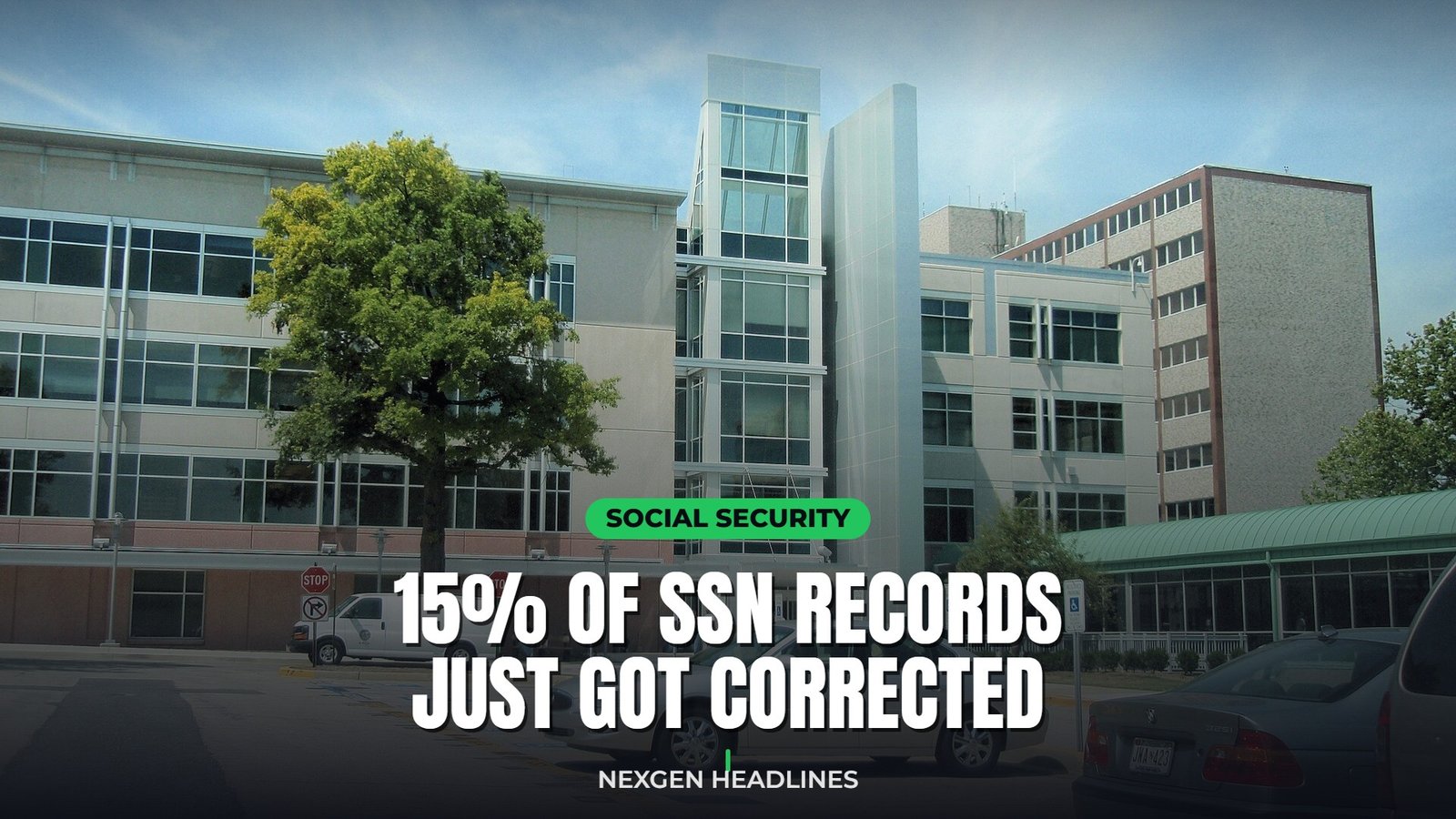

If you have a Social Security number, there is a fair chance your record sits in the group the government says it just “corrected.” On October 20, 2026, the Social Security Administration announced it had fixed records covering nearly 15% of all active Social Security numbers.
The agency called it the largest cleanup in its 91-year history. The headline numbers are big: 17 million death dates added to records that had none, and roughly 25 million records updated with citizenship information. Another 8.5 million records with inaccurate citizenship status are still being worked on.
What the announcement did not include is just as important, and it is the part that matters most if you are trying to work out whether any of this touches your own benefits. Here is the plain-English version.
The short version
- Nearly 15% of active Social Security numbers had their records corrected, according to the SSA
- 17 million death dates were added to records that were missing them
- About 25 million records were updated with citizenship data from the Department of Homeland Security’s SAVE service
- 8.5 million more records with inaccurate citizenship status are still being reviewed
- No fraud cases were cited. The SSA did not name any arrests, indictments or prosecutions linked to the cleanup
- Nothing to apply for. There is no form to fill in, and anyone asking you to “verify” your number by text or phone is running a scam
Short on time? See the key points in our web story.
What the SSA actually changed
Every Social Security number lives in a master file the agency calls the Numident. It holds the basics: your name, date of birth, place of birth, citizenship status and, eventually, your date of death. It is one of the oldest big databases in the federal government, and parts of it were typed in by hand decades ago.
That history is the root of the problem the SSA says it was fixing. Millions of records belonged to people who had almost certainly died but whose death had never been recorded. Others carried citizenship information that was blank, out of date, or simply wrong, because a person naturalized years after getting their card and the change never made it back into the file.
The SSA says it did three things:
| What changed | How many records | Source of the new data |
|---|---|---|
| Death dates added | 17 million | SSA records and other death data |
| Citizenship information updated | About 25 million | DHS SAVE service |
| Inaccurate citizenship status under review | 8.5 million | Still in progress |
Together, the agency says, those changes add up to nearly 15% of active Social Security numbers. The file covers about 330 million citizens and close to 390 million records in total once deceased and inactive numbers are counted.
The agency also says it has added stronger internal controls to stop new errors from creeping in through manual data entry, which is how many of the old mistakes got there in the first place.
What the announcement did not say
This is where the numbers need some context.
The SSA did not say whether any of the corrections uncovered fraud. It did not identify a single arrest, indictment or prosecution resulting from the work, and it did not break down how many records were routine fixes, how many were simply missing information, and how many involved suspected wrongdoing.
That matters because “records corrected” and “fraud stopped” are not the same thing. A record for someone born in 1890 with no death date attached is almost certainly a clerical gap, not an active scheme. Fixing it is good housekeeping. It does not necessarily mean anyone was collecting money on that number.
The effort builds on a March 2025 move, pushed by the Department of Government Efficiency, that marked roughly 3.2 million numberholders listed as 120 or older as deceased. Nobody that old is alive, so those records were a safe place to start.

The criticism
Not everyone accepts the agency’s framing. Democrats in Congress have challenged how the administration has handled the death files over the past year.
A former SSA employee told Congress the agency had been pressured to assign death dates to living people. Senators Elizabeth Warren of Massachusetts and Richard Blumenthal of Connecticut wrote to Commissioner Frank Bisignano demanding answers about how death records were being changed. The SSA has disputed some of the claims made about additions to its Death Master File.
The concern is not abstract. When the SSA records you as dead, that information spreads. Banks, insurers, credit bureaus and other agencies all draw on SSA death data, and a wrong entry can freeze accounts, stop benefits and take weeks to unwind.
Will this affect your Social Security check?
For most living beneficiaries, the honest answer is: probably not, and the SSA has not said that it will.
The corrections it describes are aimed at two groups: people who died without a recorded death date, and records with missing or outdated citizenship details. If you are alive, receiving benefits and your citizenship status has not changed, nothing in the announcement suggests your payment should move.
Your benefit is set by your earnings record and the age you claim, plus the yearly cost-of-living adjustment. That calculation is separate from the clean-up. The bigger change to your check next year is the 2027 COLA of 3.6%, which starts with January payments.
There are two groups who should pay closer attention:
- Naturalized citizens whose Social Security record may never have been updated after they became citizens. A wrong citizenship flag can cause problems with employment checks and, in some states, voter roll checks that now run through SAVE
- Anyone whose benefits stop without warning. A sudden halt can be a sign that a death date was attached to the wrong record
How to check your own Social Security record
It takes about ten minutes, and it is worth doing once a year anyway.
- Go to ssa.gov/myaccount and sign in, or create an account through Login.gov or ID.me. Our step-by-step guide to the Social Security statement walks through it.
- Review your personal information: name, date of birth and mailing address.
- Open your Social Security statement and scan the earnings history year by year. Missing years cost you money later.
- If you get benefits, check the payment history for anything that changed without a letter explaining why.
- If something is wrong, call 1-800-772-1213 or visit a local Social Security office with your identity documents.
If Social Security wrongly says you are dead
It is rare, but it happens to thousands of people a year, and it is stressful when it does. Act quickly:
- Go to a Social Security office in person. Phone calls are not enough for this. Bring original documents: a passport, driver license, or state ID, plus your Social Security card if you have it
- Ask for a written confirmation that the death entry was removed. Banks and other agencies may need to see it
- Call your bank. Payments can be clawed back when a death is recorded, so tell them the entry was an error
- Check your credit reports at AnnualCreditReport.com, because a death flag can show up there too. Our guide to free weekly credit reports explains how
Watch out for scams riding on this story
- The SSA will not text you a link asking you to “verify” your Social Security number
- It will not threaten to suspend your number or demand payment by gift card, wire or crypto
- If you get a call like that, hang up and report it at oig.ssa.gov
Big government announcements are a magnet for impostors. Read our guide to what to do if your identity is stolen if you think you have already been caught.
Why this matters beyond Social Security
The Social Security number has become a de facto national ID. The same file the SSA just cleaned up feeds employment checks, benefit eligibility across agencies, and death data shared with banks and insurers.
That is why both sides of this argument care so much. Supporters say accurate records stop payments to people who are not eligible and make identity theft harder. Critics say speed and political pressure raise the risk that living people get caught in the net, and that the agency has not shown how much fraud the work actually found.
Both things can be true at once. A cleaner database is a good thing in principle. Whether this one was done carefully is something the agency has not yet fully shown, and the 8.5 million records still under review will be worth watching.
Frequently asked questions
What did the Social Security Administration announce on October 20, 2026?
The SSA said it had corrected records for nearly 15% of active Social Security numbers. That included adding death dates to 17 million records that had none and updating about 25 million records with citizenship information from the Department of Homeland Security SAVE system. It called the effort the largest cleanup in its 91-year history.
Will the Social Security cleanup change my monthly benefit?
The SSA has not said the corrections change benefit amounts for living beneficiaries. The records it describes are mostly people who had died without a recorded death date and files with missing or outdated citizenship information. If your payment changes unexpectedly, check your my Social Security account and contact the SSA.
Did the SSA find fraud in the database cleanup?
The announcement did not say. It did not cite any arrests, indictments or prosecutions, and it did not say how many corrected records were linked to suspected fraud versus routine missing data.
How do I check that Social Security has my record right?
Sign in to your my Social Security account at ssa.gov/myaccount and review your statement and personal details. If anything looks wrong, call the SSA at 1-800-772-1213 or visit a local office with identity documents.
What should I do if Social Security wrongly lists me as dead?
Go to a Social Security office in person as soon as possible with original identity documents, such as a passport or driver license. Ask the office to correct your record and to give you a letter confirming the correction, because banks and other agencies may rely on the same death data.
What is the SAVE system?
SAVE (Systematic Alien Verification for Entitlements) is a Department of Homeland Security service that government agencies use to check immigration and citizenship status. The SSA says it used SAVE data to update citizenship information in about 25 million records.
More US money guides
- Social Security COLA 2027: your 3.6% raise explained
- How to check your Social Security statement online
- Medicare open enrollment 2027: dates and what changed
- What to do if your identity is stolen
- How to spot and report scam texts
Sources: Social Security Administration announcement of October 20, 2026, as reported by Reuters and others. Figures are the agency’s own and have not been independently verified.