
Europe Ski Season Faces a Historic Turning Point
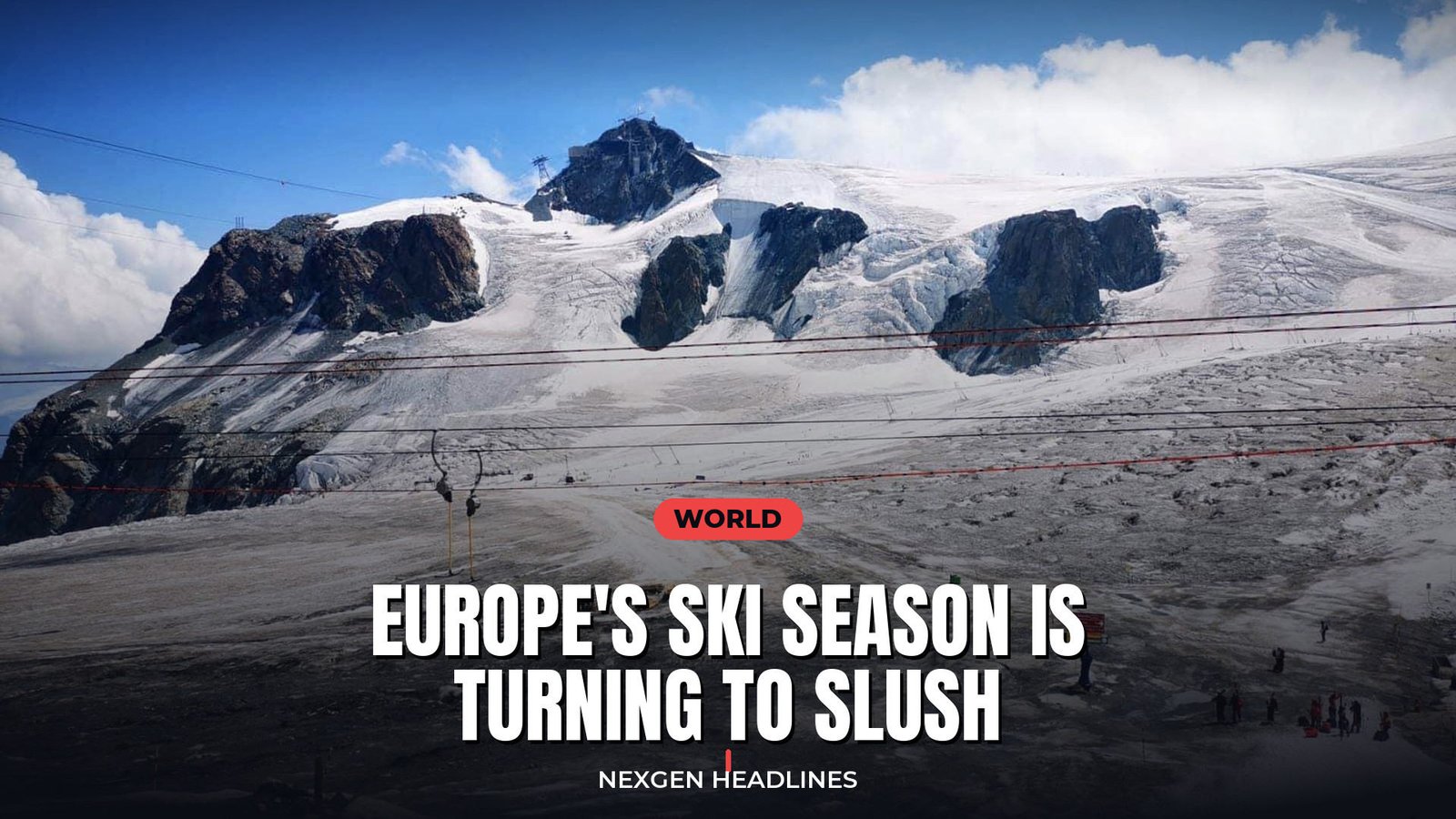
Europe Ski Season traditions are facing a dramatic transformation as extreme heat has forced the shutdown of summer glacier skiing across the Alps.
For decades, skiers could travel to Europe’s highest resorts and find snow even during the warmest months of the year. High-altitude glaciers at places such as Zermatt, Saas-Fee, Tignes, Les Deux Alpes and Passo Stelvio provided a rare opportunity to ski when most of Europe was enjoying summer.
But 2026 has delivered a remarkable warning.
By mid-August, there were no summer glacier ski areas operating anywhere in the Alps. Passo Stelvio in Italy, the last remaining summer operation, stopped skiing on August 15 after other major glacier areas had already closed.
The shutdown has raised a serious question for the future of the Europe Ski Season: If skiing disappears from the highest glaciers during summer, how much longer can the continent maintain the idea of year-round skiing?
A Summer Without Skiing in the Alps
Summer skiing has never been available everywhere in Europe. It has always depended on a small number of exceptionally high glaciers.
Zermatt and Saas-Fee in Switzerland, Tignes and Les Deux Alpes in France, Hintertux in Austria and Passo Stelvio in Italy have historically been among the places where skiers could find summer snow.
The attraction was obvious.
While temperatures rose in European cities, skiers could travel thousands of feet higher and still experience winter conditions.
But the margin for that tradition has become increasingly narrow.
In 2026, repeated heat waves from May through August produced unusually warm conditions at high elevations. The combination of heat, limited fresh snowfall and a lack of sufficiently cold nights accelerated glacier melting.
For ski operators, this is not simply a problem of having less snow.
It is becoming a safety issue.
Why Cold Nights Matter So Much
One of the most important details of the 2026 crisis is what happens after the sun goes down.
A glacier used for skiing needs to refreeze sufficiently overnight. When temperatures remain too warm, the snow and ice surface can stay soft and saturated with meltwater.
That creates dangerous conditions for skiers, ski lifts and other infrastructure.
Reports from Alpine ski areas indicate that a lack of overnight cooling was an important factor in the shutdowns. At Zermatt, high temperatures and insufficient nighttime freezing contributed to the decision to stop summer skiing.
This explains why simply having snow or ice visible on a glacier does not necessarily mean skiing is possible.
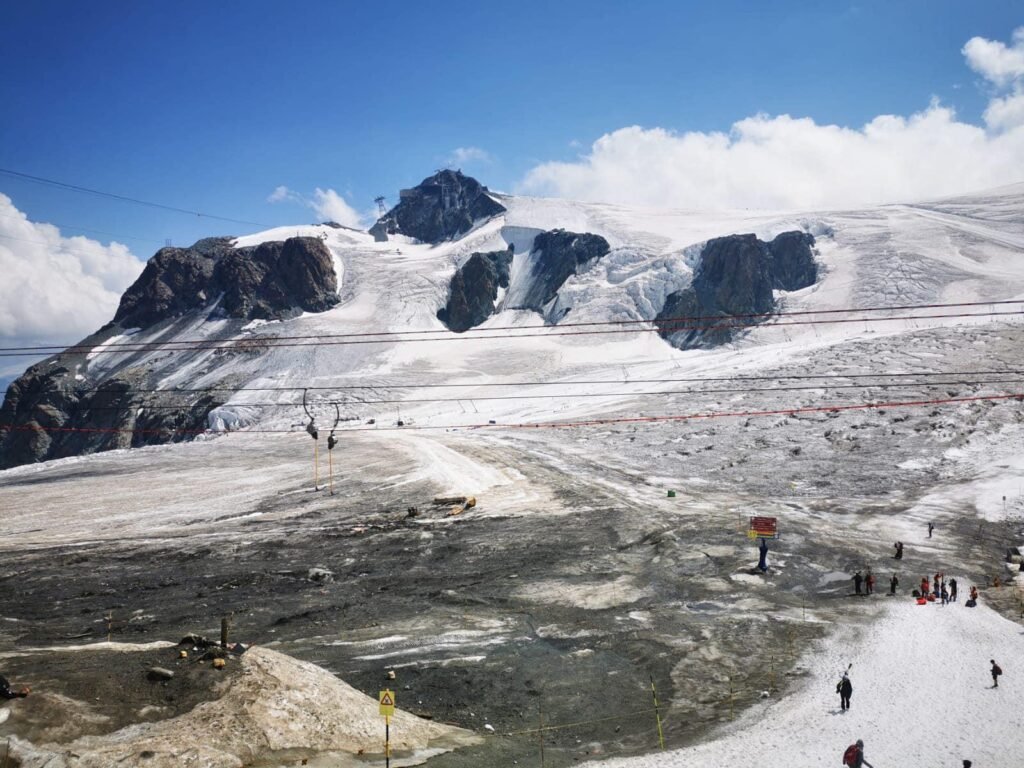
The surface might look white from a distance while the underlying glacier is becoming unstable.
Zermatt’s 365-Day Dream Is Under Pressure
Few places symbolize year-round skiing more strongly than Zermatt.
The Swiss resort has promoted skiing on the Theodul Glacier for decades, with slopes reaching almost 3,900 meters on the Swiss-Italian border.
In a normal year, Zermatt can provide skiing for much of the year and has traditionally been one of Europe’s most reliable high-altitude destinations.
But in 2026, the resort suspended summer skiing after extreme heat and insufficient overnight cooling created safety concerns.
For instructors and young athletes, the consequences go beyond tourism.
Summer glacier skiing has traditionally provided training opportunities for ski teams preparing for the coming winter season.
Simon Wells, a Zermatt-based instructor quoted by CNN, described the loss as particularly difficult for young and local teams that depend on summer training.
That means the changing Europe Ski Season could affect not only vacationers but also the development of future competitive skiers.
Saas-Fee Faces the Same Challenge
Saas-Fee is another Swiss resort famous for high-altitude glacier skiing.
Its Allalin Glacier sits high enough to traditionally provide summer snow, making the resort an important destination for athletes and recreational skiers.
But in 2026, summer operations were also affected by dangerous conditions.
When snow becomes too soft and the glacier develops cracks or unstable sections, keeping lifts open becomes increasingly difficult.
The result is a difficult calculation for resort managers.
They must balance the economic value of summer visitors against the responsibility of keeping customers and workers safe.
If conditions deteriorate too far, shutting down is the only responsible option.
Passo Stelvio Was the Last Holdout
Italy’s Passo Stelvio became a symbol of the unusual 2026 season because it remained open after other Alpine glacier ski areas had stopped.
But its operation eventually ended on August 15.
That closure was significant because it meant the entire Alpine region had lost its summer skiing operations. Reports described it as the first time in decades that no lift-access summer skiing was available anywhere in the Alps.
The significance goes beyond one resort.
It suggests that the traditional geographic safety net for summer skiing may be disappearing.
Previously, if one glacier became too warm, skiers could potentially travel to another.
In 2026, that fallback effectively vanished.
Climate Change Is Reshaping Alpine Snow
The European Environment Agency says snow cover and snow-water equivalent have decreased across much of Europe in recent decades. It also reports that snow seasons have generally become shorter, driven in part by earlier spring snowmelt.
The trend is particularly important for ski resorts because their businesses depend on predictable snow conditions.
Lower-elevation resorts are generally more vulnerable, but the experience of 2026 shows that even very high glaciers are not immune.
As temperatures rise, the elevation at which reliable snow and ice can survive moves higher.
Eventually, there may simply not be enough mountain left.
Artificial Snow Cannot Solve Everything
Ski resorts have invested heavily in snowmaking technology to protect the traditional Europe Ski Season.
Artificial snow can extend winter operations and provide coverage when natural snowfall is limited.
But summer glacier skiing presents a different challenge.
Snow machines cannot easily compensate for a glacier that is melting rapidly because of persistent high temperatures.
Snowmaking also requires suitable temperatures, water and energy.
When nighttime temperatures remain too warm, producing and maintaining snow becomes increasingly difficult.
That means technology can help resorts adapt, but it cannot completely eliminate the effects of a warming climate.
The Economic Impact Could Be Significant
Ski tourism is a major part of the Alpine economy.
Hotels, restaurants, equipment rental businesses, instructors, transportation companies and mountain workers all benefit from visitors.
Summer skiing adds another layer to that economic model.
A skier arriving in July or August spends money on much more than a lift ticket.
If summer skiing disappears, resorts could lose a valuable source of tourism revenue.
However, the change could also encourage resorts to diversify.
Mountain biking, hiking, sightseeing, climbing, wellness tourism and other summer activities are already becoming increasingly important.
The future may therefore involve less dependence on snow and more emphasis on the mountains themselves.
A New Future for Alpine Tourism
The disappearance of summer skiing does not mean the Alps are becoming irrelevant.
Quite the opposite may happen.
The mountains could become even more attractive as people seek cooler destinations during increasingly hot European summers.
But the activities visitors choose could change.
Instead of spending a summer morning skiing on a glacier, tourists may hike through alpine valleys, ride cable cars to high viewpoints, explore mountain villages or visit glacier-monitoring sites.
That represents a major transition.
The Alps could gradually move from being a destination for guaranteed snow to a destination for experiencing a rapidly changing mountain environment.
Ski Resorts Are Being Forced to Adapt
Resort operators are not simply waiting for conditions to improve.
Many are investing in new infrastructure, changing operating calendars and developing alternatives to skiing.
Some resorts are also using detailed weather and glacier monitoring to decide when slopes can safely operate.
But adaptation has limits.
A ski resort can change its business model. It can build new attractions. It can improve snowmaking.
It cannot control the temperature of the atmosphere.
That is why the 2026 summer shutdown is being watched so closely.
What This Means for the Future of the Europe Ski Season
The Europe Ski Season is unlikely to disappear completely.
Winter skiing will continue for years in many high-altitude locations, particularly where elevation and favorable geography provide sufficient snow.
But the old dream of skiing every month of the year may become increasingly difficult.
Some resorts that once advertised near-year-round skiing may have to shorten their calendars.
Others may keep limited glacier access for professional athletes while closing to ordinary visitors during the warmest periods.
And some glacier ski areas could eventually disappear altogether.
The European Environment Agency warns that snow-season reductions are expected to continue, with some regions potentially losing more than 100 days of snow season by the end of the century under projected climate conditions.
The Alps Are Sending a Powerful Warning
The extraordinary 2026 summer should not be viewed simply as a bad season for skiers.
It is a visible example of how climate change can transform industries built around predictable natural conditions.
For generations, high-altitude glaciers were considered Europe’s ultimate insurance policy against warm weather.
Now even that insurance is proving less reliable.
The Europe Ski Season is adapting because it has to.
The question is how far that adaptation can go.
If extreme heat continues to push the freezing level higher, Europe’s highest ski slopes may become increasingly dependent on short winter windows rather than year-round snow.
For skiers, that could mean planning trips more carefully.
For Alpine communities, it could mean rebuilding parts of their tourism economy.
And for the glaciers themselves, it is another sign that the mountains of tomorrow may look very different from the mountains people know today.
Final Thoughts
The 2026 Alpine summer has delivered an alarming but important warning.
The era when Europe could confidently offer skiing on glaciers throughout the summer is no longer guaranteed. Extreme heat, melting ice and warmer nights are challenging the foundations of the traditional high-altitude ski business.
The positive side is that Alpine communities still have time to adapt.
They can diversify tourism, protect mountain ecosystems and rethink what a successful summer season looks like.
But one thing is becoming harder to ignore: Europe’s snow-covered future can no longer be taken for granted.
THANKS FOR READING