Starbucks Smaller Stores
Starbucks Smaller Stores are becoming an important part of the coffee giant’s next chapter as the company experiments with a more compact café design that still aims to preserve the welcoming atmosphere customers associate with Starbucks.
- Starbucks Smaller Stores
- A Smaller Starbucks With the Same Coffeehouse Feel
- The Company Is Trying Not to Repeat an Old Mistake
- Customers Can Still Stay and Socialize
- Six Smaller Locations Are Already Open
- Why Smaller Stores Could Be Important
- Starbucks Is Also Closing Underperforming Locations
- The Bigger “Back to Starbucks” Strategy
- More Than 1,500 Locations Have Been Redesigned
- Starbucks Is Still Planning to Grow
- What This Means for Starbucks Customers
- A New Test for the Coffee Giant
- The Future May Be Smaller — But More Flexible
- Important News Takeaway
The new format, which recently opened in San Antonio, Texas, is part of CEO Brian Niccol’s broader effort to bring customers back into Starbucks cafés. The strategy is notable because the company is not simply trying to make stores smaller. It is attempting to make them smaller without making them feel less like coffeehouses.
A Smaller Starbucks With the Same Coffeehouse Feel
Starbucks Smaller Stores
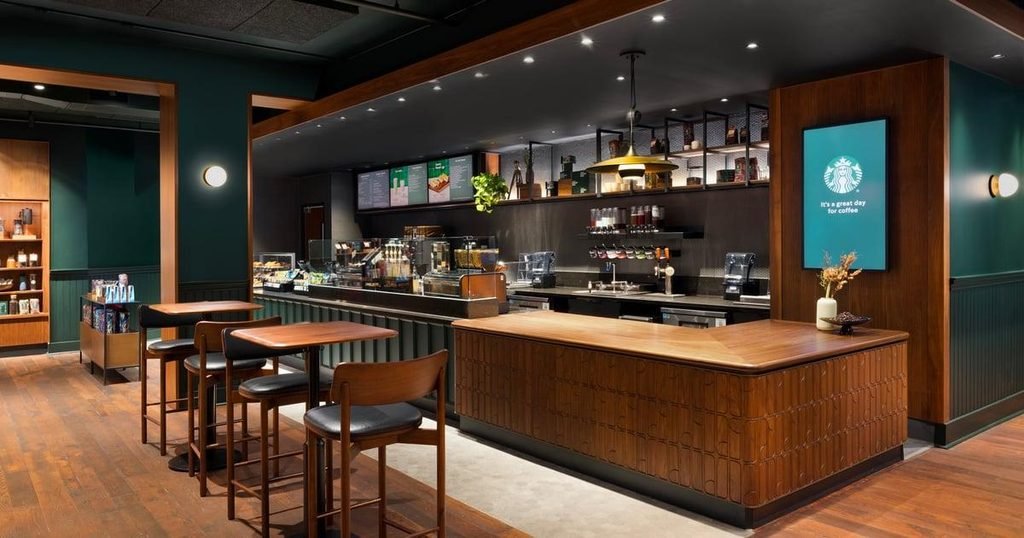
At first glance, the new San Antonio location looks like a more compact version of a traditional Starbucks.
It still includes comfortable seating, a bakery display and an espresso bar where baristas prepare drinks. The biggest difference is the footprint.
Starbucks has redesigned the counter using what it calls a “folded bar” configuration. Instead of having a long counter stretch across much of the café, the new arrangement allows the equipment and workspace to fit into narrower locations.
That could give Starbucks more flexibility in expensive urban areas where large retail spaces are difficult or costly to secure.
The Company Is Trying Not to Repeat an Old Mistake
The move toward Starbucks Smaller Stores comes with an important lesson from the company’s recent history.
Starbucks previously experimented with small, pickup-focused locations designed primarily around mobile orders. Those stores had limited seating and were built around speed and convenience.
But the strategy did not deliver the experience the company wanted.
Niccol later described those locations as overly transactional, and Starbucks closed them in July 2025.
The new smaller format takes a different approach. The company wants customers to have multiple ways to interact with the café rather than forcing them into a pickup-only model.
Customers Can Still Stay and Socialize
That distinction is at the heart of Starbucks’ new strategy.
The company says the smaller cafés will still provide space for customers who want to sit, work, meet friends or simply enjoy a drink.
Customers can also order in person, through the Starbucks app or for delivery. Some locations can even accommodate drive-thru service.
Starbucks says about 30% of its customers use mobile ordering, meaning the company still needs stores that can efficiently handle digital demand while maintaining a physical coffeehouse environment.
The challenge is finding the right balance.
A café needs enough space to support customers and employees, but every additional square foot can make a location more expensive to operate.
Six Smaller Locations Are Already Open
The experiment has moved beyond a single test store.
Starbucks currently has six locations using the smaller prototype, including stores in San Antonio and Manhattan, according to CNN reporting.
The company has not disclosed the exact square footage of the new format.
That may be intentional. Starbucks is still learning how the design performs before deciding how broadly it should be deployed.
The company says feedback from customers and employees will help shape future versions of the concept.
Why Smaller Stores Could Be Important
Real estate is one of the biggest challenges facing retailers in major cities.
A traditional Starbucks may require a relatively large space to accommodate seating, equipment, storage, food displays, employee work areas and customer traffic.
A smaller design could allow Starbucks to consider locations that previously did not make financial sense.
For example, a narrow storefront in a busy downtown neighborhood might be too small for a conventional café but suitable for the new format.
That could give Starbucks another tool for expanding its store network without relying exclusively on large spaces.
Starbucks Is Also Closing Underperforming Locations
The smaller-store strategy is happening alongside a broader effort to reshape the company’s existing footprint.
Starbucks has closed hundreds of locations across North America over the past two years, targeting stores that were underperforming or failing to deliver the experience the company wants.
The company is effectively taking two different approaches at once.
Some locations are being closed.
Others are being renovated.
And new locations may be built in smaller formats.
That suggests Starbucks is not simply pursuing growth through more stores. It is trying to become more selective about where stores are located and what each location is designed to accomplish.
The Bigger “Back to Starbucks” Strategy
The new format fits into Niccol’s broader “Back to Starbucks” strategy.
The company has been trying to restore the coffeehouse atmosphere that helped define Starbucks for years.
Before Niccol became CEO, Starbucks increasingly optimized locations around mobile ordering and quick pickup. The company removed comfortable seating and electrical outlets from some stores, making certain cafés less attractive as places to spend time.
Starbucks later began reversing that approach.
As part of a $1 billion restructuring effort announced in 2025, the company started renovating locations with more comfortable seating, additional outlets and other features intended to encourage customers to stay longer.
More Than 1,500 Locations Have Been Redesigned
Starbucks says approximately 1,500 existing North American locations have been redesigned as part of its effort to improve the café experience.
The company plans to accelerate those renovations.
That makes the smaller prototype an interesting extension of the same philosophy.
Instead of saying that a successful Starbucks must occupy a large space, the company is asking whether the same customer experience can be created in a much smaller footprint.
If the answer is yes, the potential applications could be significant.
Starbucks Is Still Planning to Grow
Despite store closures, Starbucks is not abandoning expansion.
The company has plans to open approximately 5,000 new locations over the coming years, according to CNN’s report.
The smaller format could help support that expansion by giving Starbucks additional options for locations where a traditional store would be impractical.
At the same time, the company has reported encouraging signs in U.S. sales.
Same-store U.S. sales turned positive in the most recent quarter, suggesting that some elements of the turnaround strategy may be beginning to gain traction.
What This Means for Starbucks Customers
Starbucks Smaller Stores
For customers, the biggest change may not be obvious immediately.
A smaller Starbucks does not necessarily mean fewer seats, fewer menu options or a less comfortable environment.
Instead, the company is trying to redesign the physical space so that essential features fit more efficiently.
That could mean shorter counters, smaller food displays and more carefully arranged seating.
The goal is to use space more intelligently rather than simply cutting space.
A New Test for the Coffee Giant
The success of Starbucks Smaller Stores will ultimately depend on whether the company can make the economics work without sacrificing the customer experience.
A smaller location could lower real-estate costs, but it also has less room for seating and operations.
If the design becomes too small, Starbucks could repeat the problem it encountered with pickup-focused stores: a café that is efficient but feels overly transactional.
The company’s current design appears deliberately aimed at avoiding that outcome.
The Future May Be Smaller — But More Flexible
Starbucks’ new approach reflects a broader change in retail.
Consumers want convenience, but many still value physical spaces where they can relax and connect.
The challenge for retailers is providing both without spending too much on real estate.
Starbucks is betting that its next generation of cafés can do exactly that.
The company can close weak stores, renovate successful ones and use smaller formats in locations where traditional cafés would be too expensive.
That creates a more flexible store strategy rather than relying on one standard design.
Important News Takeaway
Starbucks Smaller Stores are emerging as a key part of the company’s effort to rebuild its coffeehouse experience while making expansion more flexible.
A new prototype in San Antonio combines comfortable seating, bakery displays and a full espresso bar inside a significantly smaller footprint. Starbucks has already opened six locations using the new concept, including sites in San Antonio and Manhattan.
The strategy comes after Starbucks closed pickup-focused stores that the company believed had become too transactional. At the same time, Starbucks is renovating existing cafés and planning thousands of new locations.
The bigger idea is simple: Starbucks does not necessarily need bigger stores to create a better experience. It may need smarter ones.
If the smaller format succeeds, it could give the company a powerful new way to enter expensive urban markets, control real-estate costs and still preserve the social atmosphere that made Starbucks a recognizable part of American coffee culture.
THANKS FOR READING