
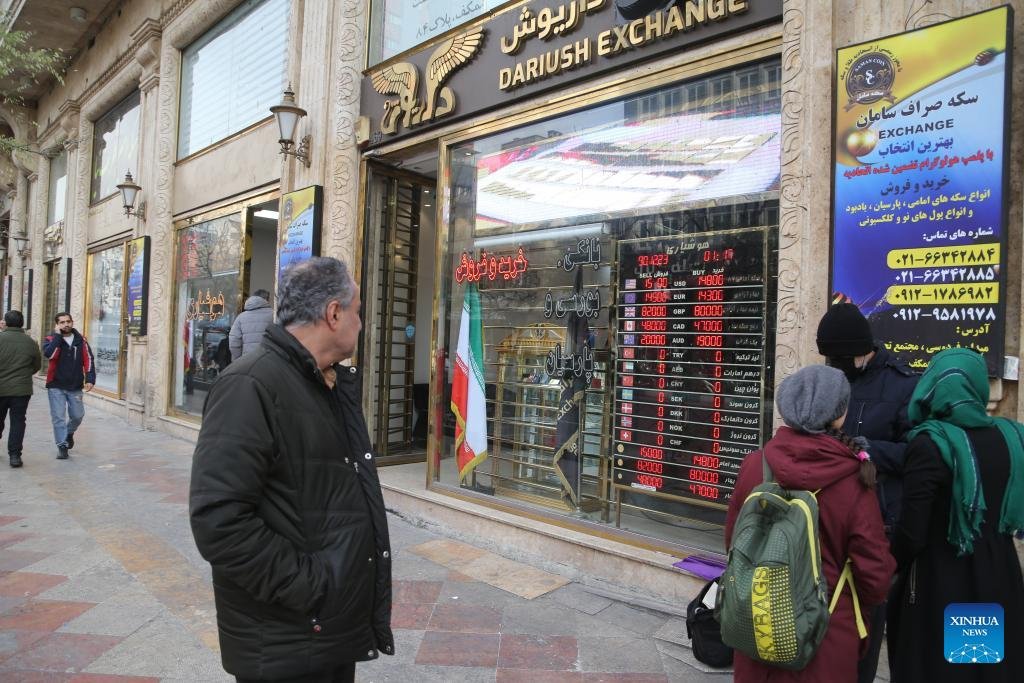
Iranian Rial Crisis
Iranian Rial Crisis has reached a dramatic new stage after Iran’s currency fell to a record low against the U.S. dollar on Monday, August 24, as the United States prepared to announce a sweeping new package of economic sanctions against Tehran.
- Iranian Rial Crisis
- The Rial Falls Through a Historic Barrier
- What Is Driving the Currency Collapse?
- Inflation Is Hitting Households
- Washington Prepares ‘Economic D-Day’
- Secondary Sanctions Could Increase the Pressure
- Oil Is at the Center of the Economic Battle
- China Faces a Difficult Choice
- Iran’s Government Faces a Growing Challenge
- Businesses Struggle With Foreign Currency
- India Could Also Feel the Impact
- Can Iran Stabilize the Rial?
- The Human Cost Could Grow
- Markets Are Watching Closely
- Diplomacy Remains Possible
- What Happens Next?
- Why This Story Matters
- Summary
The rial dropped to around 2.02 million per U.S. dollar in the open market, according to reporting from the Associated Press. Iran’s official central-bank rate remained considerably stronger at roughly 1.5 million rials per dollar, but the market rate is the one that many ordinary Iranians rely on for transactions.
The currency collapse comes at an especially sensitive moment. U.S. Treasury Secretary Scott Bessent is preparing to unveil new measures aimed at putting additional pressure on Iran’s economy. The administration has described the coming campaign as an “economic D-Day,” signaling an effort to cut off remaining financial channels supporting Tehran.
The Rial Falls Through a Historic Barrier
The latest decline represents a significant psychological and economic milestone.
The rial had already been losing value for years because of sanctions, inflation, weak economic growth and restricted access to international financial markets.
But crossing the 2 million rials per dollar threshold underscores the scale of the currency’s deterioration.
The informal market rate fell to around 2.02 million rials when trading opened Monday, according to AP. Another market tracker cited by the Guardian put the rate close to 1.992 million later in the day.
The gap between the official rate and the open-market rate also illustrates the extraordinary pressure facing Iran’s currency system.
What Is Driving the Currency Collapse?
The Iranian Rial Crisis has several interconnected causes.
Years of U.S. sanctions have restricted Iran’s ability to access international banking systems and earn foreign currency.
The situation has become even more difficult during the current conflict.
Iran’s oil exports have been disrupted, foreign-exchange transfers have become harder, and businesses have struggled to obtain dollars and other major currencies.
At the same time, expectations of higher inflation encourage people and businesses to move their savings out of rials and into foreign currency or other assets.
That can create a cycle in which falling confidence causes even more currency weakness.
Inflation Is Hitting Households
A weaker rial makes imported goods more expensive.
Iran depends on imports for a wide range of products, including food, medicine, industrial equipment and consumer goods.
When the local currency loses value, importers must spend more rials to purchase the same products.
Those costs can eventually reach consumers through higher retail prices.
Iranian households have already faced sharp increases in the prices of everyday necessities. AP reported that prices for staples such as rice and beef have become particularly difficult for many families to afford.
For ordinary citizens, the currency crisis is therefore not simply a financial-market story.
It affects grocery bills, household budgets and purchasing power.
Washington Prepares ‘Economic D-Day’
The next major development could come from Washington.
Treasury Secretary Scott Bessent has described the planned financial offensive as an “economic D-Day.”
In an opinion article published by the Financial Times, Bessent said the administration intends to use financial pressure to isolate Iran and sever economic channels that support the Iranian government.
The planned sanctions are expected to target entities and countries that continue conducting significant economic activity with Tehran.
That could make it considerably harder for Iran to maintain its remaining trade and financial relationships.
Secondary Sanctions Could Increase the Pressure
One of the most important elements of the new U.S. strategy is the possibility of broader secondary sanctions.
These measures can target companies, banks or other organizations outside Iran if they continue conducting certain transactions with sanctioned Iranian entities.
Reuters reported that Washington is preparing measures aimed at entities and countries maintaining economic ties with Iran, potentially affecting oil shippers, currency exchangers, aviation and other sectors.
If implemented aggressively, such measures could further reduce Iran’s access to foreign currency.
Oil Is at the Center of the Economic Battle
Iran’s oil industry remains critical to the country’s finances.
Oil exports provide an important source of foreign currency and government revenue.
But the current conflict has disrupted oil shipping through the strategically important Strait of Hormuz, one of the world’s most important energy corridors.
The United States has sought to increase economic pressure on Tehran while Iran has threatened actions affecting navigation through the strait.
That creates a complicated situation for global energy markets.
Any prolonged disruption could affect oil supplies and shipping costs around the world.
China Faces a Difficult Choice
China is particularly important to Iran because it remains the country’s largest oil customer.
Washington’s planned sanctions could therefore create pressure on Chinese companies involved in Iranian energy trade.
Reuters reported that China has criticized the U.S. measures and indicated that it will protect its interests.
This could create another major point of tension between Washington and Beijing.
If Chinese businesses continue buying Iranian oil despite U.S. restrictions, Washington could face difficult decisions about how aggressively to enforce secondary sanctions.
Iran’s Government Faces a Growing Challenge
The Iranian Rial Crisis presents a major political challenge for Tehran.
Governments can survive economic hardship for extended periods, but persistent inflation and currency depreciation can weaken public confidence.
When salaries fail to keep pace with prices, households have less money available for food, housing and other necessities.
Businesses also face greater uncertainty because they cannot easily predict future import costs or the value of their revenues.
That can discourage investment and make economic recovery more difficult.
Businesses Struggle With Foreign Currency
Iranian companies need access to foreign currency for many international transactions.
Importers need dollars or euros to purchase goods abroad.
Manufacturers may need foreign machinery and components.
Airlines and transportation companies require access to international suppliers.
When foreign currency becomes scarce, businesses can face delays, higher costs and reduced production.
The weakening rial therefore affects much more than consumers.
It can disrupt the wider economy.
India Could Also Feel the Impact
The economic pressure on Iran is already affecting international trade partners.
Reuters reported Monday that Indian exports to Iran could decline further after the United Arab Emirates suspended financial transactions and trade with Iran. Indian exporters of rice, tea and pharmaceuticals have historically relied on Dubai as a major trading and financial hub for business with Iran.
That means the consequences of the Iranian Rial Crisis could extend well beyond Iran’s borders.
Companies in other countries may have to find new payment systems, alternative shipping routes or different markets.
Can Iran Stabilize the Rial?
Stabilizing the currency would require restoring confidence and increasing access to foreign currency.
That could involve higher exports, improved financial access, reduced inflation and greater political stability.
However, those objectives are difficult to achieve while Iran remains under intense sanctions and involved in a major regional conflict.
If oil exports remain restricted and international financial channels continue shrinking, pressure on the rial could persist.
The Human Cost Could Grow
The most serious consequence of the Iranian Rial Crisis is its impact on ordinary people.
A collapsing currency can rapidly reduce household purchasing power.
Families may respond by buying fewer goods, postponing major purchases or converting savings into foreign currency when possible.
Lower-income households are generally more vulnerable because they have fewer financial resources to absorb rising prices.
That makes inflation one of the most politically sensitive consequences of the currency collapse.
Markets Are Watching Closely
Global financial and energy markets are also monitoring the situation.
Investors are watching the scale of the new U.S. sanctions, Iran’s response and developments around the Strait of Hormuz.
Oil prices could react sharply if shipping disruptions worsen.
The broader impact will depend on whether the latest economic measures remain focused on Iran or begin affecting major trading partners.
Diplomacy Remains Possible
Despite the escalating economic pressure, diplomatic efforts have not completely disappeared.
Regional governments continue to explore ways to reduce tensions and potentially reopen negotiations.
Pakistan has been involved in efforts to encourage dialogue, while Oman remains an important regional intermediary.
A diplomatic breakthrough could ease some pressure on Iran’s economy.
But for now, the direction remains uncertain.
What Happens Next?
The next major development will be the U.S. announcement of its new sanctions.
Markets, companies and governments will be watching to see which sectors and countries are targeted.
Iran’s response will also be critical.
Tehran could attempt to strengthen relationships with China and other partners, seek alternative payment mechanisms or take further action around the Strait of Hormuz.
Each step could influence the rial and the wider global economy.
Why This Story Matters
The Iranian Rial Crisis is more than a currency story.
It is a sign of the enormous economic pressure created by sanctions, conflict, disrupted trade and inflation.
For Iran’s population, the consequences are already visible in rising prices and declining purchasing power.
For the United States, the challenge is determining whether stronger economic pressure can achieve political goals without creating a wider regional crisis.
And for the global economy, the biggest concern is whether financial pressure on Iran eventually spills into energy markets and international trade.
Summary
The Iranian Rial Crisis has reached a new milestone after the rial fell to roughly 2.02 million per U.S. dollar in the open market, its weakest level ever reported. The collapse comes as the Trump administration prepares a sweeping new round of sanctions that Treasury Secretary Scott Bessent has called an “economic D-Day.” The measures are expected to target Iran’s remaining financial and energy connections, potentially including foreign companies and countries that continue trading with Tehran. With inflation already hurting Iranian households and oil exports under severe pressure, the coming weeks could prove critical for Iran’s economy, regional stability and global energy markets.
THANKS FOR READING
