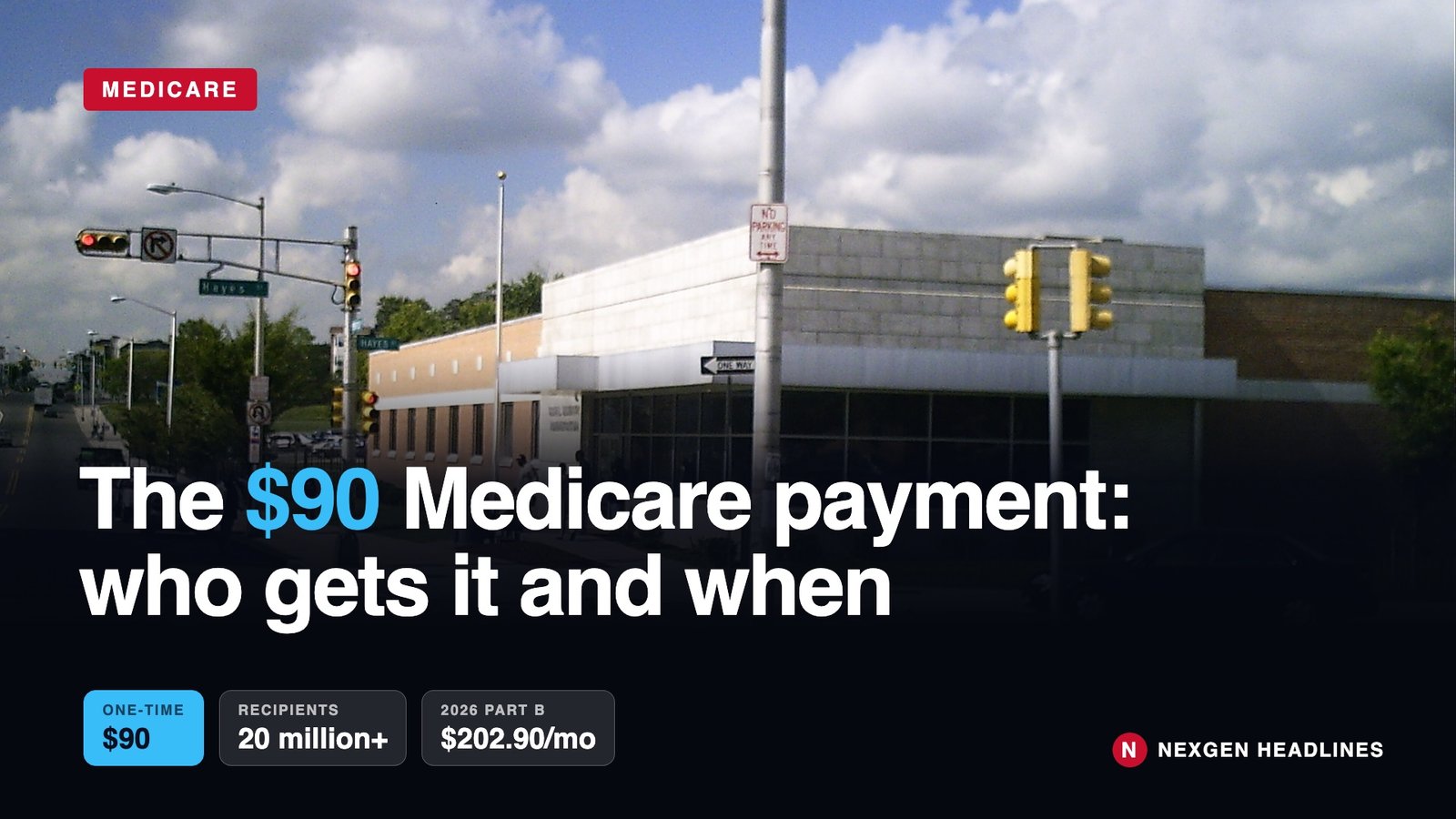

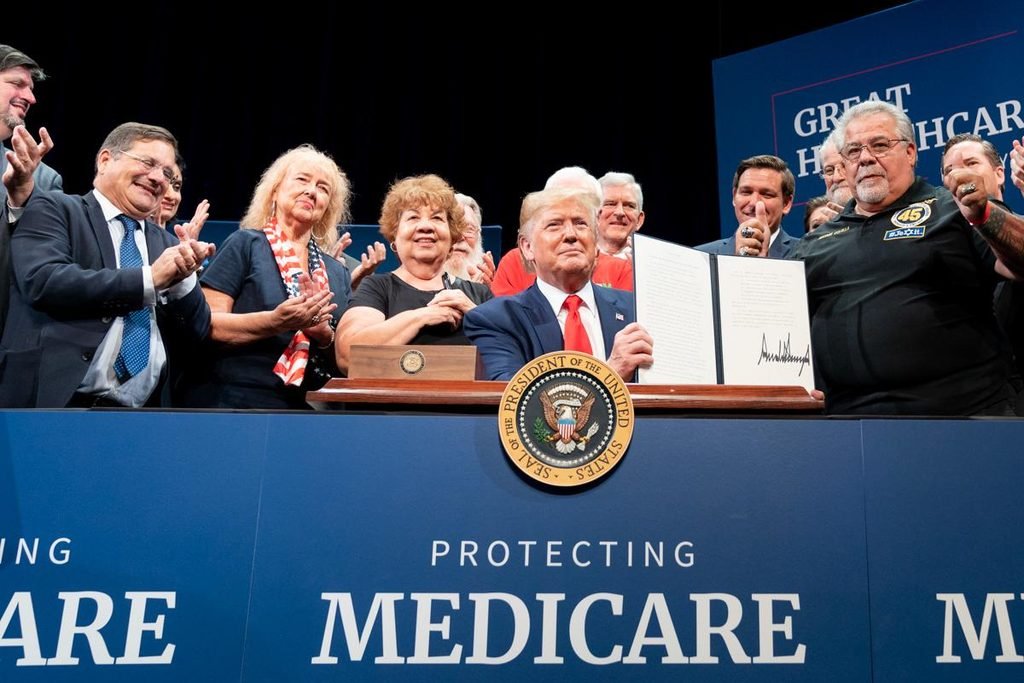
Quick answer: as of Oct. 23, 2026, the one-time $90 Medicare payment is going to more than 20 million people with Medicare Part B, according to the White House. Most were scheduled to get it by direct deposit around Oct. 8, CMS said, with paper checks mailed later in October. People whose premiums are paid by Medicaid, and people who pay the IRMAA income surcharge, don’t qualify.
The $90 payment at a glance
| Question | Answer |
|---|---|
| How much? | $90, one time, per eligible person |
| Who gets it? | Most Medicare Part B enrollees, more than 20 million people (White House) |
| Who doesn’t? | People whose premiums Medicaid pays, and people who pay IRMAA. Reports say Medicare Advantage members are also excluded. |
| How is it paid? | Direct deposit for most; a mailed check for others |
| When? | Direct deposits around Oct. 8 (CMS, as reported); checks later in October |
| Where does the money come from? | The Medicare Improvement Fund, created by Congress in 2008 |
| Questions about eligibility | 1-800-MEDICARE (1-800-633-4227) |
| Questions about payment status | Social Security, 1-800-772-1213 |
Timeline
| Date | What happened |
|---|---|
| Oct. 2, 2026 | The White House releases a fact sheet announcing $90 Medicare Improvement Fund payments. |
| Oct. 3, 2026 | CNN and other outlets report the plan and its timing before the midterms. |
| Oct. 5, 2026 | CNBC reports details on who qualifies, citing CMS. |
| Around Oct. 8, 2026 | Most direct deposits scheduled to arrive, according to CMS as reported by news outlets. |
| Later in October | Paper checks mailed to people without direct deposit. |
| Nov. 3, 2026 | Midterm elections. |
We could not find an official confirmation that every direct deposit went out on schedule. If you expected one and didn’t get it, see the steps below.
Who qualifies, in plain English
You’re likely eligible if you:
- Are enrolled in Medicare Part B (usually through Original Medicare).
- Pay your own Part B premium, often deducted from your Social Security check.
- Do not pay the higher-income IRMAA surcharge.
You likely won’t get it if:
- Medicaid or a Medicare Savings Program pays your premium. The White House says these enrollees are excluded.
- You pay IRMAA because of higher income.
- You’re in Medicare Advantage. CNBC and other outlets reported that Medicare Advantage members are not eligible. Confirm with 1-800-MEDICARE if you’re unsure.
Where the payments are going
The White House released state-by-state estimates, reported by USA TODAY. These are estimated numbers of people, not dollars. The largest:
| State | Estimated recipients |
|---|---|
| California | 1.524 million |
| Texas | 1.432 million |
| Florida | 1.398 million |
| New York | 1.018 million |
| Pennsylvania | 905,000 |
| Illinois | 867,000 |
| Ohio | 748,000 |
| Virginia | 681,000 |
| New Jersey | 645,000 |
| North Carolina | 644,000 |
At $90 each, 20 million payments would total about $1.8 billion, our own math. The White House says Congress gave the fund $2 billion.
Who decides: the people and agencies involved
| Who | Role |
|---|---|
| The White House | Announced the payment and its purpose |
| CMS (Centers for Medicare & Medicaid Services) | Runs Medicare and decides who is eligible |
| Social Security Administration | Handles payment status questions, since most Part B premiums come out of Social Security |
| Congress | Created and funded the Medicare Improvement Fund in 2008 |
How do you know if you pay IRMAA?
IRMAA is an extra charge added to Medicare premiums for people with higher incomes. It’s based on the income on your tax return from two years earlier, so 2026 premiums use your 2024 return.
For 2026, IRMAA generally starts when that income is above $109,000 for single filers or $218,000 for married couples filing jointly, according to CMS. If you pay it, Social Security sends you a letter explaining the higher amount. Your premium will also be higher than the $202.90 standard amount.
If your income dropped because of retirement, divorce or a spouse’s death, you can ask Social Security to lower your IRMAA with Form SSA-44.
How Part B premiums are usually paid
- If you get Social Security: the premium is usually taken out of your monthly benefit before it reaches you.
- If you don’t get Social Security yet: Medicare bills you directly. You can pay online, by mail, or set up automatic payments with Medicare Easy Pay.
- If you get Medicaid or a Medicare Savings Program: your state pays the premium for you, which is why these enrollees are left out of the $90 payment.
You might qualify for more help than $90
If money is tight, a Medicare Savings Program through your state can pay your entire Part B premium every month. That’s worth far more than a one-time $90. Income and asset limits vary by state, and many people who qualify never apply.
You may also qualify for Extra Help, which lowers Medicare drug plan costs. Apply for Extra Help through Social Security, and for a Medicare Savings Program through your state Medicaid office. Your local SHIP (State Health Insurance Assistance Program) offers free, unbiased Medicare counseling.
Didn’t get your $90? Do this
- Check your bank account for a deposit around Oct. 8. It may be labeled differently from your Social Security payment.
- Wait for the mail if you don’t have direct deposit. Checks were set to go out later in October.
- Check your eligibility. If you’re in Medicare Advantage, get Medicaid help with premiums or pay IRMAA, you likely won’t get one.
- Call Social Security at 1-800-772-1213 about payment status, or 1-800-MEDICARE about eligibility.
- Make sure your address is up to date with Social Security.
Watch out for $90 payment scams
Any big government payment brings scammers. Keep these rules in mind:
- You don’t need to apply or sign up. Eligible people are paid automatically.
- No one will call or text asking for your Medicare number or bank details to “release” the $90.
- Never pay a fee to get a government payment.
- Report fake calls or texts at ReportFraud.ftc.gov.
Also read: How to spot fake toll, USPS and bank texts and report them.
Why the payment is getting attention
The announcement came about a month before the Nov. 3 midterm elections. Reuters reported that it is one of several payments and proposals the administration announced ahead of the vote. The White House calls it relief for seniors facing higher premiums. Critics have questioned the timing and the use of a fund that, the White House itself says, had never been used this way before.
For context, the standard 2026 Medicare Part B premium is $202.90 a month, according to CMS. The $90 payment covers less than half of one month’s premium.
Made-up example
This is a made-up example. Ruth, 74, in Ohio has Original Medicare and her Part B premium comes out of her Social Security check. She uses direct deposit, so she’d expect the $90 in her bank account. Her neighbor Frank has a Medicare Advantage plan, so based on the reports, he would not get the payment.
Ruth’s sister Ann, 70, gets help from her state’s Medicare Savings Program, which pays her Part B premium. She won’t get the $90 either, but that program already saves her about $202.90 every month, far more than the one-time payment. If your income is limited, checking whether you qualify for that program is the bigger win.
Key dates to watch
- Late October 2026: remaining paper checks should arrive.
- Nov. 3, 2026: midterm elections.
- Fall 2026: CMS typically announces next year’s Part B premium.
FAQ
Do I have to apply for the $90 Medicare payment?
No. Eligible people are paid automatically by direct deposit or check.
Is the $90 payment taxable?
Official guidance we reviewed did not address taxes. Ask a tax professional or watch IRS.gov for guidance.
Will there be more $90 payments?
The White House described it as a one-time payment. No second payment has been announced.
Does the $90 payment lower my monthly premium?
No. Your Part B premium stays the same. The $90 is a separate one-time payment sent to you to help offset what you already pay.
I’m in Medicare Advantage. Why don’t I qualify?
News reports say Medicare Advantage members are excluded. Many Advantage members still pay the Part B premium, so if you think you should qualify, call 1-800-MEDICARE and ask directly.
Does the payment go to both spouses?
The payment is per eligible person. If both spouses are enrolled in Part B and each qualifies, each should get $90.
Who do I call if my payment is missing?
Social Security at 1-800-772-1213 for payment status, or 1-800-MEDICARE for eligibility.
Bottom line
Most people with Original Medicare Part B who pay their own premium should get a one-time $90 payment in October, by direct deposit or check. You don’t need to do anything to receive it. Ignore anyone who calls or texts asking for information to “release” it.
Sources: White House fact sheet, Oct. 2, 2026; CNN; CNBC; Money; CMS – 2026 Part B premiums; Medicare.gov – Medicare Savings Programs; SSA – Lower your IRMAA.
Last reviewed: Oct. 23, 2026.