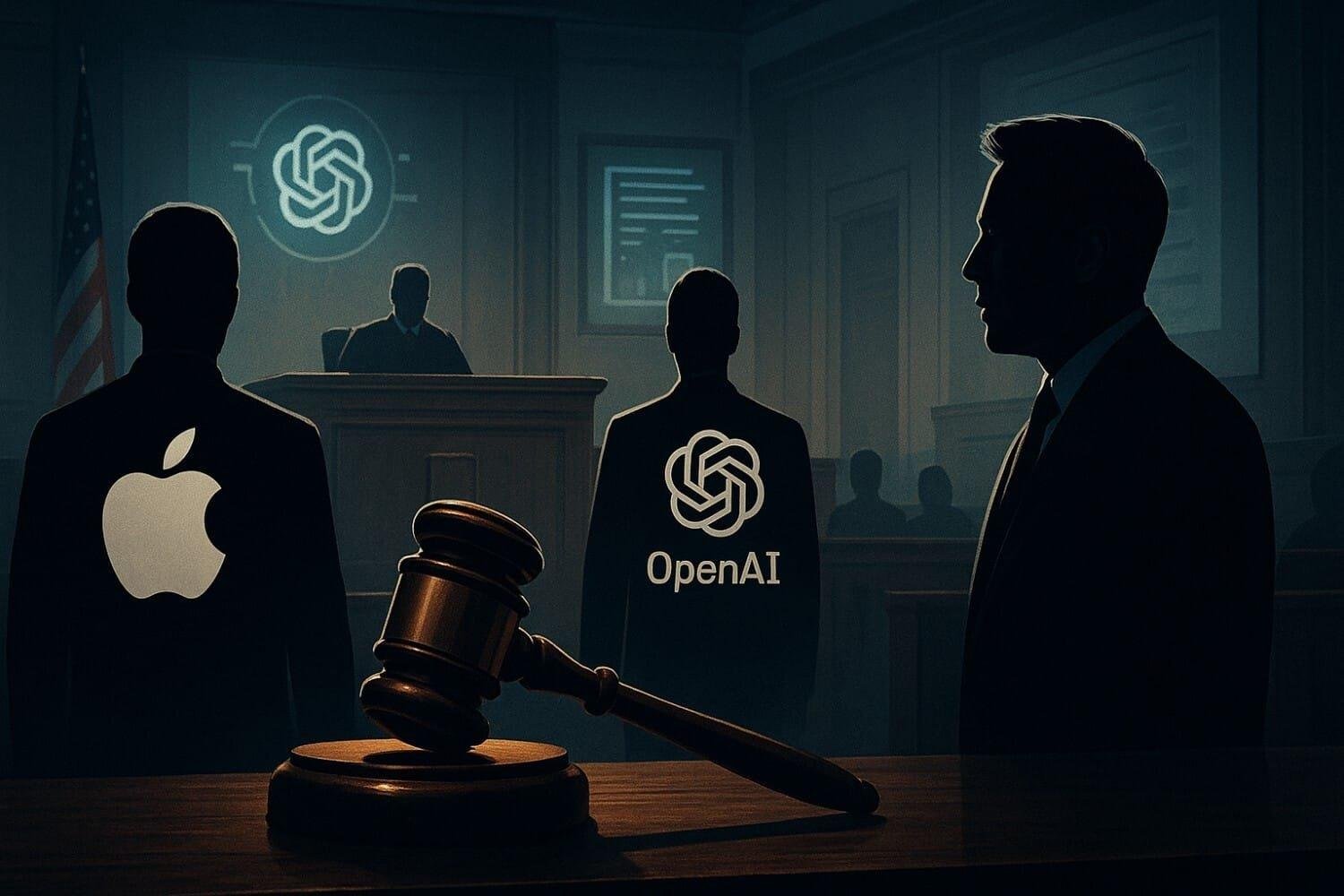

Apple OpenAI Lawsuit has filed a major lawsuit accusing OpenAI of using stolen trade secrets to develop upcoming AI hardware. Here’s what the lawsuit alleges, OpenAI’s response, and what it could mean for the future of AI.
- A Partnership Turns Into a Courtroom Battle
- What Apple Is Alleging
- The Former Apple Employees at the Center of the Case
- Why AI Hardware Is Becoming the Next Big Battleground
- OpenAI Responds
- Potential Impact on Upcoming AI Devices
- A Larger Industry Debate
- What Happens Next?
- Why This Matters Beyond Apple and OpenAI
- Looking Ahead
- Summary
The Apple OpenAI Lawsuit has become one of the most closely watched legal battles in the technology industry, marking a dramatic shift in the relationship between two companies that were recently collaborators in artificial intelligence. Apple has filed a lawsuit in federal court accusing OpenAI of misappropriating trade secrets and confidential information to accelerate the development of its upcoming AI hardware products.
The lawsuit alleges that former Apple employees who later joined OpenAI improperly shared confidential information related to Apple’s unreleased technologies, product development, manufacturing processes, and supplier relationships. Apple claims the alleged conduct formed part of a coordinated effort to gain an unfair competitive advantage in the fast-growing AI hardware market.
OpenAI has denied wrongdoing and says it has no interest in using another company’s proprietary information. The case is expected to become one of Silicon Valley’s most significant intellectual property disputes in years.
A Partnership Turns Into a Courtroom Battle
Only a short time ago, Apple and OpenAI were viewed as strategic partners in artificial intelligence.
That relationship has now changed dramatically.
According to the lawsuit filed in the U.S. District Court for the Northern District of California, Apple alleges that confidential company information was obtained through former employees who later accepted positions at OpenAI. Apple argues that the alleged actions went far beyond normal employee recruitment and crossed into trade secret theft.
The lawsuit represents a major escalation in competition as both companies expand their AI ambitions.
What Apple Is Alleging
Apple’s complaint contains several serious allegations.
According to court filings, Apple claims certain former employees retained confidential materials, shared details about unreleased products, and were encouraged during recruiting to provide information about Apple’s internal projects, components, manufacturing methods, and engineering processes. Apple also alleges that proprietary project code names and supplier relationships were improperly used.
The lawsuit names OpenAI, OpenAI hardware chief Tang Tan, former Apple engineer Chang Liu, and io Products, the AI hardware company associated with former Apple design chief Jony Ive. Jony Ive himself is not named as a defendant, and Apple does not accuse him of wrongdoing.
These are allegations made in Apple’s complaint and have not been proven in court.
The Former Apple Employees at the Center of the Case
A significant part of the Apple OpenAI Lawsuit focuses on former Apple executives and engineers who moved to OpenAI.
Apple alleges that Chang Liu retained confidential company materials after leaving Apple. The company also claims Tang Tan, who previously held a senior hardware leadership role at Apple and now leads OpenAI’s hardware efforts, directed recruiting practices that sought confidential information from Apple employees.
OpenAI disputes Apple’s allegations and maintains that it develops its own technology independently.
Why AI Hardware Is Becoming the Next Big Battleground
The legal fight is about more than documents or employee departures.
It reflects an increasingly competitive race to define the future of consumer technology.
OpenAI has publicly expanded its hardware ambitions, including its acquisition of io Products and its work with former Apple designer Jony Ive on new AI-focused devices. Industry analysts believe these products are intended to create a new generation of AI-first consumer hardware beyond today’s smartphones.
Apple, meanwhile, continues investing heavily in Apple Intelligence and next-generation AI features across its ecosystem.
OpenAI Responds
OpenAI has rejected Apple’s accusations.
The company says it is focused on building innovative products and does not seek to use competitors’ confidential information. According to reports, OpenAI believes its hardware development is based on its own engineering work rather than Apple’s trade secrets.
Because the litigation is in its early stages, both sides will have opportunities to present evidence before the court reaches any conclusions.
Potential Impact on Upcoming AI Devices
The Apple OpenAI Lawsuit could influence OpenAI’s hardware roadmap.
Legal experts say Apple is seeking damages as well as court orders that could require defendants to stop using any confidential information found to have been improperly obtained and return protected materials if the allegations are proven.
Whether the lawsuit delays future AI hardware launches remains uncertain.
A Larger Industry Debate
This dispute also highlights broader questions facing the technology industry.
Employee mobility is common in Silicon Valley, where engineers frequently move between major companies. However, trade secret law generally protects confidential business information even when employees change jobs.
Legal specialists note that the case may ultimately focus less on hiring former employees and more on whether confidential information was improperly retained, shared, or used.
The outcome could influence how technology companies recruit talent and protect intellectual property in the AI era.
What Happens Next?
The federal court process is expected to take months, and potentially years.
During discovery, both sides may exchange documents, interview witnesses under oath, and present technical evidence related to Apple’s claims.
No court has determined that OpenAI or any of the individual defendants committed wrongdoing. At this stage, Apple’s allegations remain claims contained in a civil lawsuit, while OpenAI continues to deny them.
Why This Matters Beyond Apple and OpenAI
The significance of the Apple OpenAI Lawsuit extends beyond these two companies.
The AI industry is entering a period where software, hardware, and intellectual property are becoming deeply interconnected. As companies race to develop AI-powered devices, protecting research, engineering designs, and manufacturing knowledge has become increasingly valuable.
The case could establish important legal precedents for how courts handle trade secret disputes involving artificial intelligence and advanced consumer hardware.
Looking Ahead
The legal battle between Apple and OpenAI is likely to remain one of the technology industry’s biggest stories in the months ahead.
Apple says it is acting to protect decades of research, engineering, and innovation. OpenAI says it has done nothing improper and intends to continue building its AI products.
Until the court reviews the evidence and reaches a decision, the allegations remain unproven. Regardless of the eventual outcome, the lawsuit underscores the intense competition shaping the future of artificial intelligence and consumer electronics.
Summary
The Apple OpenAI Lawsuit marks a significant escalation in the AI industry’s competitive landscape. Apple alleges that OpenAI and several former Apple employees improperly used confidential trade secrets to accelerate development of future AI hardware. OpenAI denies the allegations, and no court has ruled on the merits of the case. As the litigation moves forward, the outcome could influence AI innovation, employee recruitment practices, intellectual property protection, and the future of AI-powered consumer devices for years to come.
THANKS FOR READING