United Fidelity Bank Closure Shakes the U.S. Banking Sector
United Fidelity Bank Closure has become a major financial news story after federal regulators shut down the Indiana-based lender on November 27, 2026. The decision marks the largest U.S. bank failure by assets since April 2024, raising fresh questions about financial stability and banking supervision.
The Evansville-based bank had approximately $5.9 billion in assets and $5.4 billion in deposits as of September 30, according to the Federal Deposit Insurance Corporation (FDIC).
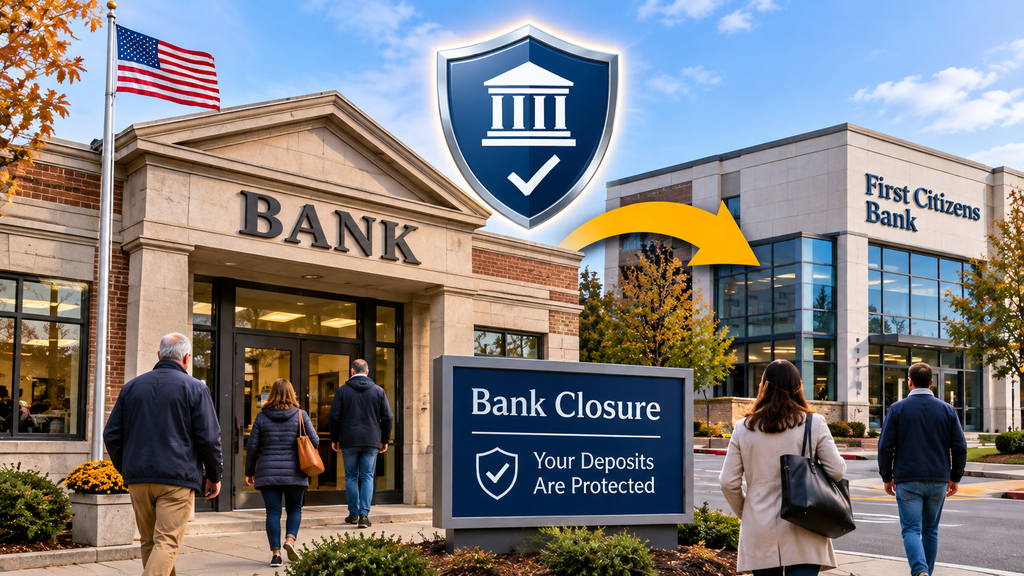
However, there is some relief for customers. First-Citizens Bank & Trust Company, commonly known as First Citizens Bank, has agreed to assume substantially all deposits and purchase substantially all assets of the failed institution.
The FDIC says customers will automatically become First Citizens depositors and retain their funds and deposit insurance coverage. Customers do not need to panic or immediately open replacement accounts.
Why Did Federal Regulators Close the Bank?
The Office of the Comptroller of the Currency (OCC) closed United Fidelity Bank and appointed the FDIC as receiver.
Regulators determined that the bank was in an unsafe or unsound condition and was likely unable to meet its financial obligations and depositors’ demands.
The official announcement did not provide a detailed explanation of every factor behind the bank’s financial deterioration. That distinction is important because the closure should not automatically be attributed to a single cause, such as bad loans, poor management, or a wider banking crisis.
The United Fidelity Bank Closure represents a serious institutional failure, but it does not by itself demonstrate that the entire American banking system is facing the same problem.
Federal regulators routinely monitor financial institutions and can intervene when a bank is no longer considered safe to operate.
First Citizens Bank Takes Over Deposits and Assets
First Citizens Bank was selected through a competitive bidding process to take over most of the failed lender’s operations.
According to the bank’s announcement and FDIC information, the transaction includes approximately:
- $5.9 billion in assets.
- $4.5 billion in deposits.
- $3.1 billion in loans.
- 22 former bank branches across several locations.
The branches include 20 locations in Indiana, Illinois, Colorado, and Florida, along with two branches in the U.S. Virgin Islands operating as Bank of St. Croix.
First Citizens also agreed to acquire certain subsidiaries, including Pedcor Homes, a real estate development and management business.
The acquisition was structured as a whole-bank purchase, allowing the failed institution’s operations to move under a new banking organization rather than leaving customers without access to their accounts.
Is Customers’ Money Safe?
This is the most important question for people who had accounts with United Fidelity Bank.
The FDIC has stated that depositors will automatically become customers of First Citizens Bank. Their funds and deposit insurance coverage will be retained under the transaction.
Customers do not need to withdraw their money simply because the previous bank has closed.
The FDIC also confirmed that customers could continue accessing their money over the transition period through existing checks, ATMs, and debit cards. Checks drawn on United Fidelity would continue to be processed.
The agency generally protects eligible bank deposits up to $250,000 per depositor, per insured bank, for each account ownership category. Customers with questions about their specific accounts should contact the FDIC or First Citizens directly.
The United Fidelity Bank Closure therefore does not mean that ordinary depositors automatically lose their savings.
However, customers should pay attention to official notices about account conversion, branch operations, and any changes to online banking services.
What Happens to Bank Branches?
The transition also affects employees, local businesses, and communities that relied on United Fidelity’s physical branches.
The FDIC said the bank’s 22 branches would reopen as First Citizens locations. Branches with regular Saturday hours were scheduled to reopen on November 28, while the remaining locations were expected to operate under the new ownership by Monday, November 30.
Customers were advised to continue using their existing branches until First Citizens completed the necessary systems changes.
This arrangement is intended to reduce disruption during the transition.
For small businesses, older customers, and people who regularly visit bank branches, continuity of service can be just as important as keeping access to deposits.
The United Fidelity Bank Closure may change the name above the branch entrance, but the takeover is designed to maintain access to ordinary banking services.
FDIC Estimates a $1.83 Billion Cost
Although customers are expected to retain their deposits and banking access, the failure will carry a significant cost for the federal deposit insurance system.
The FDIC estimates that the failure will cost its Deposit Insurance Fund approximately $1.83 billion.
The fund is financed through assessments on insured banks and is used to protect depositors when insured financial institutions fail.
The estimated cost reflects the financial gap associated with resolving the bank and transferring its operations.
First Citizens’ winning bid included an approximately $2.6 billion discount on the acquired assets, according to the transaction announcement and Reuters reporting.
The FDIC’s estimate is not a bill being sent directly to United Fidelity customers. It represents the projected cost to the insurance fund of handling the failure.
Is This the Start of a Wider Banking Crisis?
The closure is attracting attention partly because it is the largest U.S. bank failure by assets since Republic First Bank collapsed in April 2024.
It is also reported as the seventh U.S. bank failure of 2026.
Those figures deserve attention, but they should be viewed in context.
A single bank failure does not necessarily indicate a nationwide financial crisis. Banks can fail for institution-specific reasons, and federal regulators have procedures for transferring deposits and resolving failed institutions.
The United Fidelity Bank Closure will likely prompt investors and financial observers to examine the condition of smaller and regional lenders.
Important areas to watch include loan quality, liquidity, commercial real estate exposure, deposit stability, and the ability of banks to meet financial obligations.
However, without more detailed information about the causes of this particular failure, it would be premature to draw broad conclusions about the health of the entire banking sector.
What Should Former Customers Do Now?
Customers should follow official instructions rather than making rushed financial decisions.
Here are some practical steps:
- Check official notices: Read communications from First Citizens Bank and the FDIC.
- Continue normal payments: Loan customers should keep making payments according to their existing agreements.
- Monitor account access: Check whether online banking, debit cards, and automatic payments continue working.
- Verify contact information: Use official bank or FDIC contact details if account questions arise.
- Review deposit coverage: Customers with large balances should understand FDIC insurance limits and account ownership categories.
The FDIC has provided a dedicated customer assistance number: 1-866-431-1725.
Former United Fidelity customers should avoid responding to unsolicited messages requesting passwords, account numbers, or security codes. Bank transitions can create opportunities for scammers to impersonate financial institutions.
What This Means for the American Banking Industry
The United Fidelity Bank Closure is a reminder that even established financial institutions can face serious difficulties.
It also demonstrates why deposit insurance and regulatory intervention are important parts of the U.S. financial system.
For customers, the most immediate concern is access to their money. For regulators, the priority is resolving the failure while limiting disruption and protecting eligible deposits.
For other banks, the event reinforces the importance of maintaining adequate liquidity, managing financial risks, and monitoring their ability to meet customer obligations.
The coming months may provide more information about the circumstances behind United Fidelity’s failure and whether regulators identify broader lessons for the banking industry.
For now, the takeover by First Citizens provides a structured path forward for customers and local communities.
Important News Takeaway
The United Fidelity Bank Closure on November 27, 2026, marks the largest U.S. bank failure by assets in more than two years. Federal regulators closed the Indiana-based lender after determining that it was in an unsafe or unsound condition and could be unable to meet its obligations.
First Citizens Bank has agreed to assume substantially all deposits and acquire substantially all assets. The FDIC says customers will automatically become First Citizens depositors and retain their funds and deposit insurance coverage.
The failure is expected to cost the FDIC’s Deposit Insurance Fund approximately $1.83 billion.
Although the closure is a significant development for the U.S. banking industry, customers should follow official instructions and avoid unnecessary panic. The immediate priority is ensuring a smooth transition and maintaining access to everyday banking services.
THANKS FOR READING