
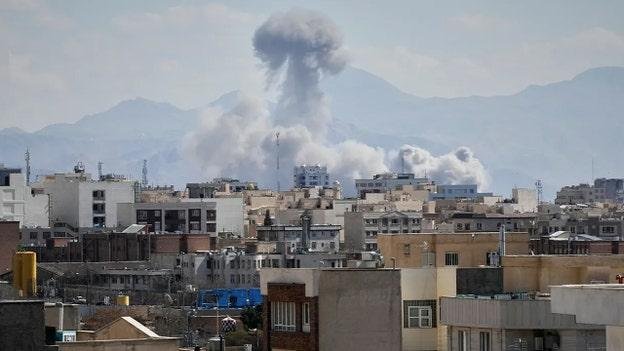
US Iran Conflict
The US Iran Conflict has intensified as both countries expand military operations, raising concerns about regional stability, global oil markets, and the future of diplomacy. Here’s what you need to know.
- US Iran Conflict
- Conflict Intensifies After Ceasefire Breaks Down
- The Strait of Hormuz Remains at the Center
- Military Operations Expand
- Regional Allies Are Feeling the Impact
- Oil Markets React to Rising Risks
- Diplomatic Efforts Continue Despite Fighting
- Humanitarian Concerns Grow
- Global Leaders Call for Restraint
- Could the Conflict Spread Further?
- What Happens Next?
- Why This Story Matters
- Summary
The US Iran Conflict has entered a dangerous new phase as both countries continue exchanging military strikes with little indication that the violence will ease anytime soon. After the collapse of a temporary truce reached last month, the United States has expanded air operations against military targets in Iran, while Tehran has responded with missile and drone attacks targeting U.S. military facilities and allied infrastructure across the Middle East.
The renewed fighting has heightened fears of a prolonged regional conflict, disrupted shipping through the Strait of Hormuz, increased pressure on global energy markets, and raised concerns among world leaders about the possibility of a wider war. While diplomatic channels remain open, recent events suggest that both sides are prioritizing military pressure over immediate negotiations.
Conflict Intensifies After Ceasefire Breaks Down
The latest escalation follows the breakdown of a memorandum of understanding that had temporarily reduced hostilities between Washington and Tehran. In recent days, U.S. forces have carried out multiple waves of strikes on military sites, coastal facilities, bridges, and infrastructure that officials say support Iran’s military operations near the Strait of Hormuz.
Iran has responded with missile and drone attacks aimed at U.S. military installations and facilities used by American allies in the Gulf region. According to officials, both sides have expanded the range and frequency of their operations compared with earlier stages of the conflict.
The Strait of Hormuz Remains at the Center
Much of the current US Iran Conflict revolves around the Strait of Hormuz, one of the world’s most important maritime chokepoints.
Roughly one-fifth of globally traded oil passes through this narrow waterway connecting the Persian Gulf with the Gulf of Oman. Any disruption immediately affects global energy markets.
Recent attacks have reportedly targeted infrastructure near the strait, while commercial shipping has slowed because of growing security concerns. Tanker operators, insurers, and energy companies are closely monitoring developments as insurance costs and operational risks continue rising.
Military Operations Expand
Military officials say recent U.S. strikes have focused on degrading Iranian military capabilities, including facilities associated with missile operations, naval assets, and logistics networks.
Iran, meanwhile, says its operations are intended to respond to what it describes as U.S. aggression and to defend its national sovereignty. Tehran has vowed to continue responding if additional attacks occur.
Neither government has indicated that it intends to launch a full-scale ground invasion, but analysts warn that the growing exchange of long-range strikes increases the risk of unintended escalation.
Regional Allies Are Feeling the Impact
The US Iran Conflict is affecting countries well beyond Iran and the United States.
Several Gulf nations hosting U.S. military facilities have strengthened security around key infrastructure, while governments throughout the region are preparing for possible disruptions to transportation, energy production, and commercial activity.
Regional leaders continue urging restraint while also reinforcing air defenses and emergency preparedness measures.
Oil Markets React to Rising Risks
Energy markets remain highly sensitive to developments in the Middle East.
Even rumors of additional attacks have caused fluctuations in crude oil prices as investors evaluate potential threats to global supply.
If shipping through the Strait of Hormuz experiences prolonged disruption, analysts warn that fuel prices could increase worldwide, contributing to higher transportation costs and inflation.
Businesses dependent on international shipping are also facing rising insurance premiums and logistical uncertainty.
Diplomatic Efforts Continue Despite Fighting
Although military operations dominate headlines, diplomatic contacts have not completely ended.
Officials from several countries continue encouraging renewed negotiations aimed at preventing a broader regional conflict.
Some observers point to Iran’s recent release of a U.S. citizen as a possible sign that limited diplomatic communication remains possible despite the ongoing hostilities. However, no new ceasefire agreement has been announced.
Humanitarian Concerns Grow
As the US Iran Conflict continues, humanitarian organizations are expressing concern about civilians living near areas affected by military operations.
Airstrikes, damaged infrastructure, and disruptions to transportation have complicated daily life in some regions.
Aid agencies continue calling on all parties to comply with international humanitarian law and to take every possible precaution to protect civilians and civilian infrastructure during military operations.
Global Leaders Call for Restraint
Governments around the world are closely monitoring the conflict.
Many international leaders have urged both Washington and Tehran to return to diplomatic negotiations, warning that continued escalation could threaten regional stability and global economic growth.
The United Nations and several allied governments have repeated calls for restraint while emphasizing the importance of maintaining freedom of navigation through international waterways.
Could the Conflict Spread Further?
Security experts believe the greatest concern is the possibility that additional regional actors could become directly involved.
Any expansion of hostilities could place more countries, military installations, and commercial shipping routes at risk.
Analysts caution that prolonged conflict could also affect international financial markets, airline routes, tourism, and global supply chains.
For now, neither side appears ready to significantly reduce military operations.
What Happens Next?
The coming days may prove critical.
Military analysts will closely watch whether attacks continue expanding or whether renewed diplomatic efforts gain momentum.
Much will depend on political decisions in Washington and Tehran, as well as mediation efforts by regional and international partners.
At present, there is little evidence that either side is preparing for immediate de-escalation, making the situation one of the world’s most closely watched security crises.
Why This Story Matters
The US Iran Conflict extends far beyond military operations.
Its consequences could influence global oil prices, inflation, shipping, international diplomacy, regional security, and financial markets.
Because the Middle East remains central to global energy supplies, developments there often affect economies around the world.
Summary
The US Iran Conflict has intensified following the collapse of a temporary truce, with both nations expanding military operations and showing few signs of backing down. U.S. strikes have targeted Iranian military infrastructure, while Iran has responded with missile and drone attacks against U.S. interests and regional allies. The fighting has disrupted shipping in the Strait of Hormuz, increased uncertainty in global energy markets, and renewed international calls for diplomacy. Although limited communication channels remain open, the conflict currently shows no clear path toward de-escalation, leaving the region and the wider world facing continued uncertainty.
THANKS FOR READING
